

The quick version
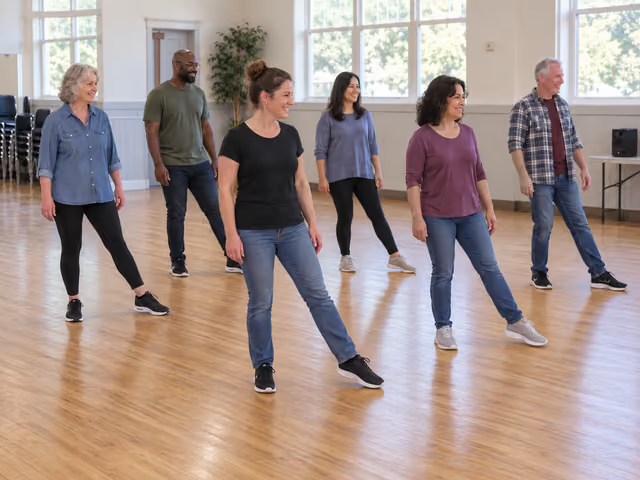
Choose a starting wall and learn the 32 counts of Ah Si! below. Walk forward and back twice, alternate forward steps with side points, then make a quarter-turn right and four hip shifts. Repeat facing the new wall. Dance cooperatively through one song; there are no points or eliminations.
Saved on this device only — clearing your browser's cache or site data removes them (no account backup).
Clear the floor and learn the beat
Use Ah Si! by Rita Masur, the 32-count, four-wall absolute-beginner dance to Levantando las Manos by El Símbolo. Four-wall means each repetition ends facing a new direction. The stepsheet below is the reference for this version; familiar dances with similar steps may differ.
This guide hosts 2–12 dancers, including the person teaching. Choose a clean, dry, level indoor floor or sheltered outdoor surface with enough room for everyone to take several small steps forward and back, point a foot sideways and turn without touching another person or an obstacle. Clear bags, chairs and cables. Check the whole movement area before music; reduce the group or move if it is cramped. Wear stable, comfortable shoes that allow small turning steps.
Arrange one row, or stagger several rows so everyone can see. Choose a starting wall as 12 o'clock; the wall to each dancer's right is 3 o'clock. A teacher faces the same direction as the dancers rather than mirroring them. Choose someone comfortable with the sequence to call counts; if everyone is new, that person learns from the written counts and leads the slow walkthrough first.
Have the named recording ready on a player with a speaker everyone can hear at a comfortable volume. A phone is one option; a standalone CD player also works. Get permission to use the space and keep sound appropriate to it. Agree that anyone may watch, pause or leave the floor. Do not film or touch someone to correct them without asking.
Each numbered count is one beat. A step takes your weight onto that foot; a point places only the toe lightly on the floor and leaves weight on the other foot. First walk through without music, then rehearse slowly with spoken counts. Start with weight on the left foot so the right can move first.
Dance all 32 counts
1–8 · Forward and back
1: right foot forward. 2: left forward. 3: right forward. 4: point left toe to your left side. 5: left foot back. 6: right back. 7: left back. 8: point right toe to your right side.
9–16 · Repeat that phrase
Do counts 1–8 again on beats 9–16. Keep steps small.
17–24 · Step and point
17: right forward. 18: point left sideways. 19: left forward. 20: point right sideways. Repeat those four actions on 21–24.
25–28 · Jazz box and turn
25: cross right in front of left, taking weight onto right. 26: left steps back. 27: right steps forward. 28: turn a quarter to your right and bring left alongside, taking weight onto left. Finish facing 3 o'clock from the original wall.
29–32 · Hips and repeat
Shift hips and weight right, left, right, left, one per beat. End on left, ready for right to start count 1. Repeat the entire sequence. Facing directions progress 12 → 3 → 6 → 9 → 12.
After a point, do not put weight on the pointing foot until its next step. At the end of count 32, weight is left. Small steps leave more room and make it easier to keep the beat.
Start, rejoin and finish together
Teach the phrases separately, then connect them and rehearse the turn from each wall. When everyone is ready, start the song. For this group session, the caller listens for a clear steady beat, counts four groups of eight as a lead-in, then calls the next beat as count 1. This is a host starting convention; the reference sheet gives no fixed song intro count.
Repeat all 32 counts from each new wall. The reference sheet specifies a repeating sequence with no extra break or shortened restart. Here, starting count 1 again happens after count 32; do not jump back to 1 whenever a lyric changes. The caller can count each phrase 1–8 while learners use the continuous 1–32 numbers above.
If you lose your place, stop your traveling steps, check the group's facing direction and wait for its next count 1. Resume with right forward when the caller cues it. If most people are lost, the host pauses music, resets everyone to the starting wall with weight left, and restarts the run after the same lead-in. This is a teaching reset, not a choreographed restart. A late joiner waits at the edge for the next count 1 and enters only if there is a clear place in a row.
Finish after one song. If the music ends partway through a sequence, the caller continues the count at the same pace to 32 and everyone stops there. That coordinated ending is this guide's host suggestion. There is no score, winner, tie, penalty or elimination; learning and completing the shared run is the result. Take a break, then agree whether to repeat the song or finish the session.
Help the rows stay together
Keep the music low enough that the count caller is audible. Use short cues such as 'forward', 'back', 'point' and 'turn right'; give the turn cue before count 25. Avoid trying to add flourishes while learning. Keep hip shifts comfortable and use small stepping turns rather than wrenching a planted foot.
Put willing experienced dancers where learners can see them after turns. Never pull someone into place. Anyone who wants to pause can step off once the movement path is clear; the caller can stop everyone if needed. Rest, water and a chair at the edge are useful optional preparations.
Settle conflicting memories by returning to the linked Ah Si! sheet and the numbered sequence, not by asking different rows to follow different versions. If crossing feet is a problem, choose the published beginner substitute below for everyone before the run. If you want to change the music, test a steady beat and comfortable pace first rather than assuming every familiar song fits.
Already know the game?
Ideas & Twists
Choose a variation together before you start.
Line dancing · See main rules
Published beginner optionCrossing-free turn
Replace only counts 25–28 with: 25 right steps back; 26 left steps back; 27 step onto right while turning a quarter right; 28 bring left alongside and take weight onto left. Keep counts 1–24 and the four right-left-right-left hip shifts unchanged. Repeat from the new wall and finish the song as usual. Agree on this option for the whole group before starting; it is the beginner substitute on Rita Masur's sheet.
Line dancing · See main rules
House teaching suggestionOne-wall rehearsal
Before the song run, keep everyone facing the starting wall for four complete 32-count repetitions. Replace counts 25–28 with right back, left back, right a small step to the side, left together; make no turn. Keep all other counts, including the four hip shifts. Stop after the fourth count 32, practice the normal turning phrase separately, then return to the main dance if the group wants. This practice adaptation changes the choreography and is not another official version.
Line dancing · See main rules
House suggestionCounted dance without music
Use the main 32-count steps without a player or speaker. One dancer calls a comfortable steady beat aloud; complete four full repetitions, turning right each time, and stop at the fourth count 32 facing the starting wall. If the group loses the count, pause, face the starting wall and begin the four repetitions again. No points or winner; this makes a complete spoken-count practice session with the same floor and shoe requirements.
About this guide
The attributed Ah Si! stepsheet supplies the 32-count sequence, four facing directions and crossing-free beginner option. The lead-in, rejoining procedure, song-end finish and two practice variations are host suggestions. This is an original plain-language explanation; follow the linked sheet for the reference version.
Ready for something different?
Find another game →