

The quick version
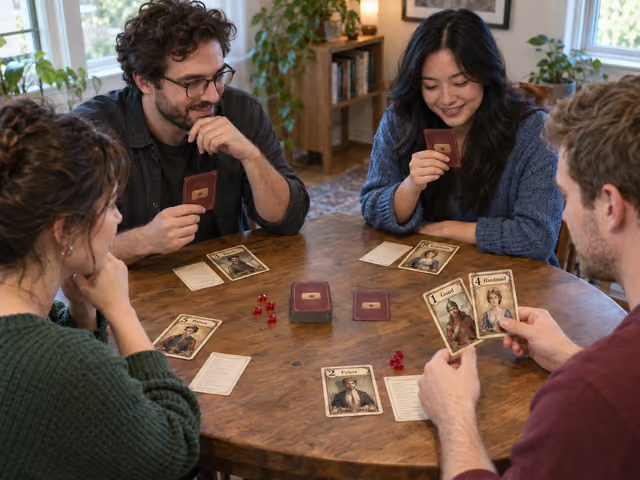
Shuffle the character cards, set one aside facedown and deal one to each player. With two players, also set three cards aside faceup. Take clockwise turns drawing one card and playing one. Keep played and discarded cards visible. A round ends immediately with one survivor, or after a completed turn leaves the draw deck empty. Highest surviving card wins; tied highest cards each earn a token. Check the separate Spy bonus, then redeal. The target is six tokens with two players, five with three, four with four, and three with five or six.
Saved on this device only — clearing your browser's cache or site data removes them (no account backup).
Check the edition, then deal one card each
This guide uses the physical Z-Man 21-card revised edition, checked against the publisher’s current English bag rulebook with a 2025 copyright. The deck has two Spies (0), six Guards (1), two Priests (2), two Barons (3), two Handmaids (4), two Princes (5), two Chancellors (6), one King (7), one Countess (8) and one Princess (9). A 16-card older edition, Premium or a themed edition may change numbers, effects or scoring; do not mix their rules into this game.
Seat 2–6 people around a shared table, each with a reference card and room for a separate faceup play area. Keep all played cards spread so everyone can count them. Put the 13 favor tokens in a shared supply. Shuffle all 21 character cards and set the top card aside facedown without looking at it. Keep that reserve separate from the draw deck. In a two-player game, also set the next three cards aside faceup for both players to see. Those three do not enter play that round.
Deal one character card facedown to each person. Look only at your own card. The remaining cards form the facedown draw deck within reach. The player who most recently hand-wrote a letter starts; if nobody can determine that, this guide suggests choosing randomly. Keep the group’s favor target visible on the reference cards or explain it before starting: 2 players need 6 tokens, 3 need 5, 4 need 4, and 5–6 need 3.
Draw one, play one, resolve its effect
Start your turn
Turns go clockwise, skipping anyone already out of this round. At the start of your turn, your previous Handmaid protection expires. Draw one card from the draw deck so you have two cards. Keep both private while deciding.
Choose the card to play
Place one card faceup in your own play area and carry out that character’s effect below. Keep the other card in your hand. If your two cards are Countess plus King or Prince, you must play the Countess. You may also choose to play her with any other card; do not show the card you kept.
Use a legal target
Guard, Priest, Baron and King choose another surviving player who is not protected by a Handmaid. Prince may choose any surviving player, including yourself, but cannot choose another protected player. If everyone else is protected, Guard, Priest, Baron and King have no effect; Prince must target you. You cannot choose someone already out of the round.
Handle elimination
If an effect knocks you out, put your remaining hand faceup in your own play area, without activating its ordinary play effect. Turn your reference card to its broken-seal side as a reminder. You take no more turns and cannot be targeted until the next round. Your already played or discarded cards stay visible.
Finish the effect before checking the deck
If only one player remains, the round ends immediately. Otherwise finish the active card’s effect, then check whether the draw deck is empty. Drawing the last card does not cancel its effect. If cards remain, the next surviving player takes a turn; if none remain, compare surviving hands as explained below.
You hold Priest (2), then draw Guard (1). You could play Priest to secretly inspect another unprotected player’s card, keeping Guard for a later guess. Or play Guard now, name a different character and keep Priest. A wrong Guard guess leaves both players in the round; you do not draw again.
What each character does
- 0 — Spy, two copies: Playing or discarding a Spy does nothing immediately. At the round’s end, if exactly one surviving player has played or discarded one or both Spies into their own play area, that player gains one bonus favor token. An eliminated player cannot earn it. Two surviving players with Spies cancel the bonus. Holding an unplayed Spy does not qualify. This bonus is separate from winning the round.
- 1 — Guard, six copies: Choose another unprotected survivor and name a character other than Guard. They answer truthfully whether they hold it. A correct guess knocks them out; a wrong guess does nothing. You may name Spy or either high character. You cannot guess Guard even if you know they hold one.
- 2 — Priest, two copies: Secretly look at another unprotected survivor’s hand. Return it without showing anyone else. Nothing is discarded or exchanged.
- 3 — Baron, two copies: Privately compare your remaining hand with another unprotected survivor’s hand. The lower value is out. Equal values leave both in. Comparing a Princess does not discard her.
- 4 — Handmaid, two copies: Other players cannot choose you for card effects until the start of your next turn. This does not block a Prince you play on yourself, the final hand comparison or the Spy check.
- 5 — Prince, two copies: Choose any legal survivor, including yourself. They discard their hand faceup without applying its ordinary play effect, then draw a replacement. If the draw deck is empty, use the facedown reserve card instead. Discarding Princess eliminates that player immediately and they draw no replacement. Discarding Spy can qualify its surviving owner for the end-of-round bonus.
- 6 — Chancellor, two copies: Draw two additional cards, choose one of the three cards now in your hand to keep, and secretly put the other two on the bottom of the draw deck in either order. With only one card available, draw it and return one of your two cards. With none available, Chancellor has no effect; do not take the reserve. Countess’s forced-play rule does not apply during this selection. Returning Princess to the deck does not discard her.
- 7 — King, one copy: Secretly exchange your remaining hand with another unprotected survivor’s hand. Each keeps the newly received card. Exchanging Princess does not eliminate anyone.
- 8 — Countess, one copy: She has no played effect. On your ordinary turn you must play her if your other card is King or Prince. You may voluntarily play her with any other card. Keep the other card secret.
- 9 — Princess, one copy: Playing or discarding her for any reason knocks you out immediately. Keeping her, privately showing her, comparing her, exchanging her or returning her to the deck is allowed.
Award favor, check the target, then reset
If only one survivor remains, that player earns one favor token for winning the round. If the draw deck is empty after a completed turn, all survivors reveal their remaining cards: the highest value wins. Every player tied for highest wins and earns one token. Do not total discarded values to break a tie in this edition.
Now check Spy cards in the play areas of survivors only. Exactly one surviving Spy owner earns one extra token, even if they did not have the highest card. A round winner who also qualifies gets two tokens. Playing or discarding both Spies still earns only one bonus token. The Spy bonus alone does not make someone a round winner.
After awarding all round and Spy tokens, the game ends if anyone has reached or exceeded the target for the original group size. If several players reach it in this round, they share the game win; do not add an unannounced tiebreak. If nobody has reached it, retain earned tokens and gather all character cards, including hands, faceup play areas and set-aside cards. Shuffle the complete 21-card deck, repeat the set-aside step and deal one card to everyone, including eliminated players. Turn reference cards back to their active side.
The previous round’s winner starts the next round. If several tied for the highest card, choose randomly among those round winners. A Spy-only token earner does not get that starting privilege. Play another round and repeat until the target is reached.
Help the group read the table
Teach the draw-one, play-one choice first, then point out three easy-to-miss rules before the opening turn: Guard cannot guess Guard; Countess must be played with King or Prince; discarding Princess eliminates you. Leave reference cards reachable. Show the Priest-and-Guard example before dealing, or use the open-hand practice variation below. The extra Spy and Chancellor decisions can be taught when they first appear.
Visible cards are evidence, not certainty: the facedown reserve is unknown, Chancellor can return cards to the deck, and King or Prince can change a previously inspected hand. Spread every play area so card counts remain visible. Announce which person a card targets and, for Guard, name the character clearly before the target answers. Protected and eliminated players are different: neither is a legal opposing target, but only eliminated players skip turns.
Players knocked out watch the remaining round without coaching guesses or exposing information they learned privately. That is this guide’s host suggestion. Everyone rejoins at the next deal. An early lucky Guard guess can eliminate someone before their first turn; do not promise equal turns or uninterrupted participation.
For a rules disagreement, pause before drawing again and consult this edition’s full rulebook. Especially check Prince’s reserve draw, Chancellor with an empty deck and the distinction between discarding Princess and exchanging her. Guard answers and mandatory Countess plays must be honest. The publisher warns about mistakes but gives no general rewind penalty. This guide suggests correcting a plainly reversible mistake before anyone learns new information; if hidden information has already changed, redeal that round without awarding tokens. Agree to this house remedy before playing, and retain tokens from completed rounds.
Choose a table where everyone can read the references, reach the deck and privately show a card when required. Main play uses spoken targeting and guesses. Seated play does not establish suitability for every vision, dexterity, memory or language need; discuss those needs with the group.
Already know the game?
Ideas & Twists
Choose a variation together before you start.
Love Letter · See main rules
Official 2–4-player optionClassic court
Use the publisher’s classic option within this same revised set. Before shuffling, remove both Spies, both Chancellors and one of the six Guards, leaving 16 character cards. Play only with 2–4 people. Keep the values printed on your remaining cards, the normal facedown reserve, the extra three faceup set-aside cards for two players, all other effects and tied-highest round wins. There is no Spy bonus. Keep this rulebook’s token targets: six for two players, five for three and four for four. This reduces the card-effect types; it does not import a different edition’s discard-sum tiebreak or victory targets.
Love Letter · See main rules
House teaching roundOpen-hand rehearsal
Before the scored game, play exactly one practice round with all players’ hands faceup. Leave the reserve and draw deck facedown; after each draw or replacement, show the new hand. Make Chancellor’s choice openly but return cards facedown in the announced order. Priest confirms the already visible card; Guard still cannot name Guard. Resolve every other effect, including elimination, normally. Award no favor tokens, including Spy bonuses. Finish at one survivor or an empty deck after a completed turn, then gather and shuffle all 21 cards and start a fresh normal game with private hands and everyone on zero tokens. This is a learning exercise, not a balanced competitive format.
Love Letter · See main rules
House communication changeQuiet court
Use the complete 21-card main game and normal scoring, but replace spoken targeting and Guard guesses with deliberate gestures. First point to the intended person; for Guard, then point to the named non-Guard character on a reference card where everyone can see the choice. The target nods for a correct guess or shakes their head for a miss, and follows the normal elimination rule. Carry out private inspections, comparisons and exchanges as usual. Other cards need only the target gesture when applicable; choose yourself visibly for a self-targeted Prince. Keep hands secret and stop gestures that could expose private information. Pause and speak if a target or rule is unclear. This changes table chatter, not effects, protection, Spy eligibility, token targets or ties; agree on signals before dealing.
About this guide
The current publisher-hosted English 21-card bag rulebook supplies the main game and official classic option. Its credits say ©2025 although the URL contains a 2024 upload directory; this packet does not claim a separately verified 2019 printing. Older 16-card, Premium and themed rules are excluded. Open-hand rehearsal, Quiet court, the starter fallback, spectator advice and mistake remedy are explicit host suggestions. Community questions informed the explanations; the rulebook settles mechanics. Main-format fit facts remain 2–6 with the full dedicated set; Classic court alone is 2–4. No numerical session length or blanket access guarantee is claimed.
Ready for something different?
Find another game →