

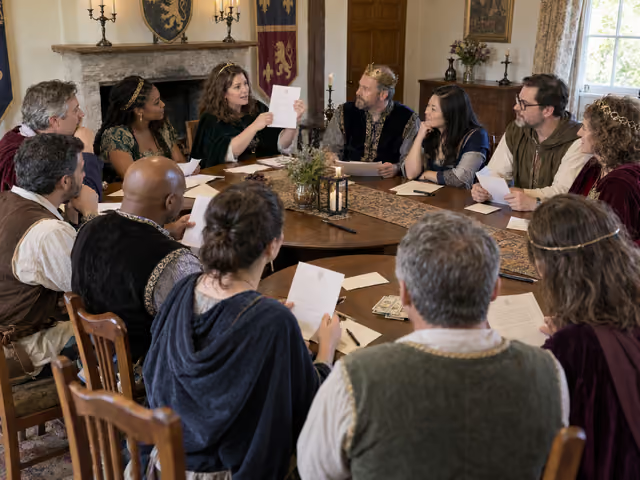
The quick version
Prepare the purchased kit and assign one role to each of 12 people, including yourself. Welcome everyone, read the introduction and distribute the first objectives. Guests question one another freely. Follow the kit's murder cue, then release the second objectives and evidence. Collect each person's written accusation before the investigator reads the solution. Finish with the kit's awards and a short discussion of the clues.
Saved on this device only — clearing your browser's cache or site data removes them (no account backup).
Choose the kit and confirm all 12 roles
Use Night of Mystery's A Knight of Murder, clean version, English, in person, 8–12 guests. This guide chooses exactly 12 character players, including the playing host, for a private gathering. Obtain that complete kit before inviting people into roles. Its story takes place at a medieval manor celebration. Use the purchased version's character list: the public preview lists the larger 15–20 cast.
Confirm attendance first. Assign each person one character from your kit and yourself the role recommended for the host. Send guests their character description and public background ahead of time. Ask them to read those pages and confirm the name they are playing. Costumes are optional; an accent or acting performance is unnecessary.
The host can play and solve the mystery. Read the host guide, but keep the solution and other characters' private objectives unread. If assembling the packs risks spoiling you, ask someone who will not play to print and seal them by character and stage. Do not mix files from another cast size.
If someone cancels, replace them in the same role. The purchased instructions identify which characters may be omitted; check that list before reducing the cast. Do not drop a role simply because the remaining number still falls inside 8–12. Below the kit's minimum or with an unfilled required role, postpone or obtain a suitable different kit.
Sort the papers before guests arrive
Print the host guide and all gameplay materials the kit specifies. Make a named pack for each of the 12 roles, keeping first-stage objectives separate from second-stage objectives. Set aside the evidence, solution, accusation/voting cards and awards in their scheduled order. Label envelopes clearly by character and release stage. Keep the solution closed until the end. Use the kit's printing and assembly instructions for quantities, play-money allotments and any special inserts.
Put name tags by the entrance, pens beside the accusation cards, and the host guide within reach. Have chairs for everyone, a clear place to present evidence, and room for small conversations. Keep unreleased materials out of guests' reach. Prepare any food beforehand so cooking does not pull the host away at a phase change; a meal and decorations are optional.
Before starting, check that all 12 players have arrived and that every pack matches its name tag. Give anyone who missed the advance reading time to read their description. Explain where the toilets and a quiet break space are, and ask everyone to keep personal belongings separate from game papers.
Question suspects, then follow the next phase
Open the story
Read the supplied introduction aloud and give out the first objectives, name tags and allotted play money as the host guide directs. Each player reads their own objectives privately. For a first action, find a character named on your sheet, introduce yourself by your character name and ask a question connected to one objective.
Mingle and pursue objectives
There is no clockwise turn order. Guests choose whom to question, answer in character and work through their current objectives. Use private conversations when appropriate, and let people finish speaking. Follow the sheet's directions about what to reveal or conceal. The printed play money is a story prop; use it only as the kit directs.
Stage the murder
At the host guide's cue, gather attention and carry out its fictional murder sequence. The victim's first objectives supply their instructions. Before the scene, agree that nobody will push, grab or perform a real fall; a supported seated slump can signal the moment. This is a house safety adjustment. The victim returns to take part in the investigation as directed by the kit.
Release the second stage
Distribute the second objectives only at the indicated point. Read your new information before continuing conversations. The investigator follows their instructions and presents the supplied evidence when called for. Gather the whole group so everyone sees and hears it; character gossip and a presented exhibit are different kinds of information.
Commit an accusation
After the scheduled evidence, hand each player a Who Dunnit accusation/voting card. Everyone privately records their suspect and fills in the other requested fields. Let people inspect the released evidence before collecting the cards. Collect every accusation before opening or reading the solution.
Ask 'Which person does your current sheet tell you to speak to?' when someone stalls. Help them find that character, then let them ask their own question. Keep future envelopes closed and explain practical instructions without supplying a suspect.
Reveal the answer and finish together
The investigator reads the kit's conclusion after the accusation cards are collected. Compare accusations with that solution, then handle the included awards and voting according to the host guide. Do not decide the culprit by majority vote: the written story supplies the answer.
For this gathering, agree before play to celebrate everyone who names the correct culprit. This is a house finish, with shared recognition if several people are correct and no sleuth winner if nobody is correct. There is no running point total or tie-break race. If an optional voted award is tied and the kit gives no tie rule, announce joint recipients rather than inventing extra clues or another interrogation.
End by inviting guests to describe one clue they understood differently after the reveal. Collect the papers and keep story spoilers within the group. For another mystery night, choose a different complete kit: people who know this solution should not compete to solve the same story again.
Keep secrets useful and problems small
Before the first phase, agree to improvise character voices and mannerisms while keeping the supplied evidence intact. Do not create new exhibits, change an alibi on a printed sheet or invent a different murderer. Players should follow their character instructions when deciding whether to withhold information; the host should not impose a blanket rule that every suspect must answer truthfully.
Make each phase change audible and check that nobody has been stranded with unread objectives. Encourage guests to approach someone they have not yet questioned. A quieter player can ask one direct question and listen; do not demand a performance. If a conversation monopolizes somebody, help the next waiting questioner get a chance.
For a disputed instruction, pause that conversation and consult the current-stage sheet or host guide. The kit settles story facts. For a missing paper, give its correct replacement privately. If a later envelope is opened early, keep its contents from spreading and ask the affected player to follow the current stage. If the solution becomes widely known, stop competitive sleuth recognition and continue as a story discussion by group agreement. These interruption remedies are house suggestions.
Keep the evidence presentation visible until accusations are complete. Separate a character's suspicion from what the exhibit actually says. If a guest needs a break, pause their conversation and resume it afterward; if they leave permanently, check the purchased absence instructions before continuing the mystery.
Already know the game?
Ideas & Twists
Choose a variation together before you start.
Murder mystery party · See main rules
House hosting optionSeated manor
Replace free roaming with seated conversations around adjoining tables. Give each guest a permanent seat and keep clear sightlines to the evidence. People invite a named character into a brief conversation from their seats; allow softly spoken side conversations, then switch partners when both have finished. The host pauses all side conversations for each phase announcement and evidence presentation. Keep all 12 roles, objectives, release order, individual accusation cards and the same reveal. Use the seated signal for the staged murder; nobody needs to fall. This changes the room arrangement, not the story.
Murder mystery party · See main rules
House hosting optionSecond look at the evidence
After the scheduled evidence presentation, add a shared review before accusation cards are submitted. Each person may request one exhibit to be shown again or ask the presenter to repeat its printed wording. Take requests around the table once and let a person pass. The presenter repeats only released information and gives no explanation of who is guilty. Then everyone completes their own card, all cards are collected and the original conclusion is read. Keep the cast and earlier phases unchanged; this helps a group that missed an important exhibit.
Murder mystery party · See main rules
House hosting optionHost knows the answer
The same 12 people play, but the host deliberately reads the solution while preparing and tells guests they already know it. The host still plays their assigned character, distributes packs and follows every scheduled phase. They may clarify printed instructions but offer no hints about the culprit, submit no sleuth accusation and receive no sleuth recognition. The other 11 character players accuse individually and share correct-solution recognition; other kit awards follow their normal instructions. Choose this option before assigning roles if someone prefers guiding the story to discovering the answer.
About this guide
Use the purchased clean 8–12 kit for the character packs, exact murder cue, evidence, solution and award instructions. The public introduction and publisher guidance explain the format; this guide adds practical hosting advice and clearly marked house options. The chosen main cast is 12, including the host. Other kit sizes, stories and virtual formats have their own instructions.
- Night of Mystery · A Knight of Murder options and host FAQ ↗
- Night of Mystery · A Knight of Murder public introduction ↗
- Night of Mystery · party phase overview ↗
- Night of Mystery · cast-size planning ↗
- Night of Mystery · preparation and printed materials ↗
- Night of Mystery · pacing and spoiler handling ↗
Ready for something different?
Find another game →