

The quick version
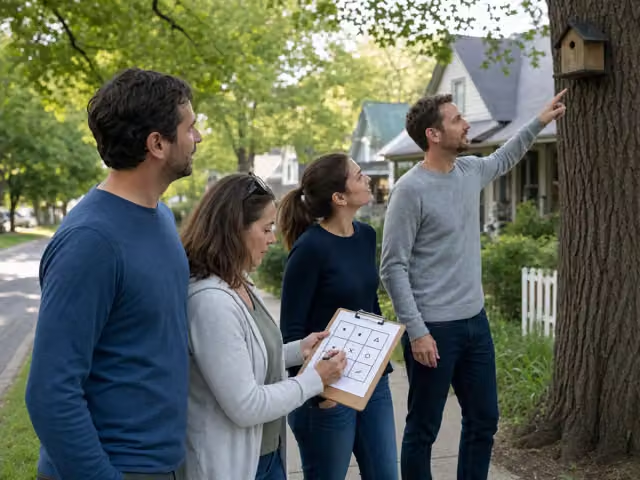
Find an item, point it out and mark its square. Four squares across, down or along a corner-to-corner diagonal makes a line. At the route's end, most complete lines wins; if tied, most marked squares wins, then share any remaining tie. One physical object can fill only one square per card.
Saved on this device only — clearing your browser's cache or site data removes them (no account backup).
Build cards for this route
Pick a public loop with sidewalks or an appropriate park path and a clear start/end landmark. Plan a short outing that suits everyone's walking pace. Check the route first, including crossings and access, and choose sixteen likely observations rather than rare sights that force a detour.
For a ready starting pool, use: a bench; a bicycle; a bird; a red door; a flower planter; a curved path; a metal fence; a brick wall; a street-name sign; an arrow; a tree with exposed roots; a round window; a public noticeboard; a mural; a dog accompanied by its person; and a drain cover. Replace unavailable items before making cards.
Draw a four-by-four grid for each person. Put all sixteen items once on every card, shuffling their positions so cards differ. There is no free square. Explain that the game ends when the whole group reaches the finish landmark, even if nobody completes a line.
Walk, verify and mark
Begin from the landmark
Keep cards unmarked until the host says start. Walk the selected route together. There are no formal turns: anyone may point out an observation from the public path, and everyone who sees it may use it on their own card.
Assign one object to one square
Say what you found and show another walker before marking. If a mural is on a brick wall, choose which square that specific object fills on your card; find a different example for the other square. The same object can score for different players. No collecting, photography or approaching strangers is required.
Keep a visible record
Cross off the square and jot a short location cue if needed, such as 'bench by the corner.' Earlier memories do not count: you must observe the item during this walk. Do not switch an already credited object to a different square later to manufacture a line.
Count at the finish
A line is four marked squares in a row, column or either full corner-to-corner diagonal. A square may contribute to several completed lines. Keep walking after the first bingo. At the end, compare verified lines, then marked-square counts to break a line tie. Equal counts share the win. If nobody has a line, marked squares decide. Reset with new unmarked arrangements for another loop.
Keep the walk together
Pause somewhere clear of passing pedestrians to check cards. Crossings are for crossing, not stopping to search. Stay on the planned public route; a target on private property can be observed from the path if visible but never requires entry.
If an item is ambiguous, settle its meaning for everybody before crediting it. If an access change makes the route unusable, finish together at a new announced endpoint and count the marks already earned. Avoid changing card contents midwalk to help a particular player finish.
Already know the game?
Ideas & Twists
Choose a variation together before you start.
Neighborhood bingo walk · See main rules
Suggested house variationFirst-line round
Keep individual cards but end scoring when the first verified line appears. Pause at a suitable spot and verify all lines completed from that same sighting; simultaneous finishers share the win. If the endpoint arrives first, most marked squares wins with shared ties. Then put cards away and finish the walk together, so an early bingo never leaves anyone walking alone.
About this guide
This is a proposed house format for a group walk. NPS observation bingo uses found things, a completed line and continued play for more lines or all squares. Our four-by-four layout, route, verification, duplicate-object rule, scoring and variations are specific choices; the NPS activity uses five-in-a-row.
Ready for something different?
Find another game →