

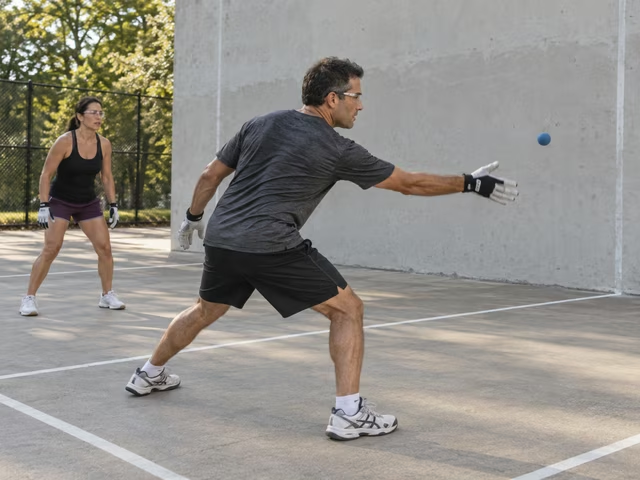
The quick version
Serve the ball against the wall so its first bounce passes the short line. Opponents alternate hand strikes, returning to the wall before the second ground bounce. The ball must stay within the court. Only the server scores; if the receiver wins, they take over service without a point. First to 21 with a two-point lead wins this house game.
Saved on this device only — clearing your browser's cache or site data removes them (no account backup).
Use a court with clear boundaries
Choose a proper one-wall court with a smooth, unobstructed playing surface and run-off. The standard wall is 20 feet wide and 16 feet high; the floor court is 20 feet wide and 34 feet long. The short line lies 16 feet from the wall and the service area's rear line at 20 feet. Identify the painted boundaries before starting. Do not borrow a wall facing traffic, windows or pedestrians.
Use a handball intended for big-ball one-wall play and wear protective sports eyewear. New players can choose handball gloves. Toss for first serve. This house game uses two attempts for every invalid serve, replayed accidental interference and a 21-point, win-by-two finish; formal USHA competition has more detailed fault and match procedures.
Return to the wall, then make room
Serve from the marked box
Stand between the short line and the service rear line, inside the sidelines. Announce your score first. Drop the ball, let it bounce once, then strike with one hand so it hits inside the wall boundaries and next lands beyond the short line but before the back boundary. The receiver waits behind the service rear line and lets this first bounce happen.
Use one clean hand strike
After the serve, alternate shots. Strike after one ground bounce or volley before that bounce. The ball must hit the wall before the floor and its first ground bounce after the wall must remain in bounds. No catches, carries or second hits. Either hand can be used.
Call the end of the rally
A double bounce, floor-before-wall shot, missed return, body contact or out ball loses the rally. Boundary lines count in for this house format. If the server wins, add one and serve again. If the receiver wins, switch service with no point. A missed serve uses the second attempt; two invalid serves hand service over.
Replay interference early
After a shot, clear your opponent's direct route and swing. Call 'stop' before hitting if someone is in danger. Accidental blocking, a loose ball or an uncertain line call replays the rally with the same score and server. This friendly replay rule is not an invitation to obstruct deliberately; repeat problems mean stopping to change positioning.
Earn the last point on your serve
Reach at least 21 with a two-point lead. At 20–20, continue until somebody leads by two; there is no sudden-death cap. Because only the server scores, winning a return rally changes the opportunity rather than the score. For example, receiving at 19–20 and winning makes you the server, still trailing 19–20.
Start with a reachable bounce
Make a few cooperative returns before scoring so both people can judge the ball and wall. Keep the first serves central and moderate. A low winner is legal, but a reachable opening is usually more useful for new partners. Pause if the court becomes wet or crowded.
GAA Handball's adult Social Handball program and the adult one-wall session recorded by Kevin's club show real routes into social play. Check the actual local session's ball, court and rules: 'handball' can also mean the unrelated goal-scoring team sport.
Already know the game?
Ideas & Twists
Choose a variation together before you start.
One-wall handball · See main rules
Suggested house variationEvery rally scores
Award one point to whoever wins each rally, whether serving or receiving. The rally winner serves next. Keep the two-attempt service rule and interference replays. Play to 15, win by two. This changes the value of receiving well and gives the game a more direct score progression.
One-wall handball · See main rules
Suggested house variationLet it bounce
Require exactly one ground bounce after every wall contact before the next hand strike. Volleys now lose the rally, including a ball caught too early in a fast exchange. Keep the main side-out scoring and finish. Players must read the landing and move into position rather than taking the ball early.
One-wall handball · See main rules
Suggested house variationAlternate hands
Each player must switch the striking hand after each of their own shots in a rally. The server starts with their chosen hand; the receiver chooses independently on their first return. Using the wrong hand loses the rally. Reset hand choice each serve and keep the normal scoring to 21. Use a slower suitable ball if both agree before the game.
One-wall handball · See main rules
Suggested house variationAlternate-shot partners
Four players form two pairs. Within each team, alternate every return, keeping that team's next hitter through changes of service. The next hitter serves when their team gains service. Give one side-out for the team, not separate turns for both partners. Use the same scoring and finish. Everyone clears the hitting lane promptly and calls stop before a collision risk.
About this guide
USHA supplies court identity and equipment guidance; International OneWall's short introduction supplies a readable basic play model. This guide explicitly standardizes service faults, boundary lines, interference and the finish as a friendly house format rather than claiming full federation equivalence. Variations are editorial suggestions.
Ready for something different?
Find another game →