

The quick version
Choose one film and confirm lawful access on the actual playback device. Secure the screen, place chairs with clear views, and keep equipment and cables outside the walking route. After dark, test the actual film and dialogue from every seat. Agree on captions, quiet viewing and how to ask for a pause. Start from the beginning, watch together and finish at the credits. Move indoors or stop if weather, equipment or noise makes the outdoor setup unsuitable.
Saved on this device only — clearing your browser's cache or site data removes them (no account backup).
Choose the film and invite a small group
Invite 4–8 people total, counting yourself. Choose one person to operate playback and monitor conditions; the host can also watch. There is no purchased game edition or official movie-night rulebook. This is a house hosting format for one film, with the exact film version and hardware selected before the invitation.
Offer a small shortlist, check content preferences privately and choose a title everyone is comfortable watching. Tell guests its version, language, listed running time and whether captions or audio description are available on your actual copy. Check the running time against darkness and local quiet hours; do not promise a fixed whole-evening duration. Say when to arrive, what seating you provide, whether they should bring a blanket, and whether poor weather means moving inside or postponing. Snacks are optional; ask about allergies if providing them.
Use a lawfully obtained disc with a compatible player, or authorized streaming access on a supported laptop, subject to the service's terms. Check the selected title, account, region, video output, audio and required adapters together. A projector's ability to display a laptop desktop does not prove it can play a particular service's film. Do not assume phone mirroring or a downloaded title will work. If streaming, test the connection from the intended backyard position. A lawfully playable disc is an alternative when connectivity is unreliable.
Keep this a private gathering of your own friends at home. A film purchase, rental or subscription does not establish public screening rights. Advertising a neighborhood event, opening attendance or changing venue calls for a separate rights check with the rightsholder or licensing provider and the venue. This guide does not grant screening permission; rules and service terms depend on the location and use.
Bring a complete playback chain
The main format needs one projector, one portable screen with every support or anchor specified by its manufacturer, one compatible laptop or disc player, one video cable with any necessary adapters, one lawfully accessible film, and one compatible powered wired speaker with its audio cable. Integrated apps or projector speakers are different equipment arrangements; do not assume they replace these items without a full test. Keep the appropriate remote or playback controls at the host's seat.
Provide stable supports for the projector, player and speaker, their suitable power supplies, a usable GFCI-protected outlet, and an outdoor-rated extension cord rated for the equipment's load. Inspect cords before use. Protect connections from moisture with products suitable for their intended use, following their instructions; household indoor power strips are not outdoor protection. Route power, video and audio cables around the perimeter, away from feet and chair legs. Do not use damaged gear, overload cords or improvise a wet-weather electrical setup.
Provide exactly one chair per person: four chairs for four people through eight chairs for eight. Add a separate battery light for the route to the house and bathroom. The yard must fit seats, the screen's supports, the projector's required distance and a clear side route. A larger image is not automatically a better one. Blankets, cushions, food and drinks are optional, and liquids stay away from equipment.
Rehearse the outdoor setup
Check the forecast and the screen and electronics instructions before carrying equipment out. Set up on stable, dry ground. Secure the screen as specified, and choose a calm evening; wind that moves the screen or threatens its supports is a reason to stop. Keep electronics dry and their ventilation clear. A blanket over a projector is not a weather cover. If conditions change, people take priority over retrieving equipment.
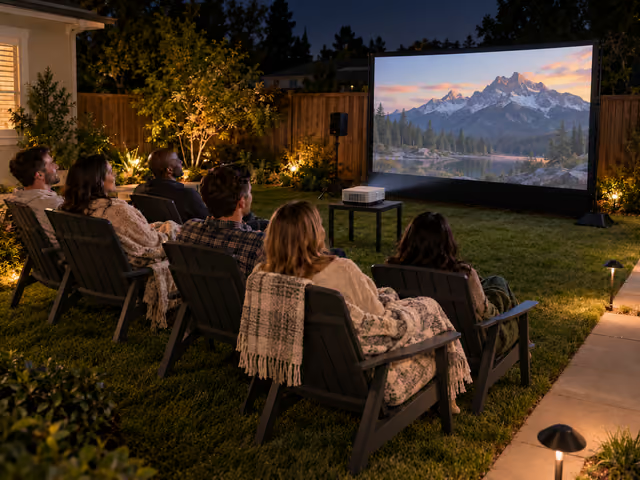
Place the projector squarely toward the screen at the distance required by that model and image size. Keep its beam clear of heads and the walking route. Stagger chairs so each person sees the whole picture, including captions, and keep support feet and any anchors out of traffic. Arrange the speaker toward the seats. Keep a visible route to the house while aiming lights away from the screen.
Rehearse after dark in the actual position before the event. Start the chosen title, check focus and picture edges, play a quiet dialogue scene, and listen from every seat at a neighbor-considerate volume. Check for sound arriving late relative to moving lips. Test pause, resume and captions or audio description if requested. Wired audio avoids relying on Bluetooth pairing, but it still needs a compatibility and sound check.
If the image is washed out, reduce light falling on the screen or wait for greater darkness; do not remove necessary path lighting. If dialogue or captions cannot be followed, adjust the setup or move inside rather than simply raising the volume. Confirm the whole group fits the tested seating area. Equipment specifications and a photo cannot guarantee your yard will work.
Settle in, start and watch together
Welcome everyone and check the seats
Show the bathroom route and where drinks can go. Ask each person whether they can see the full screen and hear dialogue. Set captions and any supported audio-description option by agreement, with the people who need them involved. Adjust seats before starting; a seated format is not a promise of accessibility.
Explain the viewing agreement
The host holds playback controls. Anyone may ask for a pause for comfort, access or a technical problem; the host pauses at once when needed. Keep extended conversations for a pause or after the film, avoid spoilers and keep bright personal screens dim or put away. Normal laughter and reactions are welcome. Anyone can step away or leave without a penalty.
Take the first action
When everyone is ready and the outdoor test passes, the host returns the selected film to its beginning and presses play. The main format has no scheduled intermission. If a pause is requested, pause, say where playback has stopped, and confirm people are ready before resuming from that point. Do not skip missed scenes without agreement.
Finish at the credits
When the film ends, let anyone who wants to watch the credits do so, then stop playback. Optional conversation follows; there is no winner, score or tie. Bring up the path light, follow the equipment's shutdown and cooling instructions, disconnect safely when conditions allow, and share chair, litter and screen pack-up. Leave the yard and route clear.
'We are watching this version from the beginning. Tell me if the picture, sound or captions do not work for you, or if you need a pause. We will keep longer conversation for breaks and the end.'
Handle interruptions and changing conditions
If guests want different films, resolve the choice before setup; use the genre ballot variation if useful. Someone may decline a title privately. Replace it with a mutually acceptable choice, move the viewing to another night or let that person opt out. Treat a caption request as a viewing need to solve, not a vote to exclude someone. For chatter or spoilers, remind people of the agreement and offer a conversation pause; do not impose game penalties.
If playback fails, pause the evening and explain the problem. Check the selected input, cable connections, player output and audio path according to their instructions. Test a lawfully available alternative only if everyone agrees. Do not bypass copy protection or treat a working menu as proof the film will work. If the issue cannot be resolved, move to a tested indoor setup or end and reschedule. Resume a stopped film from the agreed position; there is no need to replay the whole evening.
Stop outdoor viewing for rain, moisture around electrics, unsafe wind, an unstable screen, unacceptable noise or anyone's immediate safety need. If thunder is heard, go promptly into the house or other substantial safe shelter; a porch, canopy or tree is not the shelter plan. Do not delay for equipment. National Weather Service guidance says to stay sheltered for at least 30 minutes after the last thunder. For this evening, moving inside or ending is the simpler house default.
Check local noise requirements before hosting and give nearby neighbors a considerate heads-up without turning this into an open event. Set the volume from the least favorable seat and check it near the property edge. If a neighbor raises a noise problem, pause and reduce it; if everyone cannot still follow the film, move inside or stop. Borrow or use compatible equipment you can rehearse before considering upgrades. No projector brightness, wireless range, battery life or weather resistance is promised here.
Already know the game?
Ideas & Twists
Choose a variation together before you start.
Outdoor movie night · See main rules
House film-selection variationGenre ballot
Choose a genre together, then the host confirms lawful access to three suitable titles and announces each version, language and listed running time. Give everyone one vote, including the host; count openly. Most votes selects the film. If tied, hold one runoff restricted to tied titles. If still tied, the host chooses among the tied titles, as agreed before voting. Resolve any private content objection before the ballot; do not use a vote to override it. Watch one film with the main setup, pauses and finish. No extra gear is needed; votes can be spoken or shown by hands.
Outdoor movie night · See main rules
House pacing variationOne planned intermission
Before playback, agree on one approximate midpoint break and its purpose: stretch, refill water or talk. The host notes a suitable scene transition near the midpoint and pauses there without spoiling it in advance. Keep the position unchanged. Everyone can step away; the host checks readiness before resuming, and the film still ends at its credits. The break adds an unspecified amount of time, so check quiet hours when choosing the film. Anyone may still request an additional access or comfort pause. This changes the main format's absence of a scheduled break, not its equipment or weather decisions.
Outdoor movie night · See main rules
House conversation variationAfter-credits scene circle
After the film, invite each person once, in seating order, to name one memorable scene and say why it worked or did not work for them. Passing is welcome. Listeners let the speaker finish, then move to the next person; there are no correct answers or points. After everyone has spoken or passed, allow open discussion if the group wants it, then pack up. Keep discussion at a considerate volume and move indoors if needed. This adds an optional conversation finish to the main format; it does not add interruptions, a quiz or scoring during the film.
About this guide
Outdoor movie night has no universal game rules or purchased game edition. The 4–8 total, wired projector/player/speaker arrangement, viewing agreement, finish and all three variations are this guide's house format. Choose the exact film version and check the manuals for the actual equipment. Epson illustrates home hosting and device-specific playback; Netflix documents service compatibility, not a guarantee for every device. U.S. copyright sources explain public-performance boundaries, not permission for a particular screening or other countries. NWS and ESFI supply the stated weather and electrical cautions. Community discussions informed rehearsal, sound and caption advice; they are personal reports, not product specifications or evidence of popularity.
Ready for something different?
Find another game →