

The quick version
Seat 2–4 friends at one screen and join local Story mode, one chef each. Learn the controls in the tutorial, then choose an unlocked kitchen. Read the leftmost order; gather, prepare, cook and plate exactly what its icons show, then carry it to the serving hatch. Keep dishes coming back through the sink. Everyone plays at once toward one shared score. Finish three timed rounds, choosing a retry or the next available kitchen between rounds.
Saved on this device only — clearing your browser's cache or site data removes them (no account backup).
Connect the controllers and choose a kitchen
This setup uses the original Overcooked! 2 on Nintendo Switch, updated, in local Story co-op on one docked console and television. Use the base campaign in ordinary Story mode. Overcooked! All You Can Eat is a separate release; its Assist Mode and changed thresholds are not this setup. Extra campaigns and chef packs are optional.
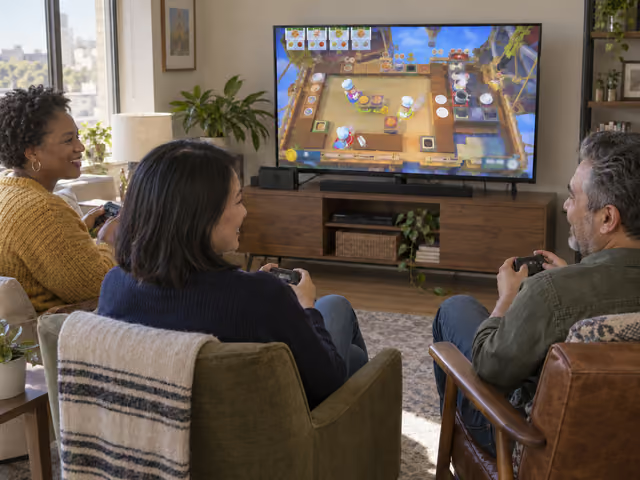
Before guests arrive, check the game launches, pair and charge one compatible controller for each person, and arrange seats so everyone can read the order icons. A single Joy-Con per person is supported; complete compatible gamepads also work. Use the displayed control prompts for the controller layout you choose. One shared console and game are used, rather than one copy per person.
Join the local lobby and select different chefs so each person can recognize their character. Open Story and choose a save slot with its owner's permission; never replace someone else's progress. New players should complete the opening tutorial together. Find movement, pick-up/drop, chop/throw and dash in the control prompts. The chop/throw action changes with the object and situation.
Agree to play three timed kitchen rounds after learning the controls. That stopping rule is a host suggestion, not a campaign rule. On the world map, drive to an unlocked kitchen; 1-1 is a useful first choice. Read its recipe introduction and visible score targets. At each result screen, choose together whether the next round will retry that kitchen or use the next available one. A retry counts as one of the three rounds.
Follow an order from ingredients to serving
Read the first ticket
Everyone acts simultaneously; there are no player turns. Start with the leftmost order at the top of the screen. Its ingredient and preparation icons tell you what belongs in the dish. Point out ingredient crates, chopping boards, any cooking stations, clean plates, serving hatch, sink and bin. Say who will prepare ingredients and who will plate and serve; add a cook or dishwashing helper when there are more players.
Gather and prepare
Move to the required crate and pick up an ingredient. Put it on a chopping board when the recipe requires chopping, then use the chop action until preparation finishes. Carry prepared ingredients onward. Throw ingredients across a gap when helpful, aiming at a teammate or clear landing place; plates and cooking containers must be carried. Do not send a teammate a pile of ingredients they have nowhere to put.
Cook only what needs cooking
Load the appropriate pot or pan and put it on its cooking station. While it cooks, do another job but watch its progress. Remove it when ready, before it burns. Some recipes use uncooked ingredients; follow the icons rather than cooking everything. Transfer finished food to a clean plate, either bringing the container to the plate or the plate to the container, and add the remaining required ingredients.
Serve and keep supplies moving
Carry the complete plated dish to the serving hatch and use pick-up/drop to deliver it. Aim to serve tickets from left to right for the order-sequence bonus. After plates return dirty, bring them to the sink and use the wash action, then return clean plates to the preparation area. On kitchens with dirty dishes, a ready meal is useless if every plate is waiting to be washed.
Recover and finish the round
If a pan burns, use the extinguisher on the flames, empty ruined food into the bin and prepare a replacement. If a chef falls, wait for the game to return them while the others keep working. Once a ticket expires, look at the remaining orders and choose the next useful task. When the kitchen clock reaches zero, stop and read the result screen together; only deliveries accepted by the game count.
For a fish sushi ticket showing fish, rice and seaweed, chop the fish, cook the rice in a pot, combine those with seaweed on a clean plate, then serve. The recipe icons decide the actual dish: a sashimi ticket needs chopped seafood on a plate and does not call for rice or seaweed.
Use the shared score and stop after three rounds
The game calculates one team score from accepted orders, tips and missed-order penalties. Faster service earns better tips; serving in the ticket sequence builds a bonus. An incorrect dish does not complete the intended order. Do not add points by hand or award individual chef scores. Use the displayed total and stars for that kitchen and player count.
Story awards up to three stars in ordinary play according to its displayed targets. Progress also depends on the stars and routes already unlocked on that save. If the next kitchen is locked, read its requirement and replay an available kitchen; retries remain part of tonight's three rounds. New Game+ has a fourth-star challenge, which belongs to a later session rather than a beginner's target.
After each round, name one useful change: wash sooner, keep the leftmost ticket moving or stop crossing another chef's work area. At the end of round three, finish tonight's session on the result screen or world map. There is no individual winner or tie-break in co-op. If you replayed the same kitchen with the same player count, compare its displayed scores; equal scores are simply equal team performances. Scores from different kitchens or headcounts are not a fair comparison.
Give each chef a useful job
With two people, try one on preparation and one on cooking, plating and dishes, then help when the other side backs up. With three, separate preparation, cooking and serving/dishes. With four, give washing its own helper when needed. These are starting plans, not character powers: anyone can take over a reachable job. Reassign tasks when a kitchen splits the team or changes layout.
Use short, helpful calls such as 'one fish next', 'rice ready' and 'washing plates'. Ordinary soft conversation and reduced game volume are enough; shouting is not a rule. Give a newcomer a clear task they want to try, explain the order bonus before holding their finished plate, and discuss changes between rounds. Help should sound like a request, not a running critique.
If two people keep fetching the same ingredient, agree who handles it. If nobody serves, give someone the hatch and order list. If the kitchen becomes confusing, pause and point out the next ticket and available stations before resuming. Do not take a person's controller or restart the team's round without agreement.
The game settles accepted deliveries, penalties and stars. A nearly completed plate at the buzzer is not an extra score. If a controller disconnects, pause and reconnect it. If the game closes or the attempt cannot be recovered, this guide suggests replaying that interrupted round without counting it against the three. Keep learning and completed results separate from an interrupted attempt.
Already know the game?
Ideas & Twists
Choose a variation together before you start.
Overcooked! 2 · See main rules
Official mode with a house finishPractice kitchen
Choose an unlocked campaign kitchen and select its Practice option from the world-map prompts. This mode replaces the normal time limit with unlimited time and orders. Keep the same chefs and cooking actions, and aim to serve five correct dishes together; count those deliveries aloud, then pause and quit that practice kitchen. Five dishes is this guide's stopping suggestion. Treat it as learning rather than a timed score or campaign-star attempt. Useful for learning a new recipe or controller before returning to Story.
Overcooked! 2 · See main rules
House teamwork challengeRole-swap replay
Use one already unlocked kitchen for all three timed rounds, with the same players and ordinary scoring. Agree on jobs before round one. At each result screen, rotate preparation, cooking and serving/dish duties so everyone tries a different responsibility; with two people, swap the two broad jobs each time. Retrying is allowed only between completed rounds, and all three count. Finish after the third result, keeping the best displayed team score. Equal scores stay equal; the aim is to discover a better shared plan, not rank individual chefs.
Overcooked! 2 · See main rules
Official co-op mode with a house session lengthArcade shuffle
Replace Story with Arcade's local co-op option on the same console. Choose a kitchen theme together; the game picks the stage. Join as one team, use its recipe prompts, and play with the normal timer and automatic scoring. Choose a theme again for each of three completed rounds, then stop. Arcade provides a kitchen session without driving through Story progression. Treat each result separately; do not total random-stage scores into a contest. This variation uses co-op, not the separate Versus mode.
About this guide
Original Overcooked! 2 local co-op rules and modes are explained here. The three-round session, five-delivery practice finish, job rotation and interrupted-round replay are host suggestions. Follow the game's control prompts, score targets and available kitchens. The image is a generated social illustration with a cooking-game display, not an authentic gameplay capture.
- Team17 · original Overcooked! 2 FAQ ↗
- Nintendo · Switch local play and controllers ↗
- Team17 · order combos, Arcade and kitchen changes ↗
- Ghost Town Games · throwing ingredients ↗
- Team17 · Practice mode update ↗
- Bennerhed and Sivertsson · firsthand Switch gameplay analysis, Appendix B ↗
- Thavamuni and colleagues · recipe icons and scored deliveries ↗
Ready for something different?
Find another game →