

The quick version
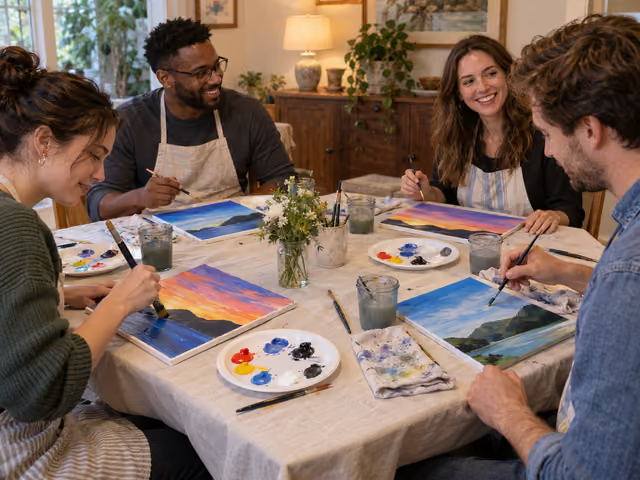
Give each painter their own canvas board, two brushes, palette, rinse cup and rag. Agree on the prompt and stopping point. Demonstrate a broad stroke and a small detail. Everyone paints a background, lets it dry enough for another layer, then adds a large shape and a personal detail. At the agreed stop, offer an optional share-out, protect wet paintings and clean the tools. The main format has no scores or winner.
Saved on this device only — clearing your browser's cache or site data removes them (no account backup).
Give everyone a complete painting place
Count the host among the 2–8 painters; no extra instructor or judge is required. Set one seat and an individual work space for each person at an indoor table. Every painter needs a small pre-primed canvas board, a flat brush for broad areas, a small round brush for details, a palette or reusable plate, a stable rinse-water cup and a wiping rag. A 9×12-inch board is this guide's suggested size; use the same size for everyone. Easels and aprons are optional.
Share water-based acrylic paint in red, yellow, blue, white and black, plus one extra pre-primed board for the host's demonstration. Set out clean water, soap and a container for paint waste. Protect the table and nearby surfaces with a suitable cover. Keep paint and rinse cups apart from food and drink. Read the paint labels and arrange ventilation appropriate to the materials.
Leave a protected place for each wet board to rest flat. Check that everyone can reach their materials and see the demonstration without leaning over another painting. A seated setup still needs hand movement, vision and room to work; discuss individual needs rather than assuming it suits everybody.
Agree on the picture and the finish
For a first gathering, use the shared prompt a sky above rounded hills. Everyone begins with that idea but chooses their own colors, number of hills and final detail. The host should try this simple sequence on the demonstration board beforehand with the actual paints and brushes. It is an original starting exercise, not an instruction to copy a commercial class or someone else's artwork.
Before painting, agree on when the host will call the final-detail stage and cleanup, using the group's available evening rather than a promised number of minutes. Say that the picture may remain unfinished and that sharing it is optional. Give everyone a chance to ask questions. Do not make exact likeness to the host's picture a requirement.
Put small, separate dabs of the five paints on each palette and refill as needed. Keep unused paint containers closed. Have the host show how to dip a brush in water, blot it, load a little paint and pull one broad stroke on the demonstration board, then show a small mark with the round brush. Painters can practice on a corner of their own board that will later become background.
Paint together, one layer at a time
Lay in the sky
Choose a sky color. On the palette, mix a small amount of blue with white for a light sky, or use another color you prefer. With the flat brush, spread a thin layer over the upper part of the board; leave the lower area for hills. Rinse and blot the brush before changing colors. Use a damp brush rather than flooding the paint with water.
Pause before overlapping
Check whether the background can take another layer without smearing; test on the demonstration board or an inconspicuous edge. If it is still wet, wait, talk or mix a fresh color on the palette. People work at different speeds: the host checks whether anyone wants help before explaining the next stage. Drying depends on paint thickness and conditions, so there is no fixed waiting-time rule.
Add a large shape
Use the flat brush to paint one rounded hill across the lower part of the board. Keep it a different lightness or color from the sky so its outline shows. Add another hill if you want, letting overlapping layers dry as needed. Everyone works on their own board at the same time; there are no turns or compulsory swaps in the main format.
Make it your version
With the round brush, add a small detail such as a sun, a cloud, a winding path or a simple tree. The host shows the chosen mark on the demonstration board if someone asks. A painter may change the starting idea or stop with just the sky and hills. Ask permission before offering a correction or touching another person's work.
Say: 'We start with a sky, add a hill when the background can take another layer, and choose our own final detail. Yours can look different from mine. Ask for a demonstration whenever you want.'
Share, dry and clean up
When the agreed final-detail stage arrives, invite painters to finish the mark they are working on. Call brushes down at the agreed cleanup point. Anyone who wants can show their painting from their seat and name one choice they made; passing is fine. Leave wet boards flat rather than requiring a standing gallery walk. There are no points, ranked results or ties to resolve. Making, sharing and putting the space back in order complete the gathering.
The painter keeps their own board. Ask before taking or sharing a photograph of people or their work. Drying may continue after the social session; leave a wet painting in its protected place for later collection, or carry it flat on a support without touching or stacking the painted faces. Do not assume it is ready to pack because the evening has ended.
Wipe excess paint from brushes and palettes into the paint-waste container before it dries, then clean the tools with soapy water according to their labels. Collect leftover paint and settled paint sludge rather than pouring them down the sink; check local disposal guidance for the products used. Empty and put away the rinse cups, wipe the protected table, and wash hands. Cleanup is shared by the painters, including the host.
Help without taking over
Stay with a few large shapes for the first session. Demonstrate a difficult mark on the extra board instead of repainting a guest's picture. Ask, 'Would you like a suggestion, a demonstration, or time to work?' An experienced painter can help when invited or pursue their own version. Guests who finish early can chat or experiment on their own board; they do not decide that everyone else is finished.
If colors become muddy, wipe and rinse the brush, blot it, and mix a fresh small dab on a clean part of the palette. If a layer smears, stop adding to that area and let it dry. A shape can be left as it is, incorporated into the picture, or covered with a suitable opaque color once dry; covering may need another layer. Different paint colors cover differently, so test on the demonstration board.
If someone dislikes their result, offer choices rather than a grade. Changing the prompt or leaving the picture unfinished does not disqualify anyone. Settle disagreements about advice, board ownership or sharing with the painter's consent. Only touch or pass a board with permission; if someone declines a twist, keep their independent painting place. This gathering has no penalties or official competition rules.
Already know the game?
Ideas & Twists
Choose a variation together before you start.
Paint night · See main rules
House suggestionOne-color mood study
Replace the five-color palette with one chosen colored acrylic plus white and black; all other materials stay the same. Each painter makes at least three lightness variations on their palette and uses them to turn the sky-and-hills idea into a mood such as misty, bright or stormy. Mix before applying and test contrasting areas; follow the same layer pauses. Share the intended mood if you want at the usual finish. There is still no score, and each painter keeps their own board.
Paint night · See main rules
House suggestionPass the landscape
Use this only when everyone agrees to other people painting on their board. Seat the 2–8 painters in a fixed circle and keep brushes, palettes and rinse cups at their own places. Each owner paints a background first. Once every board is ready for another layer, pass boards one place to the left. Each receiver adds one large feature, avoiding the existing features unless the owner agreed otherwise. Wait for layers as needed, then pass again. After exactly one visit to each other painter, pass once more to return every board to its original owner; the host tracks the visits aloud. With four painters there are three guest additions before return; with two there is one. Owners add a final detail and keep their own collaborative board. Use the usual sharing and cleanup finish with no winner; stop before completing the circuit if the agreed cleanup point arrives, return boards to owners, and call the pictures unfinished.
Paint night · See main rules
House suggestionConnected panorama
Before painting, line up everyone's same-size boards left to right and decide their permanent order. Agree where the horizon meets each neighboring edge, using a finger to indicate the height; do not paint a continuous stroke across someone else's board. Each person then paints their own segment at their own place, matching that edge height while choosing their own hills, colors and details. Check the joins by setting boards side by side without letting wet faces touch, then return them to their painters for adjustments. At the normal finish, display the segments in order as one panorama; keeping the image connected is a shared aim, not a score. Each painter still owns their board. No extra paints, tools or judge are needed.
About this guide
This is a host-authored acrylic gathering, not a purchased game edition or branded class curriculum. Painting providers establish the materials context; Liquitex supports the acrylic handling, opacity and cleanup notes. The 2–8 range, per-person packing, original sky-and-hills sequence, consent practices, finish and three twists are house suggestions. Community reports inform pacing and helpful hosting; they do not establish rules, popularity or a guaranteed experience.
Ready for something different?
Find another game →