

The quick version
Deal three hidden cards and six private cards to each person; choose three private cards to expose on top of the hidden ones. Keep the other three in hand. The dealer's left neighbor starts, then turns move clockwise. Play one card or matching ranks equal to or above the pile, or take the pile. Two resets; ten and four consecutive matching ranks clear the pile and let you play again. Refill your hand to three while the draw deck lasts. Empty your hand before using exposed cards, then reveal hidden cards one at a time. First completely out wins.
Saved on this device only — clearing your browser's cache or site data removes them (no account backup).
Give everyone a hand and a hidden ending
Seat two to five people around an indoor table. Bring one complete 52-card French-suited deck, remove both jokers, and leave room for three two-card stacks in front of each person, one central draw deck, one play pile and a separate cleared-card area. No score sheet, timer or device is needed.
This is a declared one-deck Palace format: three hidden cards, three exposed cards and a three-card hand; wild twos and tens; clockwise turns; extra turns after either kind of clear; first person out wins. The dealer's left neighbor starts as a house convention. Sevens, eights and all other ordinary ranks have no special powers. Agree to this format before dealing, because familiar groups often use different Palace rules.
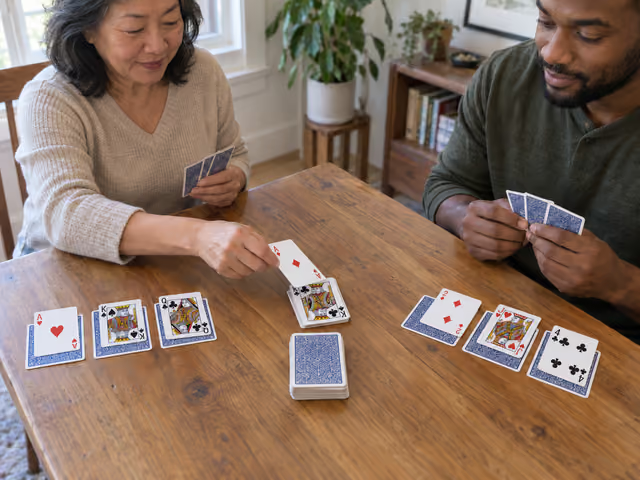
Choose a dealer, shuffle and deal three cards face down in a row to each person. Nobody looks at those cards. Deal each person six additional cards privately. Each person chooses three of those six and places one face up on each of their hidden cards, leaving the underlying card visibly separate. Keep the other three in hand. Once everyone is ready, the exposed cards stay fixed until the endgame; do not exchange them with later draws.
Put the undealt cards face down in the center as the draw deck. The play pile begins empty; do not turn over a starter card. With two, three, four or five players, the draw deck begins with 34, 25, 16 or seven cards respectively. High ranks, twos and tens are useful exposed choices, but your hidden cards remain a surprise.
Know what can follow the pile
Suits do not affect a play. Ordinary ranks climb from 3 through 9, then jack, queen, king and ace. A card must equal or exceed the top rank. For example, a 9 accepts another 9, a jack, queen, king or ace; it also accepts either special rank below. An empty pile accepts any card.
- Two: legal on any top card. It stays on the pile, and the next player may play any rank. A two does not itself give an extra turn.
- Ten: legal on any top card, including an ace. Remove the whole play pile, including the ten, to the cleared-card area. Those cards never return to the draw deck. Refill if necessary, then take a fresh turn on an empty pile.
- Four matching ranks: when the top four consecutive cards share one rank, clear the entire pile and take a fresh turn. One player can supply all four, or successive players can complete them. A lower unrelated card buried underneath does not break the top-four run; an intervening different rank does.
You may play several cards together only if they all have the same rank and that rank is legal. A pair of queens can follow a jack; a 9 and queen cannot be combined. Nobody may add cards out of turn. If you clear with four twos, you receive the clearing turn; a single two merely passes play clockwise.
Play, refill and work through your three layers
Start the empty pile
The person immediately clockwise from the dealer plays any card, or a group of one rank, from their hand. Refill that hand to three if it now holds fewer than three cards and draws remain. Turns normally pass clockwise; a clear gives its player another turn.
Choose a legal play or take the pile
If you began this turn with a hand, use only that hand. Play a legal card or same-rank group. Alternatively, pick up the entire play pile, even if you could play; that ends your turn. Do not draw instead of picking up and do not immediately replay a card you just collected. The next person starts an empty pile. If the pile is already empty and you have a hand, play something rather than passing.
Refill before the next turn
After playing from hand, draw enough cards to restore a hand of three, or take all remaining draws if fewer are available. A hand larger than three stays larger; never discard down to three. Refill before a clearing extra turn. Once the draw deck is exhausted it stays exhausted, and hands can finally shrink to zero.
Move to exposed cards
Only a fresh turn that begins with no hand and an empty draw deck permits exposed-card play. Choose a legal exposed card or several exposed cards of one legal rank. If you cannot or choose not to play, add one exposed card of your choice to the pile and take the whole pile into hand. Your turn ends. Clear the new hand on later turns before returning to your remaining table cards.
Risk one hidden card
Once your hand and exposed row are both empty, choose one still-hidden card without inspecting it first and turn it directly onto the pile. If legal, it stays there. If illegal, take it and the entire pile into hand; the next player starts a new pile. Work through that hand before revealing another hidden card. An ordinary successful reveal ends the turn, even if another hidden card might match. A clear earns a fresh turn and can reveal the next hidden card.
Recognize the finish
The first person to legally dispose of every hand, exposed and hidden card wins immediately. A final hidden card that is too low must be picked up with the pile, so it is not a win. A legal final two, ten or fourth matching card can win; needing no further cards overrides taking an extra turn. Stop the game at that winner. There are no points, equal-turn reply or tie because plays resolve one person at a time. Rotate the dealer clockwise for a new game.
'Hand first, exposed row second, hidden row last. Two resets for the next player; a clear gives you a new turn.' If your last exposed card is a ten, clear and reveal a hidden card on the new turn. If it is an ordinary two, the next person plays before you reveal anything.
Keep the pile and hidden cards honest
Keep the draw deck, play pile and cleared cards apart. When clearing, say why and move every card in the play pile; do not bury it back under the draws. Before a four-of-a-kind clear, check that the four matching cards are consecutive at the top. Two queens elsewhere in the pile cannot complete a top pair separated by an ace.
Place cards deliberately rather than slapping or throwing them. Ordinary soft conversation is enough. Keep private hands private and turn exposed cards toward their owner so everyone can inspect the ranks. Leave the three hidden positions in place; reaching the exposed card above one does not let you inspect what is underneath. Table play can be seated throughout, but card handling and recognizing ranks still matter to this group.
If an illegal hand or exposed play is noticed immediately, return the attempted cards, then make a legal play or take the pile under the applicable rule. This is a house correction, not a published penalty. If a hidden card is revealed illegally on its proper turn, use the normal pickup rule instead. If someone accidentally peeks at a still-hidden card, this guide suggests stopping that game without a winner and redealing; do not pretend the secret can be restored. Agree any different remedy before play.
For a rank dispute, read the visible card and the declared special-card rules. A two leaves the pile in play, while a ten removes it. Pickup ends a turn; a clear begins another turn. If a mistake is discovered only after further turns, pause and agree whether the visible position can be restored; otherwise redeal without a result rather than inventing a winner. Avoid changing powers halfway through a game.
Already know the game?
Ideas & Twists
Choose a variation together before you start.
Palace · See main rules
House variation inspired by reported Palace rulesSeven goes low
Give sevens one new power: a seven must itself be played legally under the usual rank rule, then the next ordinary play must be 7 or lower. Twos and tens remain legal on anything; a two restores unrestricted ascending play and a ten clears. Another seven continues the low requirement; after an ordinary 3, 4, 5 or 6, normal equal-or-higher play resumes from that rank. Sevens do not grant another turn. Eights remain ordinary and cannot bypass a seven. Four consecutive equal cards still clear, and layers, refills and first-out finish remain unchanged. Announce this before dealing.
Palace · See main rules
Documented optional ruleKeep the exposed row when stuck
Change only exposed-card pickup: when your hand is empty and you cannot or choose not to play an exposed card, pick up the play pile without adding any exposed card. Keep your exposed row intact. Pickup still ends the turn, and you must empty the collected hand before using exposed cards again. With an empty pile, play a legal exposed card rather than passing. Hidden-card failures still collect the revealed card and pile together. Everything else, including first-out victory, stays as in the main guide.
Palace · See main rules
Documented family formatPlay to the last person with cards
Replace the immediate first-out finish with a last-person result. Someone who legally clears all three layers leaves the game; skip them in the clockwise turn order, including after clears or pickups. Continue until exactly one person still has any cards; that person is the last to finish. Record no points and assign no forfeits. A failed final hidden card keeps that person in play, while a legal final special card lets them leave immediately; the next remaining person leads if the pile cleared. With two people, the first legal exit already identifies the last person. Rotate the dealer for the next game.
About this guide
This guide declares a traditional one-deck, 2–5-person format, using Pagat's six-private-card deal variation and first-out option, wild tens from its current main rules, and a house dealer-left starter. Exposed same-rank groups follow the general matching-rank rule; blind cards are single reveals. Pickup is voluntary and a stuck exposed player contributes one exposed card, as in Pagat. Bicycle instead specifies two decks for 3–5 and passes play after a four-of-a-kind clear; those rules are not mixed in here. Seven-low here is a fully declared house version, not all of Pagat's combined seven/eight rules. Correction/redeal remedies and quiet placement advice are host suggestions. No purchased edition is required.
Ready for something different?
Find another game →