

The quick version
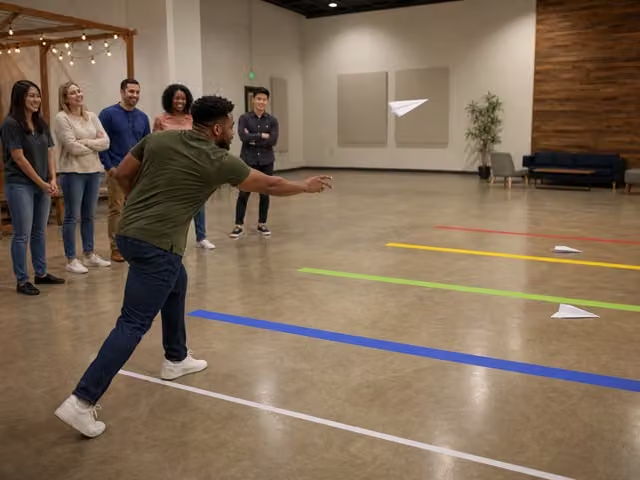
Each player builds one plane and gets a practice throw. Take three scored flights in rotation. Measure forward distance from the launch line to first floor contact; the greatest legal distance wins. Equal best distances share the win.
Saved on this device only — clearing your browser's cache or site data removes them (no account backup).
Make the lane and fold a plane
Use a room or hallway with enough empty space to glide. Move people and fragile objects out of the lane. Mark a launch line and two side boundaries, then measure the lane length. Everyone uses the same sheet size and paper weight, such as ordinary letter-size printer paper. Use folds only: no added weights, clips, tape, cuts or glued parts.
For a simple dart, place the sheet vertically. Fold it lengthwise in half and open it. Fold the two top corners to the center crease. Fold the new sloping edges to that crease again, making a narrower nose. Close the plane along the original fold with those layers inside. Fold a wing down on each side, aligning its long upper edge with the lower body edge. Open the wings slightly and check that both sides match.
Allow five minutes to fold and adjust, then one practice flight each. Players may use another folded design from the same paper. Write names on planes and record the throw order. Agree to measure in centimeters to the nearest whole centimeter.
A shorter lane may produce wall collisions before a clear winner. If practice shows that happening repeatedly, choose a longer clear space or use the landing-target variation.
Launch, measure and finish
Take the first flight
The first player stands behind the line and throws forward from a stationary stance. Do not step on or across the line before releasing. A gentle, level launch is a useful starting attempt. Everyone else stays behind the launcher.
Mark the first landing
A watcher standing safely outside the lane marks where the plane first touches the floor, before any bounce or slide. Measure perpendicular to the launch line: forward distance, not the diagonal path to the landing spot. A plane landing sideways can therefore travel less useful forward distance.
Record a legal attempt
A line foul, first landing behind the launch line or outside the side boundaries, or a collision with a wall, ceiling or object scores zero and uses the attempt. A person unexpectedly entering the lane voids the flight; clear the lane and replay it. Keep these calls the same for everyone.
Rotate three times
Retrieve planes only after the lane is clear, then give the next player a flight. Repeat the full order for rounds two and three. Players may refold their original sheet between attempts but may not substitute a fresh plane during scored play.
Compare the best flights
Circle each person's longest legal measurement from the three attempts. The greatest wins; equal measurements share the win. If all attempts score zero, no distance winner is recorded. Clear the lane and start a new set only after everyone agrees; allow fresh sheets and reset scores.
Make adjustments useful
Watch the practice flight before changing the folds. A tiny upward bend at the rear wing edges can help a dive; a small downward adjustment can help a plane that climbs and stalls. Change a little at a time and keep the wings symmetrical.
Mark contact immediately; floor sliding does not count. Keep the measurement method consistent and allow equal adjustment opportunities.
Already know the game?
Ideas & Twists
Choose a variation together before you start.
Paper-plane distance game · See main rules
Suggested house variationConsistency total
Keep three flights and all legality rules, but add each player's three forward distances instead of taking the best. Illegal attempts still contribute zero. Highest sum wins, with shared wins on equal sums. A reliable plane can now beat one spectacular flight followed by two misses.
Paper-plane distance game · See main rules
Suggested house variationLanding target
Mark a target point safely inside the lane. Use the same three flights but measure straight-line distance from the target to first floor contact; smaller is better. A foul, collision or out-of-lane landing receives a penalty distance equal to twice the lane's length. Add the three distances; lowest total wins and equal totals share the win. Announce this replacement scoring before folding.
About this guide
Exploratorium's archived paper-plane article supports folded-paper construction and small wing-edge adjustments. The simple dart and measurement contest here are a house format, not its illustrated Nakamura-lock model or official record-attempt rules. The launch line, first-contact measurement, attempt count and variations are proposed rules.
Ready for something different?
Find another game →