

The quick version
For each batch, mix 280g all-purpose flour, ½ teaspoon table salt and 3 large eggs. Knead until smooth and firm, cover and rest at least 30 minutes. Work with half at a time: roll an even sheet about 1mm thick, cut roughly 30cm lengths, dust, loosely roll and slice into 8mm ribbons. Unroll and separate them. Cook promptly in gently boiling salted water, beginning to check thin noodles around 2 minutes; the recipe suggests 3–4 minutes. Sauce, share and clean up. There is no score or winner.
Saved on this device only — clearing your browser's cache or site data removes them (no account backup).
Prepare the kitchen and one exact dough
This is a cooperative 2–6-person session making unfilled egg-pasta ribbons by hand. Use one batch for 2–4 people; for 5–6, make two separate batches. King Arthur's Fresh Pasta recipe yields 4–5 servings per batch; appetites and accompanying food vary. The people range is a hosting choice, not a recipe limit. Keep two batches separate through cooking if the pot becomes crowded.
Per batch: 280g unbleached all-purpose flour, 3 large eggs and ½ teaspoon table salt. If measuring flour by volume, use 2⅓ cups, spooned in and leveled. Have extra flour for rolling and semolina for dusting the cut ribbons. Two batches require 560g flour, 6 eggs and 1 teaspoon salt, divided equally between two doughs. This selects the all-purpose-flour option in Charlotte Rutledge's King Arthur Fresh Pasta recipe. Do not substitute the recipe's different pasta-blend quantity into this dough.
Bring: a kitchen scale or dry measuring cups, measuring spoons, mixing bowl per batch, fork, flexible scraper, dough wrap, sturdy rolling pin, sharp chef's knife and cutting board, parchment and a baking tray per batch, clean towels, stove, pot large enough for 4 quarts of water per batch, clean water, additional salt for the cooking water, stirring spoon, colander, serving bowl, plates and personal utensils. Bring a sauce already ready to serve, enough for the batches you plan; choose it with the group beforehand and follow its own preparation instructions. Also provide hand soap, washing supplies and storage containers. A sink and refrigerator must be available. A second pin and board help people work alongside one another but are optional.
Check wheat, egg and sauce ingredients with guests in advance. Keep ingredient packages available; a gluten-free or egg-free dough needs its own verified recipe and handling plan. Clear a washable rolling surface, safe knife space and a path to the stove. Nominate a willing stove cook who also joins the dough work; nobody has to use a knife or carry hot water to participate. If phones will be put away, print or write down the recipe first.
Mix, knead and let the dough relax
Wash hands and clean the work surface. Combine the measured flour and dough salt, make a broad well in the flour on the surface, and beat the eggs inside it with a fork. Gradually bring flour into the egg. Use the scraper to gather the shaggy mixture, then fold, press and knead until it is smooth and firm; the recipe gives 1–2 minutes of kneading after the dough comes together. Use the texture as the check rather than stopping with loose dry patches.
Wrap the dough tightly and rest it at least 30 minutes at room temperature. This is preparation time, not a promised length for the whole evening. During the rest, show how the pin and knife will be used and share the work fairly. Raw flour and egg dough are not for tasting. Wash hands, tools and surfaces after raw dough contact before handling ready-to-eat food.
Roll, cut and cook the ribbons
Begin with one half
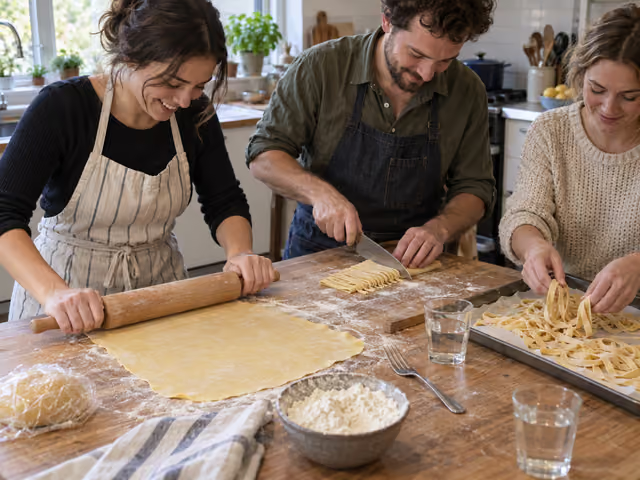
Divide a rested batch in half and keep the unused half wrapped. Dust the surface and dough. Roll from the center toward each end, lifting and turning the sheet to avoid sticking. Aim for an even sheet about 1mm thick: light should show through it. If it keeps shrinking back, cover it for another 5–10 minutes, then resume. Do not blow on shared dough to test thinness.
Cut the first sheet
Cut the sheet into roughly 30cm-long sections. Dust a section with semolina, loosely roll it up and slice across it into ribbons about 8mm wide; that width is this guide's simple house choice. Unroll and separate the strands immediately. Set them loosely on the parchment-lined, semolina-dusted tray rather than pressing them into a tight ball. Give the next willing person a rolling or cutting turn, then repeat with the covered half.
Check one noodle
Have the sauce and serving dishes ready. Bring 4 quarts of water for a batch to a boil in the large pot and season the water with salt. Lower one test ribbon into the water using a utensil. Begin checking a thin ribbon around 2 minutes; the recipe suggests 3–4 minutes. Remove it with a utensil, let it cool enough to taste and check for tender pasta with pleasant chew, not a raw floury center. If needed, adjust the remaining sheets to an even thickness before cutting.
Cook each batch promptly
Add the separated ribbons, stir gently so they do not clump and maintain a gentle boil. Use the test noodle as a guide, checking for doneness rather than applying one rigid time to every thickness. Avoid cramming both dough batches into a crowded pot; cook separately, returning the water to a boil between batches. The cook handles draining and hot vessels while everyone else leaves the stove path clear. Serve each finished batch promptly with the ready sauce.
Finish together
There are no points, eliminations or ties: the result is the food and what you learned making it. Finish when the planned dough is cooked and served, everyone who wants some has a portion, and the table and tools are cleaned. If the group stops early, agree together and safely store or discard remaining food rather than declaring a losing team. Refrigerate cooked leftovers promptly in shallow containers; do not leave raw ribbons out as a drying project.
Before everyone cuts, the host separates one ribbon and points out its flat cross-section and even thickness. People can trade the pin, take a separating turn or watch until comfortable. Passing on knife work does not mean passing on the activity.
Keep the session manageable
Make a first small sheet together before committing the whole batch. Hand rolling takes effort; one person can roll while another separates ribbons, then trade. Ask before touching someone's hands or taking over their tools. Seated dough work may help some guests, but the whole session includes stove work and kitchen transfers; assess the actual kitchen and each person's needs.
If a sheet sticks, lift it carefully and dust the contact surface. If ribbons fuse, separate them before boiling; return a badly fused portion to a sheet and recut instead of accepting a dense knot. For persistent stickiness, pause and check the ingredient measurements. Do not keep adding water or oil because another pasta recipe uses it. If a sheet tears or resists rolling, cover it for a short rest and resume gently. Irregular lengths are fine; very different thicknesses are the bigger cooking problem.
Agree that the host's dough formula and chosen width apply for this session. Different family traditions and recipes can be valid without being mixed into one batch. Settle a doneness disagreement with a cooled cooked sample; if preferences differ, cook portions separately. Neither prettier ribbons nor faster cutting determines a winner. If there is more dough than the group can finish, refrigerate it tightly wrapped for the recipe's up-to-overnight preparation option; bring it back toward room temperature for at least 30 minutes before rolling. Cut ribbons are best cooked immediately; use the linked fresh-pasta freezing method if saving them for later. Refrigerate cooked leftovers promptly in shallow containers. Perishable food, including egg dough, must not sit out longer than 2 hours, or 1 hour above 90°F; refrigerate covered dough if the session stalls.
Already know the game?
Ideas & Twists
Choose a variation together before you start.
Pasta-making night · See main rules
House learning variationCompare two ribbon widths
Split each rested dough half into two portions. Cut one at roughly 6mm and the other at roughly 15mm, keeping thickness about 1mm for both. Keep the widths on separate dusted trays and cook them separately, checking each batch rather than assuming identical cook times. Serve with the same sauce and discuss which feels better to eat; there is no vote total or winner. All dough quantities, covered rests, hygiene and cleanup stay the same. Bring a second tray or keep the two widths on separate ends of one tray.
Pasta-making night · See main rules
House tasting variationOne pasta, two sauces
Choose two ready sauces beforehand and check both ingredient lists with everyone. Bring separate serving bowls and utensils for them. Make and fully cook the main ribbon pasta, then divide it into two portions and dress each with one sauce. Offer small portions of both only to people who want them; discuss the pairings without ranking guests' preferences. Separate utensils reduce mixing, but do not promise an allergen-free kitchen. Dough, ribbon width, cooking checks and cooperative finish remain unchanged.
Pasta-making night · See main rules
House participation variationTeach the next pair
After the first sheet is cut, the roller explains the center-to-edge motion to the next willing roller, and the separator shows the next person how to open the ribbons. Rotate these roles for each dough half. Knife work remains with a willing competent person and stove work with the agreed cook; either person may change only through an explicit safe handover. Anyone can take a separating or watching role instead. Keep the same recipe, shape and unscored finish; the extra goal is that each willing guest can describe one technique before cleanup.
About this guide
The main dough selects the current King Arthur recipe's 280g all-purpose-flour option; its machine-free rolling and fresh-pasta cooking articles supply technique. There is no purchased game edition or standardized competitive rulebook. The 2–6 hosting range, batch allocation, 8mm width, role rotation, test-noodle rehearsal, meal-and-cleanup finish and variations are explicit hosting suggestions. This is hand-cut unfilled ribbon pasta, distinct from filled dumpling making. Recipes, access needs and ingredient substitutions outside this format require their own preparation plan.
Ready for something different?
Find another game →