

The quick version
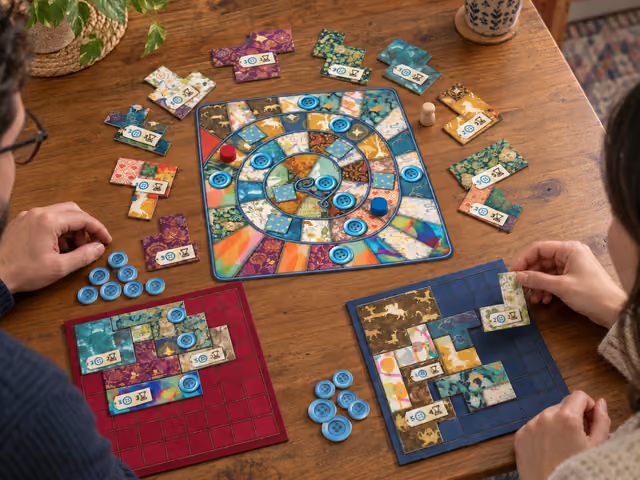
Give each player an empty quilt board, a time token and five buttons. Arrange the regular patches around the time board and put the neutral token just clockwise of the 1×2 patch. On your turn, buy one of the next three patches clockwise, or advance just beyond the other time token and collect a button per space moved. Place a purchased patch before moving your time token and collecting any income. When both tokens reach the finish, score leftover buttons plus a claimed seven-point tile, minus two for every empty quilt square. Higher score wins; a tie goes to whoever finished the time track first.
Saved on this device only — clearing your browser's cache or site data removes them (no account backup).
Set out the quilts and patch market
Use the 2025 Revised Edition's English two-player rules. Patchwork Express and Patchwork Doodle are separate games. The 2024 Anniversary box has the same two-player game and an additional solo Automa deck; that deck is not used here. If you have an older original box, check its rulebook and the publisher's time-board correction before borrowing this setup.
Each player takes one empty 9×9 quilt board and the matching red or blue time token. Give each player button currency worth five, not five tiles of any denomination. Keep the remaining currency in a common supply. The box has 32 tiles worth one, 12 worth five, five worth ten and one worth twenty. Exchange denominations as needed.
Place the time board between you; its two faces differ in appearance, so choose either. Put both time tokens at the starting space. The printed starting-player rule is whoever last used a needle. If that gives no clear answer, agree on a starter as a house setup choice and stack that player's token on top.
Mix the 33 regular patches and lay them face up in a large circle around the time board, with labels visible. Find the smallest regular patch, the 1×2 rectangle. Put the neutral token in the gap immediately after it clockwise. The first three remaining patches clockwise after the neutral token are the first player's buying choices; the 1×2 patch is behind the token, not the first choice.
Put each of the five single-square special patches on its marked time-track space. Set the seven-point special tile beside the board. Leave enough clear table area to see the whole market, both quilts and the time track. No sewing supplies, ordinary playing cards, phone or timer are needed.
Buy a patch or move forward for buttons
Find whose turn it is
The time token furthest behind goes next. If both occupy the same space, the token on top goes next. Recheck after every move: players do not automatically alternate. A player who has reached the finish waits while the other continues.
Choose one of two actions
Either buy and immediately place one of the next three remaining patches clockwise after the neutral token, or advance your time token to the space just beyond your opponent and collect one button for every space actually moved. You may choose to advance even when you could buy. If none of the eligible patches is affordable or can fit, advance; you cannot pass in place.
Complete a purchase in order
Read the patch's button price and hourglass time cost. Confirm it fits, then move the neutral token to its position, pay the button price to the supply and place the patch on your quilt. Rotate or flip it to line up with grid squares. It must fit entirely inside your board and cannot overlap another patch. It may go anywhere; touching an earlier patch or the board edge is not required. Leave it in that position for the rest of the game. Advance your time token by the printed time cost last; if you land on the other token, stack yours on top.
Update the market
The bought patch leaves the circle. Starting from the neutral token at its former position, count the next three remaining patches clockwise for the next purchase, skipping gaps. Patches you skipped stay in the market; do not discard them. Wrap around the circle when needed. If fewer than three regular patches remain, all remaining patches are eligible; with none left, use the advance action.
Resolve the track marks you reach or cross
For either action, resolve each marked event encountered along your forward move. At a button-income mark, take currency equal to the total printed button symbols on all patches already on your quilt. Count the patch you just bought because placement happened before time movement. If you cross more than one income mark, collect that income separately for each. A printed button is recurring income, not currency you may spend directly. At a special-patch space, take its single-square patch if it is still there and place it immediately in an empty square; the other player cannot claim that same patch later.
Check the seven-point reward
The first player to cover a complete 7×7 square anywhere on their quilt claims the special tile. Every one of the 49 squares must be occupied; scattered coverage or a seven-square line does not count. A regular or special patch can complete the area. Keep the tile until scoring; it is seven final points, not seven spendable buttons. Continue playing after anyone earns it.
Show the three eligible patches and point out a price, an hourglass and any income buttons. Explain: 'I pay, place, then move time.' For a spoken example, if your quilt's income was two and the new patch adds one printed button, crossing an income mark now pays three. If you are two spaces behind the other token and choose advance, you move three spaces and receive three buttons, plus any marked income you cross. Do not alter the real setup for this demonstration.
Finish both time tracks, then count the gaps
A time token stops at the final track space even if its printed movement would go farther. An advance action earns buttons only for the spaces actually traveled. If the opponent is already at the finish, advancing takes you to that same final space rather than beyond the board. Resolve marked events reached by the move, including the final income mark.
The game ends only when both time tokens have reached the finish. Filling a quilt, running short of buttons or being unable to fit a market patch does not end the game. Keep taking legal turns; use advance whenever a purchase cannot be made.
For each player, add the values of their remaining currency tiles. Add seven if they hold the special tile. Count every uncovered square on the 9×9 board and subtract two points for each. Do not add printed income symbols again, and do not award points for appearance. With 14 buttons, the special tile and five gaps, the score is 14 + 7 − 10 = 11. A score can be negative: −4 beats −9.
The higher final score wins. If scores are equal, the player who reached the final time space first wins. Remember who arrived first when it happens; a final token stack is not a reliable reminder. For a new game, empty both quilts, return all currency and patches to setup, mix a new market circle and select the starter again.
Keep the economy and placement easy to follow
Point to the time tokens before announcing whose turn it is. Read a patch's price and time aloud during the first few purchases. Keep currency beside each board so it is distinct from printed income icons. When income happens, count the icons together and then collect the currency; advance income and marked income are separate and may both occur on one move.
Consider three things before buying: whether the patch fits, how much income it can earn before the remaining income marks, and how far its time cost will move you. Early income can help fund later purchases; late in the game, coverage and leftover currency may matter more. These are planning suggestions, not a guaranteed strategy. A negative score alone does not mean you played incorrectly.
Try orientations above the board before paying. Once placed, a patch cannot be shifted to make a later purchase fit. Agree on a house correction policy before starting: this guide suggests correcting an immediately noticed illegal move before the next player acts, undoing its payment and time events and returning the patch to its exact market position. Take another legal action. For an older mistake that cannot be reconstructed, stop and agree whether to restart without a result; do not invent an official penalty.
If a single-square special patch cannot fit because your quilt is completely full, set it aside; never overlap it or move existing patches. This no-space handling is a stated host ruling for a case not expressly explained in the reviewed English rulebook. If an empty square remains, place the patch now rather than saving it for later.
Use the actual board marks and piece labels to settle disputes. The old original edition has a zero-price patch whose cost label is blank; the publisher confirms it is free, not defective. Older original time boards also place the first special patch differently; the publisher offers an optional correction and says newer prints incorporate it. This guide follows its named Revised Edition, not a guessed mix of old and new track positions.
This is a seated visual-spatial game that needs patch handling and readable symbols. Choose lighting and seating together. Check that both players can handle the pieces and read the symbols. Keep advice welcome rather than taking over the other player's decisions. For a gentler first session or a shared goal, agree on one of the clearly labeled house variations before setup.
Already know the game?
Ideas & Twists
Choose a variation together before you start.
Patchwork · See main rules
House scoring suggestion · 2 playersGentler gaps
Make each empty quilt square cost one point instead of two. Decide before setup. Keep the standard market, purchases, time order, income, special patches, seven-point tile and finish. Score remaining buttons plus any seven-point tile minus the number of empty squares. Higher score wins; a tie still goes to whoever finished the time track first. This reduces the cost of gaps and changes the value of coverage; it is not the official scoring rule.
Patchwork · See main rules
House match suggestion · 2 players; paper and penTwo-game total
Play exactly two full standard games and add each player's final scores, including negative scores. Choose the first game's starter by the usual rule or agreement; the other player starts game two. After game one, write both scores and each player's empty-square count. Reset all components and mix a fresh market circle for game two. Each game keeps its own normal finish and tie-break, but the match winner is whoever has the higher summed score. If totals tie, the player with fewer empty squares summed across both games wins; if those totals also tie, share the match result. There is no third-game tie-break. Bring paper and a pen to record both games; finish the agreed pair rather than stopping when one player wins a game.
About this guide
The main format is exactly two people with the physical 2025 Revised Edition. Its English rulebook governs setup, time-based turns, purchases, track events, seven-point reward, scoring and tie-break. The publisher identifies the 2024 Anniversary Edition's additional solo deck and the older original's optional track correction; neither changes this named setup. The rehearsal, strategy advice, unclear-starter choice, mistake remedy, exhausted-market explanation and full-quilt special-patch ruling are host guidance, with that last edge case not expressly resolved in the reviewed book. All three variations are house suggestions; only Gentler gaps takes inspiration from a reported community house rule. No Automa, Express, Doodle, promo card or app rules are imported.
Ready for something different?
Find another game →