

The quick version
Choose a short outdoor route, two places to pause and a return time. Bring enough camera phones for everyone to use one, sharing in pairs if needed. At the first stop, notice a detail, stand still and photograph it from a position you can reach safely. Walk together between stops, leaving space for each person's view. Return to the agreed finish point, offer each person a chance to show one picture or pass, and end after everyone has had that chance. There are no points or winners.
Saved on this device only — clearing your browser's cache or site data removes them (no account backup).
Choose the route and bring what you need
This suggested format is for two to six friends on an outdoor walk. It uses camera phones so pictures can be viewed at the finish; no particular brand, app or photography experience is needed.
The host checks a short permitted route beforehand: a public garden, park or neighborhood path with subjects visible from the path. Choose two places where the whole group can pause without blocking others and a clear finish point, preferably the starting point. Tell friends the distance, surfaces, steps, available seating and facilities you actually checked. Agree a pace everyone can manage, a meeting time and an exact return time before starting. Leave room for pauses and walking back; do not promise a fixed session length. If the route or conditions do not suit someone, choose another route before leaving.
Bring one charged camera phone per person or per pair sharing, with a working camera and room to save photographs: at least one phone for two people, two for three or four, and three for five or six. Pair people who agree to share; an odd person can use a phone alone. Each person brings walking shoes, water and clothing appropriate to the actual weather. The host keeps the route and finish point available on a saved map or knows the checked route well enough to lead it offline. At least one host phone should be charged for return coordination. An extra camera, strap or power bank is optional; neither a checklist nor a score sheet is needed.
Say that this is a relaxed observation outing. A person may take few photos, spend a stop just looking, decline feedback or pass during sharing. Show how to open the camera and view the latest image before leaving. If sharing a phone, let each person frame their own shot and switch fairly at the stops. Agree that the phone's owner will keep, send or delete another person's shots as that person requests, rather than uploading the group gallery automatically.
Pause, notice and make a picture
Start with one observation
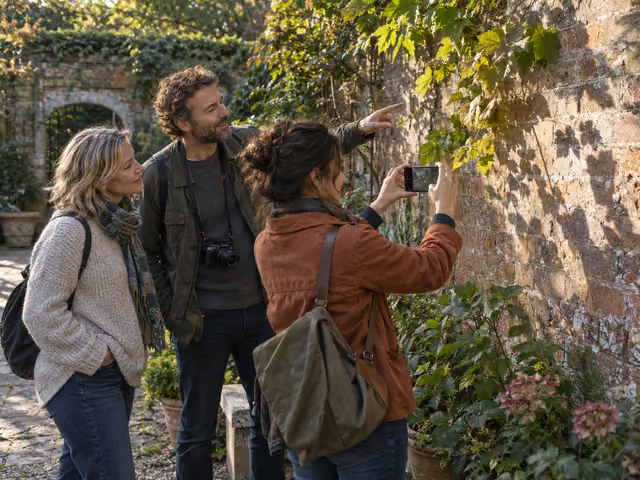
At the first pause, the host points out something nearby, such as leaf shadows on a wall, and says what caught their eye. Everyone can look for that detail or choose something else. This is an invitation to notice, not a list to complete. Stand still and check where you are placing your feet before raising the phone.
Try your own framing
Use the phone's ordinary camera mode. Tap your chosen subject to focus if your device supports it, look at the edges of the frame, and take a picture. From another safe position, you can change the distance or angle and see what changes; you do not have to keep both images. Avoid stepping backward while looking at the screen. Sharing partners swap the phone so both can try; they are not competing as a team.
Regroup before moving
People can quietly compare what they saw, ask for help or work on their own. The host checks everyone is present and ready before leading the next walking section. Put phones down while walking and crossing. At the next pause, repeat the same observation-and-photography process with new surroundings. A person taking no photos stays just as welcome.
Return and share by choice
Leave the last stop early enough to walk normally to the agreed finish point. When everyone is safely back, offer each person, in turn, the chance to show one image on the phone and say what they noticed, describe an observation, or pass. Listen first; ask whether the photographer wants suggestions before offering them. There is no judging, score, winner or tie to resolve. The outing ends after everyone has had that opportunity and any requested photo transfers have been agreed; transfers can happen later.
At a wall or tree, compare what is lit with what is in shade. Decide which detail you want the viewer to see, then check whether the rest of the frame helps show it. You can use the phone's automatic settings; a technical demonstration is optional.
Keep the pace, space and sharing comfortable
Choose still subjects such as plants, textures, shapes and buildings; no portrait is required. Ask before deliberately photographing a person, including a friend, and accept a refusal. Follow posted site restrictions, remain on permitted paths, leave objects where they are, and keep private interiors, documents and identifying personal details out of your shots. Permission to show an image to this group does not mean permission to publish it. Ask both the photographer and anyone identifiable before posting or forwarding a picture.
A photo walk has no exclusive claim to a viewpoint. If several people want the same spot, take turns and leave room; similar photographs can both be kept. If someone dislikes an image of themselves, stop showing it and agree to remove it from the device and any copies you control. A person may ask for help with framing without inviting a rating of their skill or equipment.
Check the whole group at each departure. If someone needs a rest or wants to leave, agree the return plan before separating; do not let an unnoticed gap grow. If a stop is crowded or closed, choose a nearby permitted alternative together. If weather, light, energy or conditions make the route unsuitable, return early and offer the same optional sharing at the finish. Missing a stop or getting no usable image is not a failure.
Keep gear comparisons brief so they do not consume the outing. One friend might enjoy conversation while another needs a little quiet to compose; offer room for both at each stop. Explain an idea only when wanted, and avoid taking over another person's camera. For a later walk, friends can suggest a different checked route or one of the variations below.
Already know the game?
Ideas & Twists
Choose a variation together before you start.
Photo walk · See main rules
Suggested house variationOne-color walk
Before setting off, agree one color as a loose creative theme. At each normal pause, people can photograph any detail where that color catches their eye; it need not fill the frame. Keep the same route, phones, return time and optional one-image sharing. There is no required number of finds, checklist or color judge. If the color proves scarce, people may photograph another interesting detail or simply look; this remains an observation walk with no score.
Photo walk · See main rules
Suggested house variationSame subject, different frames
At one of the two stops, the group chooses one still subject visible from permitted space, such as a tree or a wall. Anyone who wants to photograph it makes their own framing without copying directions from a leader; take turns if a viewpoint is narrow. Then volunteers show their versions side by side on the phones and name one difference in angle, distance, light or what they left outside the frame. This replaces the free-choice shooting at that stop only. Keep the other stop and final optional sharing unchanged, with no voting or best-image award.
About this guide
Nikon's composition guidance and experienced photo-walk hosts inform the photography and pacing tips. The two-stop route, small group, phone sharing and optional discussion are suggested arrangements for your own outing. Check access and conditions for the route you choose.
Ready for something different?
Find another game →