

The quick version
Lay out a labeled 4-by-4 photo grid. Draw a secret coordinate each and build its image with your material set. Write a coordinate guess for every other player. Reveal: earn one point per correct guess you made and one for each person who identified your build. Pass material sets one station left and play five rounds. Highest total wins, with shared ties.
Saved on this device only — clearing your browser's cache or site data removes them (no account backup).
Put five material stations around the table
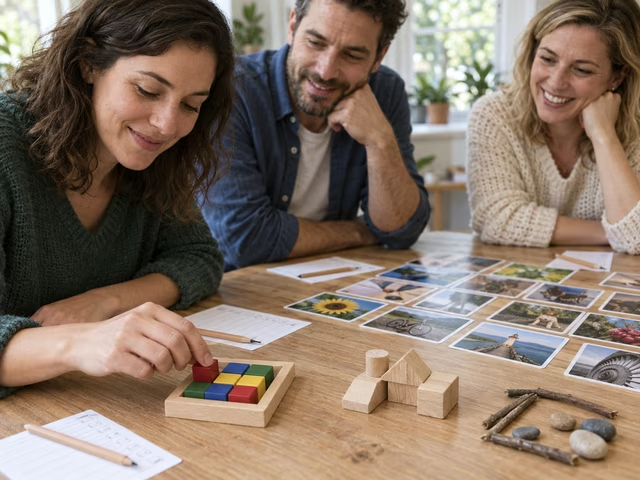
Shuffle and lay out 16 photos in four rows and four columns, marking rows with letters and columns with numbers. Put every coordinate token in the bag. Arrange the five material sets around the table: wooden blocks, sticks and stones, two shoelaces, icon cards, and colored cubes with their frame.
With three or four players, put the unused one or two sets in empty stations together between the same two players. Include those empty stations in every rotation so all five sets circulate. Give everyone a score sheet with the other players’ names and a pencil. Keep the grid in place for all five rounds.
Build without explaining
Each player draws one coordinate secretly, places it face down and uses only their current material set to depict that photo. Build simultaneously without naming the target or pointing at the grid. Blocks, sticks, stones and laces may be arranged with some pieces unused. Icons require two to five cards side by side. Cubes require exactly nine in a 3-by-3 square inside the frame.
Mark the bottom of your arrangement with its Pictures plate where needed. When everyone is ready, privately write one coordinate guess for every other player. Identical target photos are possible because coordinates occur more than once; do not assume everyone has a different subject.
Lock all guesses, then reveal builds one at a time. A correct guess earns its writer 1 point and also earns the builder 1 point. Add both kinds of points to each player’s running total. Set used coordinates aside, dismantle builds and move each set one station left, including empty stations.
After five rounds, everyone has used each material once. Highest total wins; tied leaders share the win. Keep the photographs visible during the final discussion so people can show which details they meant.
Recognizable matters more than realistic
Encourage a distinctive shape, color arrangement or relationship rather than a perfect miniature. Do not interpret someone’s build for the table before guesses are written. Leave enough viewing space to inspect each arrangement from its intended bottom edge.
Already know the game?
Ideas & Twists
Choose a variation together before you start.
Pictures · See main rules
Published variantFresh photos
After scoring, replace every photo that was a target this round with a new photo. Return all used coordinate tokens to the bag. Keep the five material rotations and normal score.
Pictures · See main rules
Published variantAvoid a repeated pairing
If you draw a photo that you have already depicted with this material set in an earlier game, draw a replacement token first, then return the original. Use this only when the group can honestly remember the pairing; otherwise accept the draw.
Pictures · See main rules
House suggestionOne-minute finish
Once the first player finishes building, start a one-minute timer for everyone else. At the bell, hands off and write guesses. Add a timer; use it in all five rounds so the constraint applies equally.
Pictures · See main rules
House suggestionOne extra guess
Each player gets one rescue token for the whole game. When writing guesses, spend it beside one builder’s name and write two different coordinates. If either is right, award the ordinary single point to both guesser and builder; there is no double reward.
About this guide
The five material restrictions, rotations, coordinate duplicates and scoring follow the published rules. Two twists are published; the remaining three are house suggestions. The publisher’s product page returned 403, so the complete rulebook transcription was used.
Ready for something different?
Find another game →