

The quick version
Prepare one plain crust per person and set out sauce, cheese and toppings. Choose an oven host, agree the baking order, and wash hands. Top your own crust lightly on its cool baking tray. The oven host bakes one tray at a time, checks the crust and toppings, and serves each pizza as it finishes. Sharing slices is optional; there are no points or winner.
Saved on this device only — clearing your browser's cache or site data removes them (no account backup).
Prepare the kitchen and one crust each
This is a house-hosted evening for 2–6 people, including the oven host. Use an indoor kitchen with a working conventional oven, refrigerator, sink, clear preparation surfaces and somewhere everyone can eat. Check ingredient restrictions with guests before shopping. The standard crust contains wheat and milk; mozzarella also contains milk. A shared flour-covered kitchen is not automatically suitable for someone who must avoid cross-contact.
Have one cool, oven-safe metal pizza pan or tray large enough for a roughly 12-inch pizza per person; mixing bowl, measuring cups and spoons or a kitchen scale, bowl covers, knife, cutting board, sauce spoon, topping bowls and serving utensils; dry oven mitts, timer, cooling rack or heat-safe landing area, pizza cutter or clean kitchen scissors, a wide heat-safe spatula, plates and shallow leftover containers. Have soap, clean towels and an appliance thermometer for the refrigerator. A stone, steel, peel, mixer and phone are optional. Check that each tray fits the oven and its rated temperature before food goes on it.
For every two crusts, combine 312g Italian-style flour, 2 teaspoons instant yeast, 2 teaspoons sugar, 1¼ teaspoons table salt, 1 tablespoon nonfat dry milk, 170g lukewarm water and 25g olive oil. Knead 5 minutes, divide in two, and cover for 15–60 minutes. Press each portion to an 11–12-inch round about ⅛ inch thick on its lightly oiled tray; rest 30 minutes while heating the oven to 450°F (232°C). Bake plain about 4 minutes, until the edges begin coloring; cool before guests top them. Prepare one batch for two guests, two for three or four, three for five or six; keep any extra crust separate.
This uses King Arthur's linked thin-crust recipe, with lightly oiled metal trays as this guide's house alternative to its greased parchment. The crust preparation happens before the gathering; guests assemble personal pizzas rather than wait for dough to rise. Prepare these crusts the same evening. Do not taste partially cooked dough. Let pans cool before assembly and handle all hot pans with mitts.
As a shopping starting point per pizza, allow 2–3 tablespoons sauce, about 60g grated low-moisture mozzarella and a small handful of finely cut toppings. These quantities are host suggestions, not a fixed recipe requirement. Offer choices such as sliced peppers, drained olives and cooked, well-drained mushrooms; keep the first gathering vegetarian so no raw meat needs cooking at the topping station. Wash produce before cutting it. Use a separate utensil for each bowl and keep chilled refills in the refrigerator rather than setting out everything at once.
Agree the oven order before topping
Choose one person to operate the oven; they make a pizza too. Agree a simple order by going around the group, with one named pizza in each slot. For example, with four friends: Sam, Jo, Lee, then the oven host. Say whose tray is next before anyone picks it up. Keep each tray at its owner's preparation place until called, so no labels or score sheet are necessary.
The oven host explains the hot-pan landing place and keeps the oven aisle clear. Everyone washes hands and chooses toppings. People can watch, pass on an ingredient or ask for help; nobody must toss dough, race or eat a topping to participate. One person may help another assemble, but ask before changing their pizza.
Assemble, bake and serve
Build your pizza on its tray
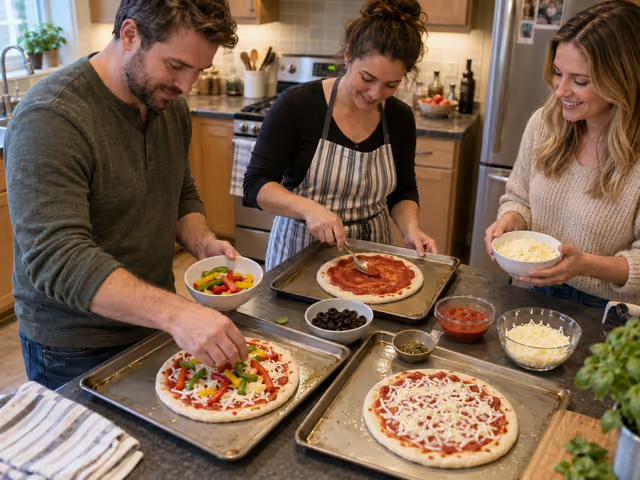
Keep a clear crust rim. Spread a thin sauce layer, scatter cheese and add a modest amount of drained toppings, leaving gaps rather than a heavy mound. The crust stays on its cool, lightly oiled tray; do not build it on the counter and try to lift it fully topped. Keep sauce and flour away from the ready-to-eat serving area.
Call the next tray
The oven host follows the agreed order, using one tray per bake. Only the oven host loads and unloads; others stay clear of the hot landing area. Start the timer when the tray goes in. Nobody changes the heat setting or removes someone else's pizza. Once that tray is out, close the door promptly and allow the oven to regain its set temperature before the next tray.
Finish cooking
Finish at 450°F (232°C), beginning the check after about 6 minutes. Serve only when the base is browned and firm, the dough is cooked through and the toppings are hot with the cheese melted. Add time if needed; a timer or browned cheese alone does not prove the center is done. The oven host lifts an edge carefully with a utensil to inspect the underside. If the top colors before the base finishes, move the tray to a lower rack and continue checking. Do not serve a wet, doughy center.
Cool briefly, then cut
Set the tray down on the heat-safe surface. Let the pizza cool enough to cut and handle, then transfer with a suitable spatula to the clean cutting board or cut on the tray if its manufacturer permits. Cut slices with the cutter or scissors and give them to the owner. Other people may taste only with the owner's agreement. Continue through the queue; expect people to start eating at different times.
Complete the evening
Finish after every participant, including the oven host, has received a fully cooked pizza and any agreed extra crusts have been baked or put away appropriately. There is no score, ranking or tie. Turn the oven off, put away chilled ingredients and leftovers, wash tools and counters, and leave hot pans to cool safely before cleaning them. A second round is a new group decision, not an obligation.
A six-person evening means six personal pizzas through the oven, not six pizzas served simultaneously. Leave the oven host's portion in the schedule and let them sit down to eat when their pizza finishes.
Solve the common snags
Too many toppings: ask the owner to reduce the pile or divide it between their pizza and an extra crust before baking. Avoid a wet center by draining toppings and spreading them thinly. An extra crust does not move someone ahead of the agreed first-round queue.
Not enough oven space: the main format already uses one tray at a time. Do not stack trays, crowd the oven or promise everyone a simultaneous hot dinner. A cold side dish can help while people wait, if the group wants one; it is optional. Make fewer pizzas through the shared-pizza variation only if the whole group chooses that change beforehand.
A pizza sticks or breaks: let the oven host settle the hot tray securely before doing anything. Use a utensil to loosen a cooked base, never bare fingers near hot metal. A broken shape can still be served if fully cooked. A dropped or contaminated pizza gets discarded; offer the spare crust or other agreed food. Appearance is not a competition.
Ingredient disagreement: each person controls their own pizza. Keep unwanted toppings separate and use clean utensils; nobody gets a surprise ingredient. If a restriction cannot be accommodated with the ingredients and workspace available, agree an appropriate separate meal before beginning. Do not call a shared kitchen allergen-free.
Food waiting out: keep cold ingredients at 40°F (4°C) or below until needed, putting out small portions. Refrigerate perishable ingredients and cooked leftovers within two hours, or within one hour above 90°F (32°C); discard food that has exceeded that limit. Use shallow containers. Wash hands and surfaces after raw dough work and before touching cooked food. Keep raw flour away from the finished-pizza area.
Quiet conversation fits the activity, but kitchen timers and appliances make sound. Reaching the oven, moving hot trays and clearing up are part of this version. Seated topping can be arranged, but it does not make the whole evening a fully seated activity or guarantee a suitable kitchen for every access need.
Already know the game?
Ideas & Twists
Choose a variation together before you start.
Make-your-own pizza night · See main rules
House suggestion · personal pizza remainsTwo flavors on one pizza
Keep one crust per person and the same oven order. Split the topping area mentally down the middle and choose a different combination for each half, keeping the total topping load as light as in the main version. Use a separate sauce spoon for each offered sauce and check its ingredients first. After cooking, cut along the flavor boundary before dividing into slices. Sharing either half remains the owner's choice; the finish and cleanup are unchanged.
Make-your-own pizza night · See main rules
House suggestion · package-specific cookingBought plain-crust shortcut
Replace the homemade dough preparation with one bought plain prebaked pizza crust per person. Read its package before shopping for trays and choose crusts that fit the oven. Retain those instructions: follow that product's topping and baking temperature, time and tray placement instead of importing the homemade crust's 450°F and 6-minute finish. Do not substitute raw dough under this shortcut. Keep the personal assembly, light toppings, oven host, one-tray queue and cooking checks. Finish only after every pizza is fully cooked and served, then clean and store leftovers as in the main version.
About this guide
This is an original cooperative house format, not an official cooking competition or a purchased game's edition. The linked King Arthur thin-crust recipe was opened on October 2, 2026; its published yield is two 12-inch pizzas. Lightly oiled metal trays replace its greased parchment as an explicit house preparation choice. Participant range, topping allowances, one-tray oven queue, consent, cleanup and all three variations are host suggestions. Baking times are checks for this thin crust, not a promise for other doughs, ovens or premade bases. FDA sources support the raw-flour, hygiene and chilled-food boundaries.
Ready for something different?
Find another game →