

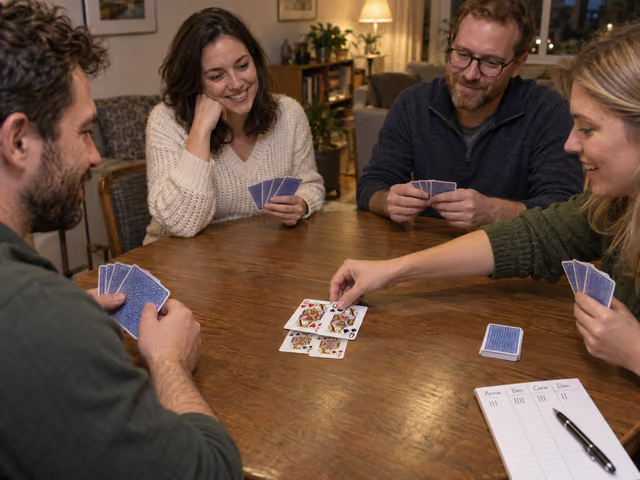
The quick version
Play a higher rank with exactly the same number of cards, or pass. A pass skips only this turn. When everyone else passes after the latest play, clear the pile and its last player leads again. First out earns 2 points, second earns 1; finish each deal and play to 11. Twos rank highest but cannot beat a larger set.
Saved on this device only — clearing your browser's cache or site data removes them (no account backup).
Deal the whole deck and agree the format
Seat four to seven individual players around a surface with room for one face-up play pile and a separate cleared pile. Remove jokers. Each suit has the usual 13 cards; suits do not affect play. Rank from low to high: 3, 4, 5, 6, 7, 8, 9, 10, jack, queen, king, ace, 2. There are no wild cards, runs, suit trumps, equal-rank plays or special clearing cards.
Choose the first dealer by agreement. Shuffle and deal one card at a time clockwise, starting on the dealer's left, until all 52 are distributed. Some hands have one extra card: four players get 13 each; five get 10 or 11; six get 8 or 9; seven get 7 or 8. Keep every card. Sort your own hand privately by rank.
Make a score column for each player, starting at zero, and leave room to record each deal's finish order. Our house match uses 2 points for first out, 1 for second, zero for everyone else. Complete the entire deal that takes any total to 11 or more; the highest total wins, with tied highest totals sharing the win. Do not stop the deal when its first player finishes.
Climb the pile, pass or take the next lead
Open the first deal
The player left of the dealer places a single card, a pair, three of a kind or four of a kind face up. Every card in a set must have the same rank. Name the play, such as 'pair of fives.' This determines the required number of cards until that pile clears. There is no draw pile and you never pick up played cards.
Beat the latest play or pass
Take turns clockwise, skipping players already out of cards. Play exactly the same number of cards at a strictly higher rank, or say 'pass.' A higher pair beats a lower pair; a single 2 does not beat a pair, and three kings do not beat two queens. You may choose two of your three kings and retain the third. Passing is allowed even when you could play; on your next turn you may re-enter if the pile has not cleared.
Clear only after all opponents pass
Each new legal play replaces the play everyone must beat. Starting after that player, continue clockwise until every other player who still has cards has passed without an intervening new play. Then move the entire pile face down to the cleared area. Its last player leads a new single or matching set of any size if still holding cards. If that player went out, the next player clockwise who still has cards leads instead. The leader must play; an empty pile cannot be passed.
Record each finish and keep playing
Immediately record a player who uses their last card or set: first is President, second is Vice-President, followed by the remaining finish places. Their final play still sets the rank and number for the next player to beat. Continue among everyone with cards. When only one player has cards, record that player last and end the deal; they do not need to play the rest. Finishing with a 2 or any other legal play is allowed. Add 2, 1 and zero points respectively.
Exchange one card for the next deal
If nobody has reached 11, gather all 52 cards. Under our fixed-seat house arrangement, move the dealer one seat clockwise and deal as before. The previous last-place player hands their single highest-ranked card face down to the President; if tied in rank, choose either suit. The President adds it to their hand, then returns any one card face down. Nobody else trades. Check that both hands retain their dealt sizes. The previous President opens this deal with any legal single or matching set. Repeat until the match ends.
In clockwise order, Alex leads a pair of fives, Blair passes, Casey plays a pair of nines and Drew passes. Alex passes; Blair may now play a pair of kings. Casey, Drew and Alex must each respond to that new play. If all three pass, Blair clears and leads again. If Blair's kings emptied their hand, Casey leads the new pile instead.
Settle the rules before the first card
Before shuffling, demonstrate a single against a pair, then the pass-and-re-enter example above with a few face-up cards. Gather them back and make a fresh deal. Tell returning players that a 2 is simply the highest rank: two 2s can beat two aces, but one 2 cannot. Equal ranks never beat each other; four of a kind has no extra power. No one may jump in out of turn. Cleared cards stay out until the next deal.
Keep each new card or set together and visible on top of the play pile so the table can see its rank and size. Announce who went out and who leads after a clear. Count passes from the most recent play, not from the start of the pile. With two players still holding cards, one opponent's pass clears the pile; if someone goes out leaving only one, the deal ends immediately.
For this friendly table, an illegal or out-of-turn play is taken back before anyone else acts, and the correct player makes a legal play or passes. This is a house correction, not an official penalty. If a misdeal is caught before play, gather and redeal; if an error cannot be reconstructed after play begins, agree to replay that deal with scores and previous ranks unchanged. Never invent a card fine. The one-card exchange is compulsory in the main format; it is not a negotiation, and the President cannot ask for a particular suit or extra cards.
Keep the same group throughout a match. Someone who finishes early watches until all finish places are settled and returns for the next deal. Make player changes between matches and start everyone at zero with no exchange on the first deal.
Already know the game?
Ideas & Twists
Choose a variation together before you start.
President · See main rules
Suggested house variationPass and sit out
A pass now removes you from the current pile until it clears. Skip passed players as well as players with empty hands. When nobody else remains eligible, clear the pile; its last player leads, or the next clockwise player with cards leads if the last player went out. Everyone still holding cards becomes eligible again. Keep strict ranks, equal set sizes, scoring and exchange unchanged. This makes passing a commitment; it does not remove you from the deal.
President · See main rules
Suggested house variationFresh hands each deal
Omit the President's one-card exchange for the entire match. Keep seats fixed and rotate the dealer as in the main format, but the player left of the new dealer opens every deal. Finish ranks still award 2 and 1 points, and the 11-point finish remains. Each new hand starts with its dealt cards rather than a benefit inherited from the previous win.
President · See main rules
Suggested house variationThree-deal match
Replace the 11-point threshold with exactly three complete deals. Keep the main rules, including exchange before deals two and three. Add 2 points for first and 1 for second after each deal. Highest total after deal three wins; tied leaders share the win. This limits the number of deals, not their duration.
About this guide
President is a traditional game with many local versions, not one official tournament standard or a purchased edition. Bicycle supplies the equal-size climbing and re-entry rules. Pagat supplies the 52-card, 4–7-player, 2-high basic format, finished-player lead succession and one-card exchange. This guide adopts the documented 2/1 scoring example and 11-point target as its house match. Fixed seats with a rotating dealer, neutral last-place naming, shared match ties, correction/redeal procedures and player-change timing are explicit friendly house arrangements. The three twists are optional rule changes; special-card, two-card-tax and rank-reversal versions are not silently mixed into the main game.
Ready for something different?
Find another game →