

The quick version
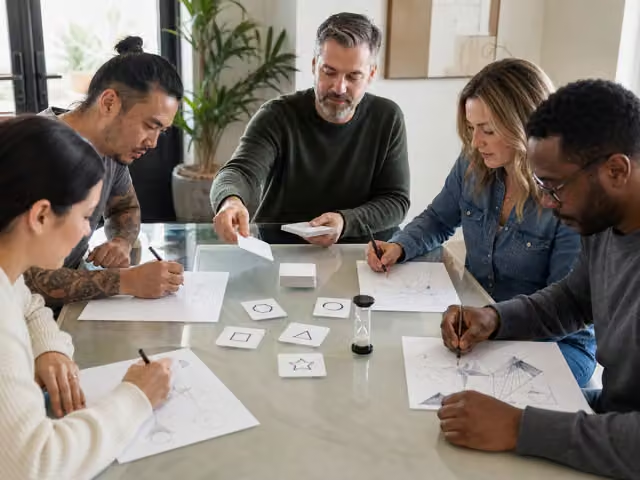
Draw the same prompt for four minutes. Show all sketches together, then privately vote for one other person's most inventive interpretation. Each vote earns that drawing one point. Repeat for three prompts; highest total wins and tied totals share the win.
Saved on this device only — clearing your browser's cache or site data removes them (no account backup).
Prepare a shared prompt and equal supplies
Give everyone three sheets of the same size and the same choice of pencil or pen. Erasers are fine if available to everyone. Put a timer where the host can see it, and prepare small ballots and a score sheet. Players can draw sitting comfortably; a separate display area is useful for the reveal.
Before the first round, each person writes one short imaginary scene on a slip. Good prompts leave room for interpretation: a robot on holiday, a tiny shop inside a shoe, or a house for a very untidy bird. Avoid a prompt requiring private knowledge of one friend or copying a particular brand image. Put the slips in a bowl and add enough extras to have at least three.
Give each player a visible letter, A onward, for labeling drawings and ballots. The host may play because nobody has a hidden answer key. Agree that the vote asks which drawing makes the most inventive use of the prompt, not which looks most professionally finished.
Everyone sees the prompt; words can be part of a drawing. Set aside phones, tracing and reference images during the sketch.
Draw, reveal and choose
Read one prompt
The host draws a slip and reads it aloud. Clarify the wording before starting. If the group cannot understand it, replace it now and put it aside. All players get the same four-minute timer.
Sketch your idea
Draw the scene in any style. Start with the main shapes, then add the detail that makes your interpretation distinctive. You can erase, change direction or leave parts unfinished; nobody loses points for an unfinished sketch.
Reveal together
At four minutes, put pens down and label your sheet with your letter. Lay the sketches out together. In letter order, let each person give one sentence about a detail they chose. Do not keep improving a drawing while other people present.
Vote once
Everyone privately writes one other player's letter for the most inventive interpretation. No self-votes and no splitting a vote. The host counts the ballots and awards one point per valid vote. A missing or self-vote is ignored, not reassigned after results are seen. Tied round leaders each keep their actual points.
Play three rounds
Use a fresh sheet and unused prompt for rounds two and three. Add the votes earned across all three. Highest total wins; tied totals share the win. Finish by viewing the three sets together. Return drawings to their creators; start fresh scores if the group wants another set.
Help people start drawing
If someone is staring at a blank page, suggest finding the largest shape first and building smaller details around it. Simple lines and stick figures can still communicate a good idea. Keep commentary about choices in the picture; nobody needs a critique of their ability.
Make the voting question clear before the first reveal. Keep drawings visible during private voting. Announce counts without guessing who voted for whom.
Already know the game?
Ideas & Twists
Choose a variation together before you start.
Sketch the same prompt · See main rules
Suggested house variationAdd your neighbor's detail
After reading each prompt, everyone writes one small object or detail and passes it to the right. Each sketch must visibly include that received detail as well as the shared prompt. Let everyone read their detail before starting the four minutes. Keep the same three rounds, private votes and highest-total finish with shared ties. This adds a concrete constraint while leaving the interpretation open.
Sketch the same prompt · See main rules
Suggested house variationOne continuous line
Draw each round with one continuous line: after your first mark, keep the pencil on the page until time ends or you choose to stop. Retracing is allowed; erasing and lifting to restart are not. Use no written labels. Keep the four-minute limit and three rounds, voting for inventive interpretations under this constraint. Add votes as usual; highest total wins, ties shared. If you accidentally lift, show the sketch as it stands rather than starting again.
About this guide
The National Gallery of Art describes drawing through overall shapes, gesture and contour. Those techniques inform the starting advice and continuous-line idea; prompts, timed rounds, voting and scoring are proposed house rules. The source is an educational drawing exercise, not an official rulebook for this social game.
Ready for something different?
Find another game →