

The quick version
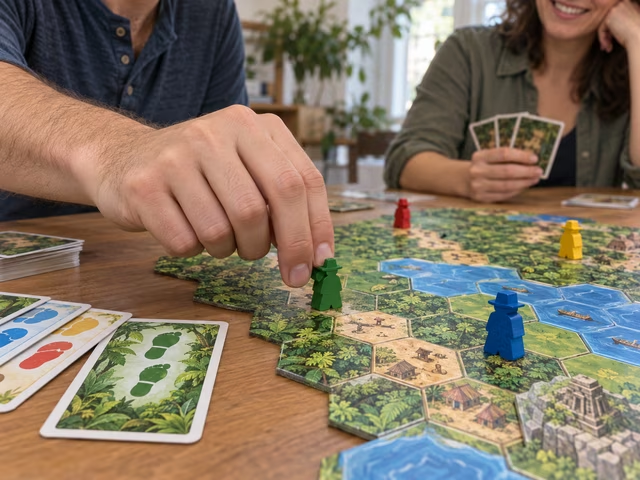
First play cards to move, then use remaining cards to buy at most one card. A green, blue or yellow terrain hex needs one card of the matching symbol with enough power for all symbols on that hex. Leftover power can continue across adjacent hexes of that same terrain; it cannot be saved for another card.
Saved on this device only — clearing your browser's cache or site data removes them (no account backup).
Prepare the table
Use a base-game route from your box's setup diagrams, including its starting and ending tiles; preserve the shown tile orientation and connections. Put a random face-up blockade on each designated terrain connection. Sort all eighteen market card types into three-card piles. Put the six types marked for initial setup on the market board and the other twelve above it. They remain available for later market openings.
Give each player their eight-card starter deck: one Sailor, three Explorers and four Travelers. Shuffle and draw four. In three- or four-player games place one pawn per player on numbered starts in clockwise order. With two, the first player uses starts one and three and the other two and four; each controls both pawns. Give the first player the hat marker so the final round is clear.
Play a turn
First play cards to move, then use remaining cards to buy at most one card. A green, blue or yellow terrain hex needs one card of the matching symbol with enough power for all symbols on that hex. Leftover power can continue across adjacent hexes of that same terrain; it cannot be saved for another card. Never combine two weak cards to enter one stronger hex. Mountains and occupied spaces are impassable, including your own other pawn in a two-player game.
Gray rubble instead requires discarding the pictured number of cards of any type. Red camps require removing that many hand cards from the game. To cross a blockade, pay its terrain-like requirement first and keep it; it no longer blocks anyone. In two-player games, each played card moves just one pawn, but another card may move your other pawn.
For a purchase, yellow cards provide their coin value; every other card is worth half a coin. Add them and buy one affordable card from the six active piles, without change. If an active pile is empty, you may instead buy from any off-board pile, moving its remaining cards into the empty slot. Put purchases on your discard pile, never straight into your hand.
Follow purple action-card text when played; cards drawn by an action can be used this turn. Crossed-out-card items leave the game after using their special effect, but discard normally when merely spent as half a coin or rubble payment. End by discarding played cards. Keep or discard each unused card, then draw back to four. When needed, shuffle your discard into a new deck; currently played cards are not in that shuffle.
Finish and score
Reaching a finishing hex moves that pawn off the route into El Dorado. With two players you must get both pawns there to trigger the finish. Complete the current round, giving equal turns rather than a whole extra turn to everyone. Among players who finished, most collected blockades wins; ties use the highest numbered blockade in the newer edition, or the highest power blockade as printed in the original Ravensburger rules. Use your edition's printed tiebreak consistently. If still unresolved, share victory as a house resolution.
Host the first game
Demonstrate why three one-power cards cannot enter one three-symbol hex, and show where a purchased card waits. Reddit's first-play discussion reports strong family appeal and varied routes; choose a printed introductory route before designing a custom one. Card names and artwork vary by edition, so teach symbols and effects as well as names.
Already know the game?
Ideas & Twists
Choose a variation together before you start.
The Quest for El Dorado · See main rules
Original STUDplay house twistPublic hands
Keep each four-card hand face up beside its deck. Draw effects still add cards normally. Visible movement and buying power make blocking and turn planning easier to understand.
The Quest for El Dorado · See main rules
Original STUDplay house twistOne early cull
Before shuffling starters, everyone removes one Traveler. Start with a seven-card deck and still draw four. This slightly accelerates stronger draws without changing movement costs.
The Quest for El Dorado · See main rules
Original STUDplay house twistLimited backpack
At turn end you may retain at most one unused card rather than any number. Discard the other unused cards before refilling to four.
The Quest for El Dorado · See main rules
Original STUDplay house twistSeven market spaces
At setup add a seventh active pile chosen by group agreement from the off-board supply. Mark its extra slot on paper. It follows the same empty-slot replacement rules; all eighteen types remain in the game.
The Quest for El Dorado · See main rules
Original STUDplay house twistSupply stop
Choose one reachable ordinary hex on the middle terrain tile and mark it on a paper sketch of the route. Each expedition must end a movement card there at least once before finishing. In two-player games only one of your pawns must visit. Remove the marker from your checklist after visiting; it never blocks the hex.
About this guide
Requires the named physical game and its supplied components. Rules are paraphrased teaching guidance; keep the box's cards and reference diagrams beside the table. Original STUDplay house twists are optional, untested suggestions rather than publisher rules. Agree one before setup; unchanged rules still apply.
Ready for something different?
Find another game →