

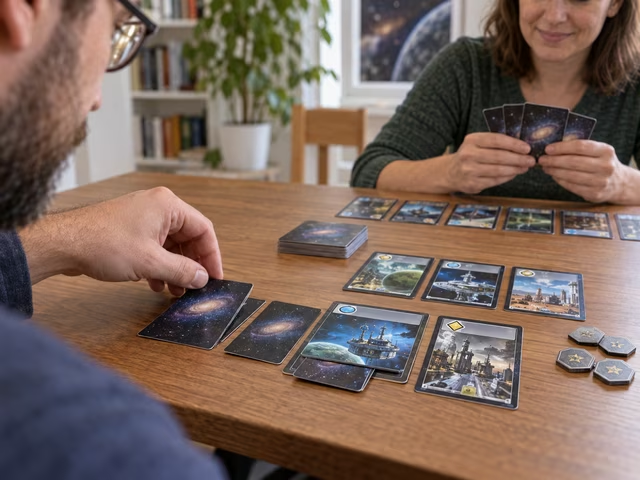
The quick version
Each round secretly choose one action card, then reveal together. Resolve only chosen phases, once each in order: Explore, Develop, Settle, Consume, Produce. Everyone may take each selected phase's normal action; choosing that phase grants its bonus.
Saved on this device only — clearing your browser's cache or site data removes them (no account backup).
Prepare the table
Use the second-edition base game and the standard one-action selection, including for a first two-player game. Set out twelve victory points per player in small chips, keeping spare chips aside. Give everyone seven different action cards and a starting world. For a first game use worlds one and two with two players, one through three with three, or one through four with four, plus each world's matching numbered four-card starting hand.
For later games deal random starting worlds from the five original worlds, shuffle unused starts into the deck and deal six cards each; everyone discards two. Place one face-down deck card as Alpha Centauri's starting good if it is in play. Keep draw and discard piles distinct; all discards are face down.
Play a turn
Each round secretly choose one action card, then reveal together. Resolve only chosen phases, once each in order: Explore, Develop, Settle, Consume, Produce. Everyone may take each selected phase's normal action; choosing that phase grants its bonus. Choosing the same phase twice across players does not repeat it.
Explore draws two and keeps one, discarding the other. Its chooser either draws seven and keeps one, or draws three and keeps two, according to their selected action. Add relevant tableau powers; deal all draws before discarding.
Develop lets each player simultaneously reveal and place one development, paying its diamond cost by discarding that many other hand cards. The chooser pays one fewer, minimum zero. You cannot own duplicate developments. Settle similarly places one world: pay a black-circle cost in cards, or meet a red military world's defense with your total military without discarding payment. Military strength is not spent and cannot be mixed with payment, except explicit card powers. The Settle chooser draws one card after successfully placing a world. A colored halo world arrives with a face-down good.
Consume requires you to use your available consumption powers on goods for their printed rewards. Choose their order, but fully resolve each and consume whenever possible; each good is used once and each power once unless it specifies several goods. The Trade chooser first sells one good for cards: blue novelty two, brown rare three, green genes four, yellow alien five, plus trade powers. Only that chooser trades. The double-points chooser instead doubles consume victory chips, except points from discarding hand cards; card draws are not doubled.
Produce adds one face-down deck card to every empty solid-color production world. The chooser also produces on one empty halo windfall world. Each world holds at most one good. Card powers modify only their stated rules, combine where applicable and become active in the phase after placement. Keep the supplied icon sheet beside each tableau.
After all phases, discard to ten hand cards and reclaim action cards. Reshuffle discards when needed. For timing conflicts, after simultaneous choices resolve clockwise from the lowest-numbered original start world.
Finish and score
Finish the entire round when someone has at least twelve face-up tableau cards or the victory-point supply empties; use spare chips for all final rewards. Add printed world/development points, earned chips and variable six-cost development scores. Highest total wins; ties favor hand-card count plus goods on worlds, then share.
Host the first game
The recent Reddit discussion praises the compact decisions after familiarity, while the Race-versus-Res-Arcana thread notes that occasional players may need to relearn icons. Walk through a production world and a windfall before starting. Explain that hand cards are both possible builds and payment, so keeping everything prevents building anything.
Already know the game?
Ideas & Twists
Choose a variation together before you start.
Race for the Galaxy · See main rules
Published advanced two-player rulesTwo choices at two players
With exactly two experienced players, use all nine action cards and choose two each round. Both Explore bonuses draw eight and keep two before powers. Two Develop or two Settle choices create two sequential phases; an opponent choosing one gets its bonus only in the first. Choosing both Consume bonuses trades first, then doubles consume points.
Race for the Galaxy · See main rules
Published experienced-player setupChoice of starting world
Deal each player one odd-numbered red and one even-numbered blue starting world from the edition's full start-world set, plus six game cards. Inspect all, discard one world and two game cards, then reveal starts simultaneously.
Race for the Galaxy · See main rules
Original STUDplay house twistOne opening redraw
After the ordinary random-world setup and before choosing round one's action, each player may once shuffle their four-card hand into the deck and draw four replacements. Starting worlds and goods stay unchanged.
Race for the Galaxy · See main rules
Original STUDplay house twistLarger hand
Raise only the round-end hand limit from ten to twelve. Payment, Explore keeps and all finish conditions remain normal.
Race for the Galaxy · See main rules
Original STUDplay house twistPublic first phase
In round one only, select action cards face up in clockwise order from the lowest-numbered starting world. All later rounds return to simultaneous secret selection.
About this guide
Requires the named physical game and its supplied components. Rules are paraphrased teaching guidance; keep the box's cards and reference diagrams beside the table. Original STUDplay house twists are optional, untested suggestions rather than publisher rules. Agree one before setup; unchanged rules still apply.
Ready for something different?
Find another game →