

The quick version
Deal six cards each. Alternate playing one beside an unclaimed stone, claim any stones your completed formations win, then draw one. Formations rank by suited run, triples, color, run and sum. Three neighboring claimed stones or any five win immediately.
Saved on this device only — clearing your browser's cache or site data removes them (no account backup).
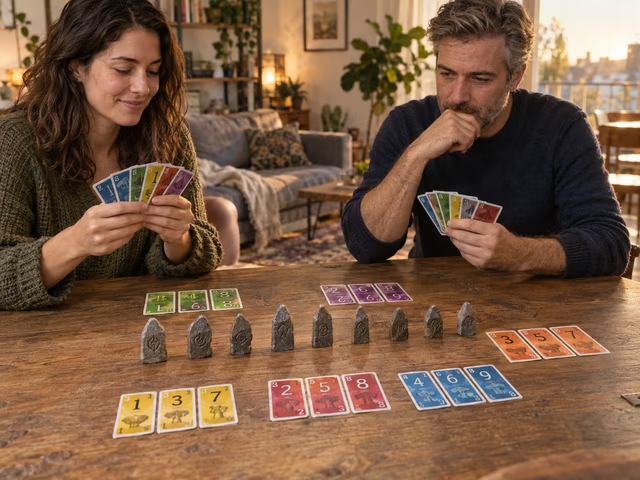
Lay out the border and six-card hands
Place nine stones in a straight line. Shuffle clan cards numbered 1–9 in six colors and deal six to each player. Leave the rest face down; tactics are not used in this main format. Choose a first player and keep a ranking aid visible.
Commit a card, check claims, then draw
Play one hand card face up on your side of an unclaimed stone, keeping earlier cards visible. Each side holds at most three cards. A played card cannot move. After playing but before drawing, you may claim one or more stones where you have a completed three-card formation.
If the opponent also has three cards, compare formations. Strongest to weakest: three consecutive values of one color; three equal values; three cards of one color; three consecutive values in any colors; any other three cards. Within the same category, greater sum wins. If still equal, whoever completed their third card there first wins. Runs need not have been played in numerical order.
You may claim before the opponent completes only by proving that no remaining possible cards could beat you, using cards already played on the table. Your hidden hand is NOT evidence. Explain the proof; if it is not conclusive, leave the stone unclaimed.
Move a claimed stone toward its winner and stop playing at that position. Draw one card after claims; if the deck is empty, continue with your remaining hand.
Watch the line as well as the count
The game ends immediately when someone controls three adjacent stones or five anywhere. A player who cannot place any clan card passes while the other continues; once both cannot play, settle completed contests and valid proof claims. If a rare unresolved position cannot establish either condition, record a draw rather than invent hidden information.
Explain one formation comparison
A same-color 2, 5, 8 beats a mixed-color 6, 7, 8 because category comes before sum. Within two same-color groups, compare sums. Community comparisons with Hanamikoji highlight that reading the visible border and timing commitments are central here; keep every played card readable.
Players comparing two-player games emphasize reading the opposing formations. Keep both sides of all nine stones visible and explain a proven early claim with an example.
Already know the game?
Ideas & Twists
Choose a variation together before you start.
Schotten Totten · See main rules
Publisher expert variantDelayed claims
You may claim stones only at the beginning of your turn, BEFORE playing a card. You therefore cannot claim a stone immediately after completing it. All proof and formation rules stay the same; the opponent gets one intervening move.
Schotten Totten · See main rules
Original STUDplay house twistOpen draw row
Reveal three clan cards beside the deck. After playing and claiming, draw either one visible card or the unseen top deck card. Immediately refill a visible gap while the deck lasts. After the deck empties, the row remains available until exhausted.
Schotten Totten · See main rules
Original STUDplay house twistSeven-card planning
Deal seven clan cards instead of six and refill to seven after each play. Do not add tactics. The nine stones, formation rankings and immediate victory conditions stay unchanged.
Schotten Totten · See main rules
Original STUDplay house twistComplete the contest
Remove early proof claims. A stone may be claimed only after BOTH sides have three cards. This makes commitment to a losing lane unavoidable and reduces deduction requirements. All ordinary ranking and win rules remain.
Schotten Totten · See main rules
Original STUDplay house twistOne relocation
Give each player one paper token. Instead of playing a hand card on a turn, discard the token to move ONE of your cards from an unclaimed stone to another unclaimed stone with space. You do not draw that turn. Check claims after moving. Claimed stones and opponent cards cannot be changed.
About this guide
Use the named physical base game and its supplied cards, boards and rules. Rules below are paraphrased teaching guidance. Original STUDplay house twists are optional suggestions, not publisher rules or balance-tested claims; agree one before setup.
Ready for something different?
Find another game →