

The quick version
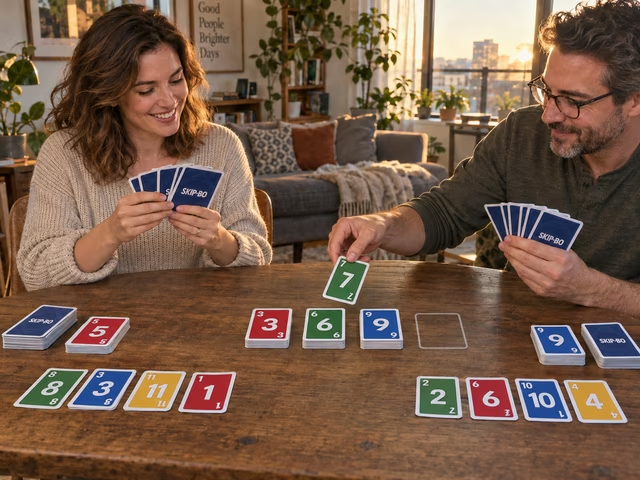
Start your turn by drawing to five cards. Play as many legal cards as you want from hand, stock top or discard tops onto shared 1–12 piles. Refill immediately if you empty your hand by playing. Discard one hand card to end. First empty stock wins.
Saved on this device only — clearing your browser's cache or site data removes them (no account backup).
Separate stock, draw and building piles
Remove blanks or reference cards. Shuffle the complete deck. Deal each player a face-down stock of 30 cards for two to four players, or 20 for five or six. Reveal only its top card. Remaining cards become the central draw pile. Leave four central building spaces empty, plus four empty personal discard spaces per player.
Choose a dealer; the person on their left starts, then go clockwise. No initial hand is dealt: draw it when your first turn begins.
Draw to five, then build freely
At the start of your turn draw enough to hold five cards. Play any number of cards from your hand, the exposed top of your stock or the top of any of your discard piles. Start an empty shared building pile only with a 1 or a Skip-Bo wild; thereafter its next number must be one higher, through 12. A wild represents the required number.
When you play your stock top, immediately reveal the next stock card. When you play a discard top, the card beneath becomes available. Finish a build pile at 12, remove those twelve cards to a completed pile, and make that space available for a new 1. You may not build past 12 or create a fifth shared pile.
If you play all five hand cards, immediately draw five more and continue this same turn. You may stop even if a play is available. End by placing one hand card on one of your own four discard piles. Discards need no numerical order; only their top cards can later be played. You cannot take another person's discards or move cards between discard piles.
When the draw pile runs out, shuffle completed building piles into a new draw pile. Do not recycle personal stock or discards.
Empty the stock to win
Playing the last card of your stock wins immediately, even if cards remain in your hand or discard piles. Those other cards do not need to be cleared. One game has no points or equal-turn finish.
For a separately agreed match, the publisher awards each winner 25 points plus five for every card remaining in opponents' stocks; first to 500 wins. This is optional and requires paper and pen.
Point to each pile before the first turn
The shared draw pile supplies hands; personal stock is the victory target; personal discards are future options; central building piles accept plays. Correct those names first. If someone draws too many, this edition puts the extra drawn cards into their own stock and shuffles it. Resolve mistakes promptly before later hidden information makes repair difficult.
Players discuss alternative stock-pile formats. Start with the standard stock so everyone first learns which discard cards remain available.
Already know the game?
Ideas & Twists
Choose a variation together before you start.
Skip-Bo · See main rules
Publisher short-game variantTen-card stock
Deal each player only ten stock cards regardless of count. Keep five-card hands, four personal discard piles and four shared building piles. The first empty stock still wins immediately.
Skip-Bo · See main rules
Publisher partnership variantPartners
Use four players in two opposite-seat partnerships. On your turn you may play from either partner's stock or discard piles, plus your own hand. Your partner stays quiet and acts only when you request a specific play. Both partnership stocks must empty to win. A partner whose stock is empty still participates using remaining cards.
Skip-Bo · See main rules
Original STUDplay house twistTwin stocks
Split each player's normal stock into two equal face-down piles, revealing both tops. Either exposed stock top is playable. You win only after BOTH your stocks empty. Do not transfer cards between them; all hands and personal discards work normally.
Skip-Bo · See main rules
Original STUDplay house twistThree discard lanes
Give each player three personal discard piles instead of four. Shared building piles remain four. End every turn with the usual one-card discard. This makes hand organization tighter without changing stock size.
Skip-Bo · See main rules
Original STUDplay house twistOne rearrangement
Give each player one paper token. Once per game, before playing any card on their own turn, discard it to exchange the top cards of two of their nonempty personal discard piles. Both cards must remain tops; no hidden cards move. Then continue the turn normally.
About this guide
Use the named physical base game and its supplied cards, boards and rules. Rules below are paraphrased teaching guidance. Original STUDplay house twists are optional suggestions, not publisher rules or balance-tested claims; agree one before setup.
Ready for something different?
Find another game →