

The quick version
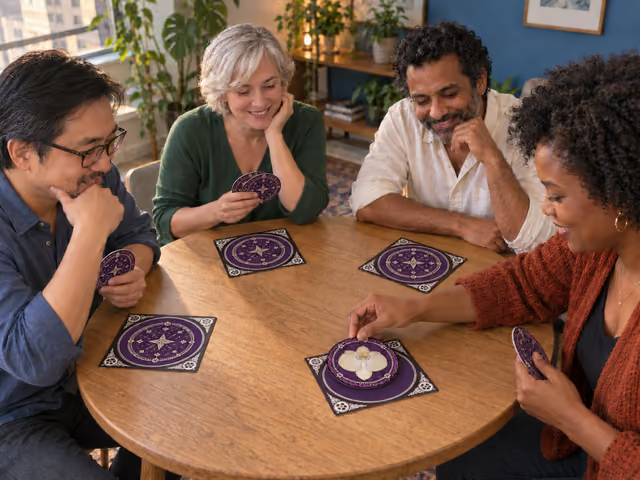
Give everyone three flower discs, one skull and a mat. Everyone places one disc face down; the first player places theirs last. Going clockwise, add a disc or open bidding with a positive number up to the total discs on the table. Once bidding starts, raise or pass; nobody adds discs. The last bidder reveals from their own stack first, then opponents' top discs one at a time, until reaching the bid or hitting a skull. Success earns one point; a skull costs one disc. Two points or being the last player remaining wins.
Saved on this device only — clearing your browser's cache or site data removes them (no account backup).
Give everyone flowers and a skull
Use the basic physical game from SPACE Cowboys' 2023 English pink-box edition for 3–6 players. Leave the optional Last Chance disc in the box unless you choose that variation. Each person takes one set: a square player mat and four round discs with matching backs, containing three flowers and one skull. Keep the disc faces hidden from other people and place your mat blank side up; its flower side will record your first success.
Sit around a table with room for a separate stack on every mat. The printed starting rule chooses whoever most recently gave someone flowers, or a skull. Everyone else secretly chooses one disc and places it face down on their own mat. The first player waits until all others have placed theirs, then chooses and places one too. No one opens bidding until every active player has placed this initial disc.
Place, bid, then reveal
Add a disc or open bidding
Starting with the first player and proceeding clockwise, take one action. Either place one remaining disc face down on top of your own stack, slightly offset so its size is visible, or announce how many discs you will try to reveal as flowers. The opening bid must be at least 1 and no greater than the total discs currently on all mats. You may open immediately instead of adding a second disc. If you have no unplayed discs, you must open bidding.
Raise or pass
Once anyone bids, no more discs may be placed this round. In clockwise order, each person still in the bidding either announces a strictly higher number, no greater than the table total, or passes. You may jump by more than one. Passing lasts for the rest of this round; slide your mat toward the middle to mark it, but leave its discs available to the challenger. Continue around the remaining bidders until everyone except the highest bidder has passed. At the table-total maximum, nobody can raise. The highest bidder becomes the challenger; they cannot simply withdraw their bid.
Reveal from your own stack first
The challenger flips discs one at a time, starting at the top of their own stack. Each flower counts toward their bid. They may touch another person's stack only after revealing all of their own discs. Once their own stack is exhausted, they choose any opponent's topmost face-down disc; they can switch between opponents after every flip. Never reach beneath a face-down disc. Stop when you have revealed the bid number of flowers, or immediately when you reveal a skull. If the bid is smaller than your own stack, reaching that number ends the challenge within your own stack; do not keep flipping beyond the target.
Record success or lose a disc
If you reach the target with only flowers, flip your mat to its flower side for your first point. A second success wins immediately. If you reveal someone else's skull, gather all your remaining discs, both played and unplayed, shuffle them face down and offer them to that skull's owner. They remove one at random to the box without looking. If you reveal your own skull, secretly choose one of your own remaining discs to remove instead. Only you may check which disc you lost. The lost disc stays out for the rest of the game; a failure does not erase an earlier point.
Reset the round or finish
After the challenge, everyone takes back their played discs, keeping any lost discs out. If the challenger still has a disc, they start the next round whether they succeeded or failed. If they lost their last disc, remove their mat and eliminate them: the owner of the skull that eliminated them starts next. If they eliminated themselves with their own skull, they choose the next starter. Begin again with one disc from every remaining player, starter placing last. Continue even if only two people remain. A second successful challenge or being the only player left ends the game immediately; there is no tied score or equal-turn finish.
With four people, have everyone place a flower and let the starter bid 2. The next person raises to 3 and the other three pass. The challenger reveals their own disc and any two opponents' top discs: three flowers succeed. Reset, put a skull in one opponent's place and repeat to show how failure works. Return every practice disc and turn all mats blank side up before the real game; practice awards no points and removes no discs.
Make the bluff understandable
A flower makes your stack safer for you to reveal. A skull can catch an opponent who trusts you. You can even bid while hiding your own skull, hoping someone else will raise; if everyone passes, you must attempt the challenge yourself. Discuss that choice after the practice round rather than telling people a winning script. Claims about hidden discs may be true or false; the count of visible discs, current bid, passing and score must stay clear.
Count all placed discs before accepting a bid. Keep stacks in their placed order: no swapping or rearranging after placement. Only the challenger flips during the attempt; after a failed challenge, others may voluntarily reveal their own discs to show the bluff. That does not change the result. Do not announce a discarded disc's identity or look at someone else's hand.
The key disputes are simple: everyone gets an initial disc before bidding; passing does not remove your stack; and your own stack comes before anyone else's. If someone gives an out-of-range bid, this guide suggests correcting it before the next person acts. If an accidental reveal makes the attempt unusable, agree to abandon that round, recover the discs without points or losses, and restart with the same first player. These are house remedies, not printed penalties.
Play can stay seated and use quiet conversation. Make bids audible to everyone and leave room to reach the mats. Some groups enjoy reading and influencing one another; others find it uncomfortable or uninteresting. Let people choose whether to join, and let eliminated players watch without choosing anyone else's discs. A new game restores all four discs and resets the mats.
Already know the game?
Ideas & Twists
Choose a variation together before you start.
Skull · See main rules
Official 2023 optional variationLast Chance flower
Use the extra Last Chance disc. When a failed challenge reduces you to exactly one of your own discs, take it for the next round only. Everyone knows it is a flower. Treat it as an extra playable disc in your hand: you still place just one initial disc and may add another on your turn, following the usual stack and bidding rules. Return it to the supply at the end of that next round, even if you did not play it. If you are the challenger and fail during that round, return the Last Chance disc and lose your final personal disc together: you are eliminated. Each player can receive it only once per game. Points, starter selection and the two-successes-or-last-remaining finish stay the same.
Skull · See main rules
House equipment adaptationPlaying-card travel set
Replace the purchased discs and mats with one ordinary 52-card deck with identical backs, plus paper and a pen. Give each of 3–6 people any three number cards from 2–10 as flowers and one jack, queen or king as their skull: four cards per player, up to 24 total. Explain the number-card/face-card distinction and let each person inspect their hand. Suits and numerical ranks have no other effect. Each person's separate face-down card stack replaces their mat; write names and points on the paper, and say 'pass' clearly to mark leaving a bid. Set unused cards aside and keep lost cards in a separate concealed discard pile. Reveal cards from the top of your own stack first, then other top cards, exactly as in the main game. Use the same hidden random loss, chosen self-skull loss, starter and elimination rules. Two successes or last player remaining wins. Do not add Last Chance in this adaptation.
About this guide
The main game follows the 2023 physical English edition; Last Chance is its optional variation. The rulebook's target count and own-stack-first wording is clarified by Board Game Arena's explanation that a smaller bid stops within your own stack; its automatic self-elimination starter selection is not used here. The practice round, dispute remedies and ordinary-card adaptation are host suggestions. Earlier Skull & Roses artwork and online interfaces do not change this guide's required physical set.
Ready for something different?
Find another game →