

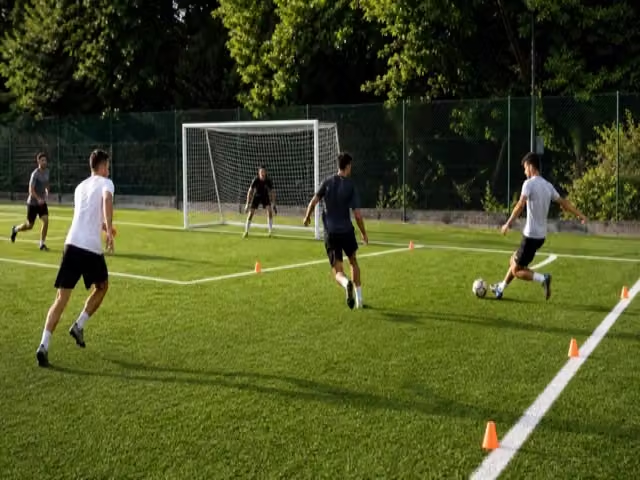
The quick version
Play two eight-minute halves; most goals wins, ties are draws. No hands, offside or sliding challenges. Use sideline kick-ins, corners after a defender's end-line touch, and goal restarts after an attacker's.
Saved on this device only — clearing your browser's cache or site data removes them (no account backup).
Mark the pitch and finish
For six players, try a 25-by-15-metre rectangle; enlarge it for eight. These are house dimensions. Mark sidelines, end lines and center. Secure mini-goals following their instructions, or make each scoring gate with two cones about two metres apart.
Play three a side with six or seven people, four a side with eight. With seven, assign the substitute to one team; swap them with a teammate halfway through each half. Toss for kickoff; the other team chooses an end. Play two eight-minute halves with a short break. The running clock continues through ordinary outs; pause for injury or outside interference. Most goals wins; ties are draws.
Start, attack and restart
Kick off at the center
Place the ball at the center with both teams in their own halves and opponents at least three metres away. Kick it to a teammate in any direction. The kicker may not touch it again before another player does. After a goal, the conceding team restarts this way. At halftime, swap ends and let the other team kick off; keep the score.
Play the ball, not the player
Pass, dribble and shoot with feet or body, excluding hands and arms. Standing interception is allowed; no pushing, holding, charging or sliding challenges. No goalkeepers and no offside apply here. For this house game, keep the ball below waist height and do not head it; a deliberate high kick or header gives an indirect free kick to the opponents.
Count a goal
The whole ball must cross the goal line between the posts and under the bar. With cone gates, it must cross between the cones below knee height. A goal earns one. A player may defend the gate with their feet but cannot use hands or grab the frame. This house game requires another player's touch before a kickoff can score.
Restart a sideline out
If the whole ball crosses a sideline, the other team takes a kick-in where it left. Make the ball stationary on the line, stand with feet on or outside it and keep opponents three metres away. No direct goal from a kick-in, and the kicker must wait for another player's touch before touching again.
Restart an end-line out
If the attackers touched last, the defending team places the ball centrally two metres in front of its goal for an indirect goal restart. If the defenders touched last, the attackers take an indirect corner from the nearest corner. Opponents stay three metres away; another player must touch before a goal can count, and the kicker cannot take two consecutive touches.
Handle fouls and the clock
For a foul or deliberate hand use, award a stationary indirect free kick at the spot. Move kicks within three metres of goal three metres straight out. Defenders retreat three metres; another player must touch before scoring. These house rules replace penalties. Stop at the timer; goals count only if crossed before the signal.
Agree on the small details
Demonstrate indirect restarts: either team's touch qualifies. Direct scores from indirect restarts do not count; give defenders a goal restart. Replay unresolved calls by agreement. For a rematch, reset scores and switch kickoff.
Already know the game?
Ideas & Twists
Choose a variation together before you start.
Small-sided soccer · See main rules
Suggested house variationTwo-touch game
Each player gets at most two consecutive touches before passing or shooting. A third touch gives opponents an indirect free kick, moved away from goal if needed. Restart takers still need another player's touch before touching again. Keep two eight-minute halves and ordinary goals; most goals wins, ties are draws.
Small-sided soccer · See main rules
Suggested house variationEnd-zone passing
Replace goals with two-metre-deep end zones across each end. Score one when a teammate receives a pass inside the attacking zone and controls it under a foot; dribbling in does not score. Defenders may enter. After scoring, the conceding team kicks off. Keep halves, outs, height limit and indirect fouls; take defending goal restarts centrally in the end zone. Highest score wins; ties are draws.
About this guide
Proposed house format informed by FA small-sided laws: no offside, whole-ball goals and kick-ins. Sizes, halves, height limit, cone goals and indirect restarts are house choices. The accessible handbook is 2024–25; organized venue rules may differ.
Ready for something different?
Find another game →