

The quick version
Agree on the path, turnaround, rest stops and a return deadline before riding. Choose a front leader and a rear rider. Check bikes and helmets, then start gently in single file with space to stop. Stay between the leader and rear rider; anyone can ask to slow or stop. Regroup off the path at each junction and planned stop, and rest before restarting. Turn back together, return to the meeting point and count everyone in. There is no scoring or tie.
Saved on this device only — clearing your browser's cache or site data removes them (no account backup).
Choose a ride everyone agrees to
The host checks the actual path before inviting friends: cycling permission, opening hours, surface, slopes, crossings, current closures and places large enough to stop off the travelling line. Choose a paved out-and-back that avoids busy roads and technical trails. A map alone cannot confirm conditions. If you cannot find a suitable route, change the plan before inviting people.
Tell friends the meeting point, departure time, total out-and-back distance, hills, turnaround landmark, rest stops and planned return deadline. The return is an estimate, not a promise. Ask what distance and terrain each person can already manage, rather than using another rider's idea of easy. Choose the route for the least confident participant and allow for the return journey. Check the forecast and daylight; shorten, postpone or cancel if conditions are unsuitable.
Choose one confident rider who knows the route to lead from the front and another to stay at the rear. With two people, those are the two riders; with more, everyone else stays between them. Explain that no-drop here means the whole group slows for the rear rider and nobody is deliberately left to catch up alone. The 2–8 range is this small-group hosting choice, not an official cycling limit.
Bring working bikes and a way to get home
Each rider brings a correctly sized, working pedal bicycle, a fitted cycling helmet with its strap fastened, drinking water and clothing suited to the weather. Secure loose laces, trouser legs and belongings. A working hybrid, city, road or mountain bike can suit a paved path; matching brands, racing clothing and a fast bike are not required. This main format does not assess powered cycles, tandems or adaptive cycles; their permission, handling and route fit need a separate check.
The group brings a route map, which can be printed or saved offline, and at least one charged phone for assistance. Keep it put away while moving. Bring a pump that fits the valves, tyre levers, and a compatible spare tube or puncture system for every different tyre setup present. Supplies may be shared, but someone must know how to use them; carrying tools does not make a failed bike rideable. Agree beforehand how to arrange collection or walk back if a bike cannot be fixed. Bring a snack if the chosen route needs one; do not depend on an unconfirmed shop.
This plan starts and finishes in daylight. Confirm any locally required lights, reflectors or audible warning equipment before setting off. If poor visibility or darkness could become part of the ride, revise the timing or bring the appropriate equipment; the basic daylight plan is not a night-riding guide.
Check, brief and roll out gently
Check each bicycle
Check tyre condition and inflation, brakes, chain and secure wheels. Take a brief slow test ride in a clear permitted area to confirm steering and stopping. Have an experienced person help if a rider is unsure. An unresolved fault means that bicycle stays out of the ride; do not ask someone to improvise a repair they cannot judge.
Explain the group agreement
Point out the leader and rear rider, show the route and stops, and count everyone. Agree plain calls: 'slowing', 'stopping', 'turning left/right', 'hazard' and 'ease up'. Practise saying them before departure. Use local turn signals only when you can keep control; pass calls along the group. Tell people how to ask for a break and how to tell the host they want to leave.
Begin with a gentle section
The leader starts only when everyone says they are ready. Leave room between bikes for each rider to brake safely; do not ride close to another wheel or overlap it. Ride single file for this guide and follow the path's direction rules. At the first suitable stopping place, pull clear, count everyone and ask whether the pace and spacing work. Adjust now rather than waiting for someone to fall behind.
Ride, stop together and return
Let the rear rider set the limit
The leader holds a steady pace that the whole group can manage and checks that the rear rider remains in sight. Anyone can call 'ease up' or 'stopping'; pass it forward and slow smoothly. Nobody rides ahead of the leader, races a hill or pressures another person to keep up. Save longer conversations for stops when riding needs your attention.
Share the path
Keep to the locally required side and speed limits. Slow around other users, give space and an audible warning before passing where permitted; wait if there is no room. Do not block the path. At a road crossing, each person checks and follows the actual signs or signals; another rider's 'clear' is not permission to follow blindly. If the group is split, wait at the next suitable off-path place rather than rushing the crossing.
Give the last arrival a real break
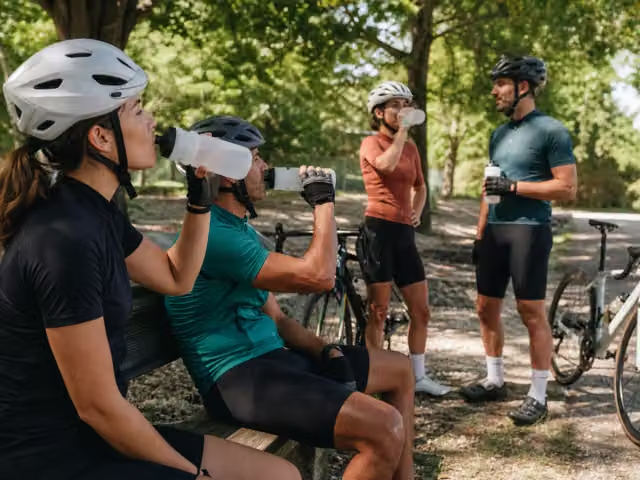
Regroup at every route junction and planned stop, using the checked space off the travelling line. Count everyone, including the rear rider. Drink, talk and let the final arrival recover before asking whether all are ready. The first arrival does not decide when the break ends. If someone is uncomfortable, shorten the outing or turn back together.
Turn and finish as one group
Stop at the agreed turnaround, count in, rest, then reverse direction from a suitable clear place. Turn earlier if weather, daylight, fatigue or the return deadline require it. Follow the same pace, crossing and regroup agreement on the way back. The ride ends when everyone has returned to the meeting point or the host has confirmed an agreed alternative return. No points, winner, tie-break or fastest finish are part of this outing.
'Our turnaround is the signed picnic area, and we return by the same path. Stay between Sam at the front and Lee at the rear. Say ease up whenever you need it. We stop off the path at the bridge junction and wait for everyone to rest before restarting.' Replace these example names and places with your checked route; they are not a route recommendation.
Handle changes without losing anyone
If a rider or bike has a problem, call a stop and get the group clear of the path where possible. The rear rider stays with the affected person while the leader keeps the rest together. Attempt only repairs someone can competently perform. If repair is not possible, use the agreed collection or walking plan and confirm who accompanies whom. For a serious incident, call local emergency services, give the exact location and follow their instructions.
If someone is missing at a headcount, stop the group at the agreed safe place and contact them. Keep the others together; do not scatter riders along an unfamiliar route. If their location cannot be established or danger is suspected, seek appropriate help. A deliberate early exit requires a conversation with the host at a stop: confirm the person's route or collection, companion if needed, and arrival check. Do not silently turn off. When only two people are riding, return together if either needs to end the outing.
Settle pace disputes by the agreement made before departure: slow down or shorten the ride. Stronger riders wanting extra distance can arrange a separate ride after this one has ended. Do not add a surprise hill, shortcut, longer turnaround or faster section by majority vote over a reluctant rider. Stop, explain any necessary route change and get everyone's agreement; otherwise return by the checked route or end the outing.
Ask before taking or sharing photos, and take them while stopped clear of other users. Different comfort, language, hearing, balance and mobility needs require an actual discussion about this route and format. Being seated on a saddle does not make this a seated social activity or guarantee access. This is a friendly ride for people who can already control a bicycle; it is not cycle instruction or an organized club's operating policy.
Already know the game?
Ideas & Twists
Choose a variation together before you start.
Social bike ride · See main rules
House suggestion · talk at two planned stopsLandmark stories
Before departure, pick two landmarks with checked off-path stopping space on the same route. At each stop, invite each rider to share one observation, memory or question about the place; passing is fine. Look and talk while stopped, never search for objects or take photos while riding. This replaces ordinary rest-stop conversation, adds no points and needs no extra gear. Pace, headcounts, turnaround and return finish remain unchanged.
Social bike ride · See main rules
House suggestion · bring food and agree the stopPicnic turnaround
Choose a permitted picnic area as the turnaround and agree the food, dietary needs and cleanup before leaving. Each person brings their own food and packs away all litter; add whatever containers or utensils their meal needs. Stop, secure the bicycles and keep the group together while eating. Check that the return distance and daylight still suit everyone. Ride back together after everyone is ready; the finish stays at the original meeting point. This adds a meal stop, not a race to the food.
Social bike ride · See main rules
House suggestion · change the route to a familiar loopChoose the next loop together
Replace the out-and-back with one checked paved loop that returns to a meeting area with off-path stopping space. Before leaving, agree a maximum of two shared loops and a return deadline. Ride the first loop using the same leader, rear rider, spacing and regroup rules. At the meeting area, count in and rest; do a second loop only if every rider actively wants it and conditions still allow it. One person's preference to finish ends this shared ride after the first loop. No solo laps or lap scores are added; the outing ends with the final headcount at the meeting area. No extra equipment is required.
About this guide
There is no purchased game edition or universal social-ride rulebook. This is an authored 2–8-person, daylight pedal-bicycle outing with house choices for single file, front/rear roles, a shared return and all three twists. Cycling organizations inform preparation, bike checks, communication and predictable riding. Their road-group drafting and rotating-front techniques are not imported. The helmet requirement is this guide's hosting rule, consistent with the League's advice; Cycling UK leaves helmet wearing to personal choice. UK road permissions are not presented as local law. Confirm actual path rules and conditions. Community reports informed clearer pace and rest agreements, not universal speed or duration claims.
Ready for something different?
Find another game →