

The quick version
Bat in a fixed order against underhand pitches with a 6–10-foot arc. Start each batter at zero balls and zero strikes; four balls give a walk and three strikes give an out, including a foul with two strikes. Three outs switch sides. Touch the bases in order to score runs. The higher score after seven innings wins.
Saved on this device only — clearing your browser's cache or site data removes them (no account backup).
Reserve a diamond and prepare both teams
Use a permitted, maintained softball diamond with a backstop, clear outfield and marked foul lines. This format uses 70-foot base paths and a pitching rubber 50 feet from the back point of home plate. First base must have a white half in fair territory and a contrasting half in foul territory. Confirm the field's dimensions and any booking, weather, footwear or bat restrictions before inviting everyone; a small lawn is not enough.
Bring at least two intact 12-inch .52 COR/300-compression softballs and one or more slow-pitch bats compatible with that ball. Check the exact bat model on the current USA Softball approved and non-approved lists, its manufacturer's ball compatibility and the park's restrictions; a certification stamp alone is not the whole check. Reject cracked, dented or altered equipment. Each fielder needs a glove. House equipment requirements are batting helmets for batters and runners, suitable pitcher face protection, and a properly fitted catcher mask/helmet with throat protection. Share helmets only when their fit is suitable; have enough for the batter and up to three runners. Wear athletic shoes or permitted molded cleats; this house game excludes metal cleats. Bring water and a paper lineup/score sheet.
Split 20, 22 or 24 players into equal teams of 10, 11 or 12. List everyone once in each team's fixed batting order. Only ten defend at a time: pitcher, catcher, first base, second base, third base, shortstop and four outfielders. With 11 or 12, rotate the resting players into defense between half-innings without changing the batting order. Do not quietly treat an odd headcount or missing player as this format; stop and agree a separate game if either team cannot keep ten fielders.
Flip a coin for home and away. Away bats first; home bats second. A willing catcher calls pitches from a protected position behind the batter, outside the swing path; fielders nearest a base call its plays. This self-officiating arrangement is a house choice. An available nonplaying umpire can instead make all calls, but is not required or included in the player counts. Write the house choices down before the first pitch: 0–0 starting count, no steals or leads, no gender-based walk awards, all listed players bat, no home-run quota or run-ahead ending, and extra innings start with empty bases. House pitching uses the rubber itself, rather than the permitted USA rec pitching area behind it. There is no pitch-clock penalty. These choices replace the corresponding competition procedures.
Walk the live-ball boundaries together. Fence-clearing fair fly balls are home runs; a fair ball bouncing out is a two-base award from the bases held at the pitch. Keep bags and spare equipment behind the backstop or in the team area. Warm up with easy throws, fly-ball calls and a few unscored pitches, then point out the route home → first → second → third → home.
Pitch, hit, run and change sides
Start the first at-bat
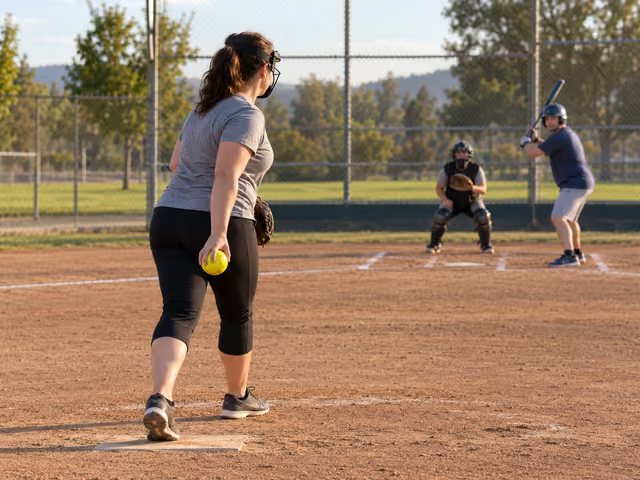
Away's first batter takes the box, home puts ten fielders in position, and the catcher confirms everyone is ready. The pitcher pauses facing the batter with a foot on the rubber, then releases a continuous underhand pitch at moderate speed. Its highest point must be 6–10 feet above the ground. Bat only after the catcher calls play; never quick-pitch an unready batter.
Track balls and strikes
A legal pitch passing over home plate between the batter's front knee and back shoulder is a called strike in a natural stance. A swing and miss is also a strike. This game uses no strike mat: where the pitch lands does not define the zone, and a pitch touching the ground or plate before being hit is dead. An unswung pitch outside the zone, short, onto the plate, or with an illegal arc is a ball. If the batter swings at an illegal airborne pitch, the swing or hit counts. Start 0–0. Four balls award first base, moving only runners forced by that award. Three strikes retire the batter even if the catcher drops the pitch; a foul with two strikes is the third strike and an out. A foul tip directly into the catcher's hands is a strike and dead ball in this format. A pitched ball hitting the batter is dead: an unswung pitch outside the zone is a ball, not an automatic walk; an attempted swing counts as a strike.
Put the ball in play
Swing normally; bunting or deliberately chopping the ball downward is an out, with the ball dead and runners returned. On fair contact, set the bat down rather than fling it and run to first. A ground ball before first or third is fair or foul where it is touched or settles; one passing either base in fair territory stays fair even if it later rolls foul. For an untouched fly beyond the bases, its first landing decides fair or foul. Lines and the white halves of the bases are fair. An uncaught foul is dead: runners return and the strike is counted. A caught fair or foul fly is an out and remains live.
Run and make outs
House rule: stay on the base until the ball is batted; an early departure is an out and the pitch is canceled. There are no steals, wild-pitch advances or pickoffs. After a fair hit, touch bases in order. At a contested first-base play use the contrasting half while the defender uses white; our house game stops and replays that at-bat if an errant throw would require swapping halves. Once the play ends, use white to stand on first, return or round toward second. You may overrun first and return immediately without a tag out if you do not attempt second. At other bases, remain in contact to be protected. A fielder makes an out by catching a fly before it lands, touching a forced runner's next base with the ball securely held, or tagging a runner off base with the held ball. Throwing the ball at a runner never makes an out.
Know when a runner is forced
The batter must reach first. A runner on first must go to second when the batter becomes a runner; with first and second occupied, second's runner must also go to third. A runner with an empty base behind them is not forced: touch-tag that runner instead of merely standing on the next base. When a following runner is put out, the force ahead can disappear. On a caught fly, runners must retouch their original base after the ball is first touched before advancing; this is tagging up. A fielder can appeal an early departure or missed base before the next pitch by naming the runner and base to the caller. A fair ordinary-effort infield pop-up with first and second occupied, or bases loaded, and fewer than two outs is an infield fly: call the batter out even if it drops, remove the force, and let runners stay or advance at their own risk. Line drives do not qualify.
Score and finish the half-inning
Each runner legally reaching home scores one run. With two outs, no run counts on a play whose third out is a force or the batter being retired before first. On a third-out tag, a run completed before the tag can count. Announce outs and runs after every play. When action finishes and the ball returns to the pitcher, the catcher calls time; runners then hold their bases. Three outs end the half-inning, clear the bases and switch teams. Start the next half with no outs. Continue each team's batting order from its next uncompleted turn; do not restart at the top each inning.
Complete the game
After the top of inning seven, stop if home already leads; otherwise home gets its final half. If home takes the lead in that half, it wins immediately. A fence-clearing home run credits the batter and every runner, even if only one run was needed. If still tied after seven, play another inning with empty bases, away batting first and home receiving a reply; repeat while tied. If the booking or safe conditions prevent more play, record a tie. For a weather or injury interruption, stop immediately. Our house result uses the last complete inning, unless home's partial reply already tied or passed away's score; if none was completed, record an unfinished game. There is no guaranteed whole-game duration or automatic run-ahead finish.
A grounder with the batter out at first ends the inning with no run, even if third's runner touched home earlier. If the batter reaches first and a different, unforced runner is then tagged for the third out, compare the tag time with the touch of home.
Resolve close calls and keep the field workable
Demonstrate a force at first, a tag at second and tagging up before scoring begins. Put a confident communicator at pitcher and someone ready to call fly balls in each outfield area; catcher is not permission to stand close to a moving bat. Tell runners whether to hold or go from outside the baseline. Help a new batter wait for the descending pitch instead of rushing the swing.
House dispute procedure: stop after the play, before the next pitch. Each captain gives one account and the designated caller decides. A genuinely unseen close play is replayed from the prior count, outs, runners and score. For a missed base or early tag-up, make the appeal before another pitch; an upheld appeal retires that runner and cancels their run if applicable. Check unusual appeals against the rulebook rather than guessing. Out-of-play throws are dead and award two bases from each runner's last touched base when the throw left the fielder's hand; an overthrow staying inside the boundary remains live. Our house boundary simplification gives one base from the last touched base for a fielder carrying or accidentally dropping a held ball out of play.
House contact procedure: no deliberate collisions, fake tags or blocking a base without a play. A runner deliberately interfering with a fielder's play is out; return others to the bases held at the interference. A defender obstructing a runner without fielding the ball gives that runner the base they would have reached, as judged by the caller. Stop immediately if a collision or injury occurs. These are simplified house remedies, not the rulebook's complete interference and obstruction cases. Do not require someone to slide; slow or give up a play rather than collide. Pitchers and infielders face hard batted balls even with protective equipment. Stop for lightning, poor footing or inadequate light and follow the venue's reopening instructions.
Say the current inning, score, outs and count aloud so both benches follow. Confirm the score sheet at each side change. If someone must leave, stop and reorganize before continuing; this packet does not invent automatic missing-player outs or a substitute roster. For a new game, reset scores, recheck equipment and choose home/away again.
Already know the game?
Ideas & Twists
Choose a variation together before you start.
Slow-pitch softball · See main rules
Suggested house variationFive-inning game
Agree on five innings before play. Keep every other rule, applying the final-inning and extra-inning procedure in inning five instead of seven. This reduces the planned innings, not a promised number of minutes.
Slow-pitch softball · See main rules
Suggested house variationOne courtesy foul
With two strikes, allow one uncaught foul without adding a strike. A second uncaught foul with two strikes is an out. Called or swinging strike three still ends the at-bat. A caught foul fly remains an immediate out. Reset the courtesy allowance for each batter; this changes the main game's first-foul-with-two-strikes ending.
Slow-pitch softball · See main rules
Suggested house variationFive-run innings
For innings one through six, end a half-inning at three outs or five runs, whichever comes first. Credit no more than five runs in that half, including a home run, and resume the lineup with the next batter. In inning seven and any extras remove the cap. Keep the normal home-team reply and walk-off finish; this changes the early innings' run limit, not the winner condition.
About this guide
Recreational house format reviewed October 2, 2026, drawing on USA Softball 2026 basic mechanics rather than claiming championship compliance. Explicit house choices cover lineup/walk equality, starting count, no leads/steals, rubber-only pitching, no clock penalty, equipment, officiating/replays, contact remedies, interrupted games, no home-run quota/run-ahead ending and empty-base extra innings. Municipal rules show local differences; their gender-specific formats and time limits are not imported. Community discussions guide beginner explanation, not rule authority or popularity claims.
- USA Softball · 2026 Official Rules ↗
- USA Softball · current certified equipment ↗
- City of Rockville · 2026 adult slow-pitch league rules ↗
- City of Clermont · 2026 adult softball rules ↗
- r/slowpitch · General first game advice? (June 2025) ↗
- r/slowpitch · Never played, signed up for rec league (July 2026) ↗
Ready for something different?
Find another game →