

The quick version
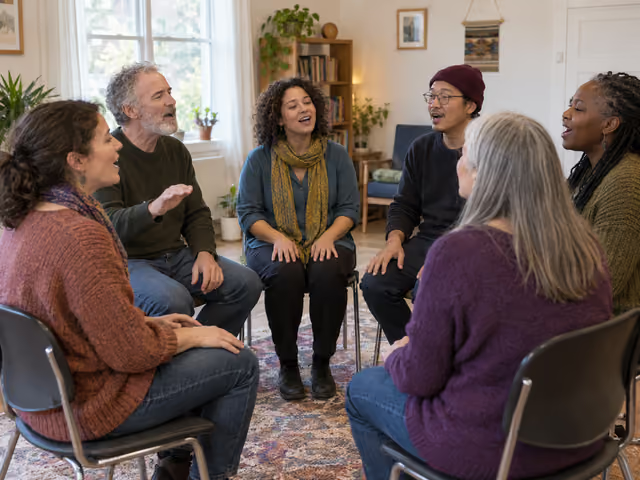
Seat 4–12 people in a circle and choose a host. The host starts with an easy group song, then offers the next choice clockwise. On your turn, choose one song with a singable chorus or short repeated phrase, ask a willing person to lead it, or pass. Teach the shared part before starting, agree how it ends, and let everyone join or listen. After everyone has had one choice, repeat the opening song together to close. There are no points or winners.
Saved on this device only — clearing your browser's cache or site data removes them (no account backup).
Make a circle and prepare something to share
This is a private, seated, unaccompanied house format for 4–12 adults, including the host. It has no purchased edition or universal rulebook. Song circles have different local customs; this guide chooses a clear clockwise order and one circuit so a new host can run the gathering.
Use a room where singing is welcome and everyone can hear one another. Arrange one seat per person in a circle, with a clear route in and out. Existing chairs, a sofa arranged with other seats, or suitable floor seating can work; ask what seating people need. No stage, instrument, microphone, playback device, songbook, printed lyrics, paper, pen or timer is required.
Ask willing singers beforehand to bring a song they can lead from memory: a familiar song, an original song, or a short melody with a repeated part that can be taught by ear. Everyone need not bring a song. The host prepares one reliable opening song, which also becomes the closing song, and one fallback. Choose material appropriate to the invited group; ask before using unfamiliar ceremonial material and respect a contributor's boundaries. This guide reproduces no song lyrics and supplies no permission to copy, distribute or record someone else's work.
Explain that the whole circle is invited to sing, hum the melody, or listen. Choosing and leading are optional. The base format uses one melody at a time, with no instruments or backing tracks. Agree to one circuit of choices, a shared closing song, and breaks whenever needed. A longer gathering needs a fresh agreement after that finish.
Give everyone a first sound to join
The host names the opening song and identifies the part everyone will share. Sing that chorus or short repeated phrase alone once, then invite the group to try it together. Start at a comfortable pitch and pace; a person can sing the same melody in a different octave. If the pitch feels strained, stop and restart lower or choose the fallback rather than asking people to force it.
A ready-to-use house fallback is a wordless tune. The host invents a short, gentle four-beat melody on an open vowel or a hum, sings it once, and lets everyone echo it. Try it together until people know the shape, then sing it in unison four times. Count the last repetition with fingers and finish with a closing hand cue. This is a teaching example and backup, not a required song or a singing test.
For an ordinary verse-and-chorus song, say whether everyone joins throughout or only at the chorus. The leader can carry the verses while the circle shares the recurring part. Choose the last verse before starting; for a repeated song, choose the number of repetitions. Demonstrate a raised hand for the last repetition and a closing hand for the final note. The opening song counts as the host's choice in the circuit.
Offer a song, sing together, pass the choice
Offer the next choice
After the opening song finishes, the host offers the turn to the person immediately clockwise. That person can lead one song, request one that a willing singer knows, or pass. A request does not oblige anyone to perform. If nobody can lead it, choose the fallback or pass; move on without an extended search. A helper's leading does not consume the helper's own later choice.
Teach the shared part
The chosen leader briefly explains where the circle joins and sings the shared part for everyone to hear. Let the group try it before beginning the full song. Use the same melody in the main format; harmony and layered rounds are optional variations. The chooser and leader agree on the final verse or repetition count and show the ending cue.
Sing and listen
The leader starts and keeps a steady pace. Others join the agreed part, hum, or listen while learning. Sing at a level that lets you hear the leader and your neighbors. Pause for a breath or restart together if the group loses the phrase; mistakes do not remove anyone. Give a clear last-verse or last-repetition signal, then end together.
Continue clockwise
Allow a brief pause after the song, then offer the next seated person's choice. One song or pass completes a turn; repeats are allowed. Keep the same seat order even when another person helped lead. A late arrival can join the singing immediately and gets a choice when the remaining circuit reaches their seat; if it already passed that seat, the host offers one final choice before closing.
Close the circle
When every present person has had one opportunity, the host announces the closing song and repeats the opener with its agreed ending. If every guest passed, the opening and closing songs still make a complete session. There is no score, ranking, winner or tie. If the group needs to stop earlier, agree to go directly to the closing song; nobody owes a performance or a makeup turn.
Keep the circle easy to enter
Offer a turn once and accept a pass warmly. Someone who passed can ask the host for a final choice before the closing song, but need not explain their decision. Do not turn singing into auditions, loudness contests or compulsory solos. Check before filming or recording; a person's willingness to sing does not mean they agreed to be recorded.
If two people begin at once, return to the current chooser. If a singer remembers another melody or set of words, follow the version the leader started; suggest trying the other version on a later turn. Do not debate it over an unfinished song. If the leader forgets a verse, finish at the next shared ending, use the fallback, or stop that turn kindly.
If voices drift apart, ask everyone to listen while the leader restarts the shared phrase. If someone dominates the sound, ask for a softer repeat so people can hear each other. Move a difficult song to a future meeting rather than spending the circle on correction. A brief thank-you after each contribution is enough; keep conversations for the pause.
Singing involves audible vocal sound even in a small seated circle. Choose a suitable room and check individual hearing, voice, language and seating needs; this setup is not a blanket accessibility guarantee. Take water or rest breaks as needed, and let anyone leave or listen. Participation, rather than vocal accuracy, is the point of the gathering.
Already know the game?
Ideas & Twists
Choose a variation together before you start.
Song circle · See main rules
House suggestion · learn by earEcho circle
Replace the verse-and-chorus choices with short phrases that the current leader sings once and the group echoes once. The leader teaches a phrase on a hum, vowel, or their own words, then leads four call-and-echo pairs and closes with the usual hand cue. Keep clockwise choices, request-a-helper and passing. After the circuit, close with four call-and-echo pairs led by the host. No new equipment, harmony, scores or solo requirement is added.
Song circle · See main rules
House suggestion · add one layerTwo-part round
On a willing chooser's turn, use a short repeating melody the group already knows well and that works as a round. First sing it together in unison. Divide willing singers into two groups, with a confident singer in each. The leader names an entry point: group B begins its first phrase when group A reaches that point. Each group sings the melody three times, then stops at the end of its own third repetition; B finishes after A. Others may listen or stay with one group. If the layers drift, return to unison and finish together. This replaces only that turn's song; circle order and the shared unison closing song remain. No instrument or conductor's stand is needed.
Song circle · See main rules
House suggestion · connect the choicesSongs on a theme
Before starting, agree on a broad topic such as journeys, seasons or home. Each chooser offers a singable song connected to it and can explain the connection in one sentence. Personal connections count; nobody judges the best match. If someone cannot think of a song, they may request the opener or fallback, or pass. Keep one choice per person, teaching, endings and the shared closing song. The theme changes selection, not scoring or participation.
About this guide
Song-leading practitioners and community discussions inform shared singing, optional turns and teaching by ear. The clockwise circuit, fallback, closing song and variations are suggested hosting arrangements. This guide provides no song lyrics or permission to copy or record another person's work.
Ready for something different?
Find another game →