

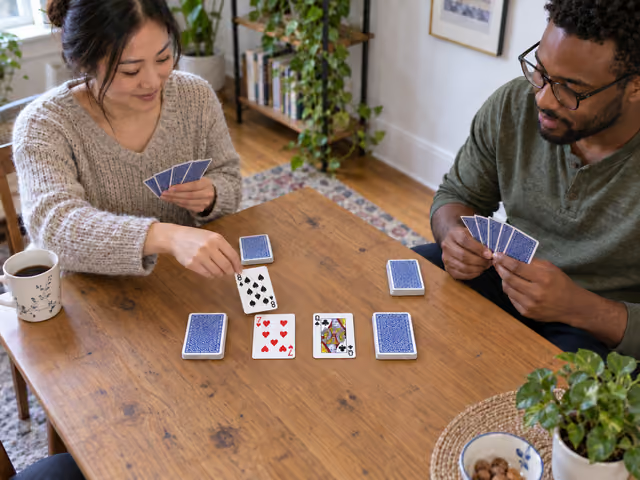
The quick version
Deal five cards to each hand and a face-down draw stack of fifteen to each player. Between you, make a row of five face-down reserve cards, one face-down starter, another starter and five reserve cards. Turn both starters up together. Play single cards one rank up or down on either middle pile; suits do not matter and king–ace–two connects. Draw up to five in hand. When neither can play after drawing, turn a reserve card onto each middle pile together. Empty your hand and draw stack first to win.
Saved on this device only — clearing your browser's cache or site data removes them (no account backup).
Deal hands, draw stacks and the middle row
Use one complete 52-card French-suited deck, with all jokers removed, and a stable table within comfortable reach of two seated players. Both need to see the middle piles and hold a small fan of cards. Choose cards you are comfortable handling quickly.
This guide uses five-card-hand Speed with twenty cards per player: five held privately and fifteen in a personal face-down draw stack. Pagat documents this deal alongside a smaller fifteen-card version. It is different from Spit, where players have rows of exposed stock piles, and California Speed, where matching ranks in a layout trigger plays.
Shuffle all 52 cards. Deal each player five cards to hold and fifteen more for their personal draw stack. Deal the remaining twelve in one shared horizontal row: a face-down pile of five reserve cards, a single face-down starter, a second single starter and a face-down reserve pile of five. These total 40 player cards plus 12 middle cards. Keep the two reserve piles at the outer ends, distinct from your personal draw stacks.
Agree to the collision, correction and tied-finish house procedures below before starting. The main format is one deal with one winner; no timer, phone, score sheet, slapping or spoken race call is required.
Start together and keep both piles in view
Reveal the starters
When both are ready, each player turns one middle starter face up at the same time. Those are the two shared play piles. Neither player owns a pile: either person can play onto either one, with no turns.
Play one card
Use one hand to place a single card from your hand onto a play pile. Its rank must be immediately above or below the current top card. The rank cycle is A, 2, 3, 4, 5, 6, 7, 8, 9, 10, J, Q, K, then A again. A 7 accepts a 6 or 8; an ace accepts a king or 2. Suit and color are irrelevant. Equal ranks are not allowed. Place a run one card at a time, checking the new top each time; never drop a packet.
Refill from your own stack
You may draw one card at a time from your personal face-down draw stack whenever you hold fewer than five. Never hold more than five. You may make several separate legal plays before drawing again. If you cannot play, draw back to five while cards remain and check again. When your draw stack is empty, continue with the smaller hand you have left. You may not look through, reorder or draw from the middle reserves.
Restart only when both are blocked
A player who cannot play waits while the other continues. If neither can play after replenishing their hands as far as possible, pause together. Each flips the top card from one outer reserve onto its adjacent middle pile, simultaneously, then resume. Do not restart just because one player is stuck or dislikes an available play.
Rebuild exhausted reserves
If both outer reserves have emptied and both players are blocked, leave the top card of each play pile in place. Gather the covered cards underneath those two tops, shuffle them together and divide them into two face-down reserves as evenly as possible. On a shared count, flip one from each onto the adjacent middle pile and resume. If one reserve has one extra card and only it remains at the next block, flip that card onto its adjacent pile. These uneven-reserve handling details are this guide's house procedure.
Finish the deal
You win as soon as your last hand card is legally played and your personal draw stack is empty. An empty hand with cards still to draw is not a finish: draw and continue. The middle play and reserve cards do not belong to either player's remaining total. Say you are finished and stop to confirm both personal areas. There are no ongoing points in the main format. Gather all 52 cards and shuffle afresh if you want another deal.
Before the race, use the actual starter cards to ask which ranks would fit. If a top is 7, the answers are 6 and 8, of any suit. If it is an ace, king and 2 fit. Walk through one play and one draw without racing, then gather and redeal for a scored result.
Keep the race clear and fair
Arrange the two middle piles so each player can reach both without leaning across the other. Keep cards flat and place them rather than throwing or slapping them. Fast card handling and rank recognition are central to this game; being seated does not make it suitable for every vision, dexterity or processing need. Use the slow demonstration before a competitive deal.
For a collision, a legal card that clearly touched first becomes the new top; the later card must fit that new rank, not the rank it replaced. For example, if both try to put an 8 on a 7, the second 8 cannot stay. If the order is unclear, pause, return both attempted cards to their owners, restore the prior top and resume on a shared count. This indeterminate-order remedy is a house agreement.
For an illegal play or a sixth card held, stop as soon as it is noticed. This guide suggests returning the illegal card or the most recently drawn extra card, restoring the immediately preceding position where both can identify it, then restarting together. If later plays or draws make an accurate restoration impossible, void the deal and reshuffle all 52 cards. These corrections are house procedures, not a universal traditional code.
If both last cards are legal and neither player can establish who finished first, call the deal tied and replay from a fresh shuffle. Do not award a win for a louder call or a faster slap. If a player says they are blocked, check their hand and draw stack before changing the middle cards; a playable card cannot be withheld to force a restart. Quiet conversation is enough for readiness, pauses and confirmation.
Already know the game?
Ideas & Twists
Choose a variation together before you start.
Speed · See main rules
Documented Speed deal optionSmaller deal, bigger reserves
Give each player fifteen cards total instead of twenty: five in hand and ten in their personal draw stack. Increase each middle reserve from five to ten cards; the two single starters remain. All 52 cards are still used. Keep the same five-card limit, rank cycle, simultaneous play, blocked restart and first-empty finish. This changes how much each player must shed; it does not introduce Spit's exposed stock piles.
Speed · See main rules
House ruleDraw before playing again
After each play, draw one replacement from your own stack before making another play, while the stack contains cards. When it empties, play the remaining hand normally. Keep the maximum of five, single-card placements, shared piles and all restart and finish rules. This replaces the main format's permission to play several cards before refilling and gives both players the same draw rhythm.
Speed · See main rules
House match formatFirst to two deals
Play freshly shuffled deals until one player has won two. Each valid deal win counts as one; tied or void deals count for neither player and are replayed. Alternate who shuffles and deals, return all 52 cards before each deal, and keep the same main rules. Remember the deal score aloud or optionally write it down; no opponent-card point total is used.
About this guide
This is a traditional game, not a purchased edition. Pagat's page, last updated June 29, 2020 and opened October 2, 2026, distinguishes five-card-hand Speed from Spit and documents the twenty-card-player/five-card-reserve deal used here. It also documents keeping the top middle cards when rebuilding reserves. Triple S Games' retrieved creator description supports the same deal, one-hand single-card play and optional rather than compulsory immediate refilling; direct video playback was unavailable. This guide ends after one deal instead of using Pagat's cumulative opponent-card scoring. Uneven recycled reserves, collisions, corrections, tied finishes, compulsory-draw variation and the first-to-two match are explicit house agreements. No Spit pile-taking or California Speed matching rule is imported.
Ready for something different?
Find another game →