

The quick version
Deal four cards each. Feed cards from the dealer's stock around the table to the left, keeping or passing one at a time. Four of a kind lets you take the first spoon; then everyone may take one. The person without a spoon gains a letter. Spell SPOON and leave the game; last remaining player wins.
Saved on this device only — clearing your browser's cache or site data removes them (no account backup).
Put the spoons within everyone's reach
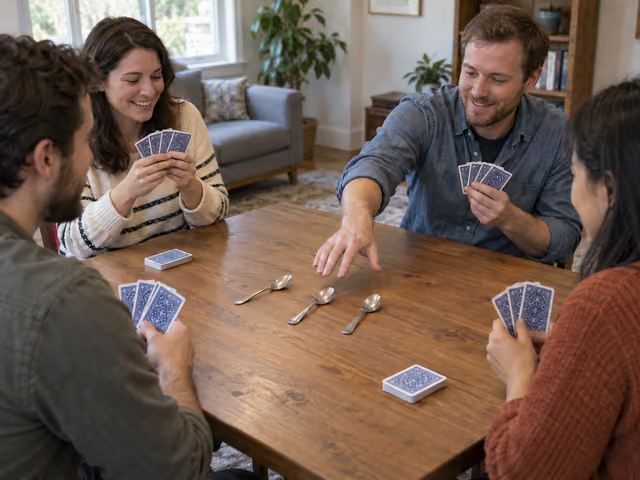
Start with 3–6 people seated around a clear, stable table. Use ordinary smooth spoons, not forks or brittle utensils. Put one fewer spoon than players in a small central circle, separated enough to pick up individually. Everyone must be able to reach the spoons while seated; move drinks and clutter away.
Remove jokers from a standard deck. Choose a dealer, shuffle and deal four cards to each person. Put the rest face down beside the dealer as the stock. The player immediately to the dealer's right is last in the passing chain and needs a clear space for a face-down discard pile. On paper, list each person's name and leave room for the letters S, P, O, O, N.
Agree on the friendly handling rules before playing: one spoon per person, stay seated, and never pull a spoon from someone's hand. A touch alone does not claim it; lifting it clear does. If two people hold the same spoon, release it and pause for the dispute remedy below.
Keep four cards and watch the spoons
The dealer starts the chain
Draw the stock's top card. Keep it and pass a different card, or pass that new card unchanged, face down to the left. Finish the choice with four cards in hand. For example, with three queens and a five, keep a new queen and pass the five.
Pass continuously
Everyone else receives cards from the right, makes the same keep-or-pass choice and passes left. The last player discards instead of feeding the dealer. Players act as cards arrive, not in a single table-wide turn. House pacing: handle one incoming card at a time, in arrival order; leave any waiting cards face down and do not scoop up several or hoard them. The dealer slows down if a queue builds.
Take a spoon at the right moment
Four cards of the same rank qualify: four sevens, for example, not four cards of one suit. You may take the first spoon as soon as your four-card hand qualifies, even immediately after the deal. A quiet pickup is allowed. After the first valid pickup, everyone else may take one, whatever cards they hold. Stop handling cards once you take a spoon.
Recycle an empty stock
If the dealer runs out, pause the passing and shuffle the last player's discard pile into a new face-down stock. Keep hands and queued cards in place, then resume. House fallback: if that pile is empty, finish passing the queued cards to produce discards before restarting the dealer's draws.
Mark the letter and redeal
When all spoons are taken, the person without one gets their next letter in SPOON. There are no card-point totals. At five letters they are eliminated; otherwise everyone stays. Collect and reshuffle all 52 cards for the next round, pass the deal left to the next remaining player, and reset the spoons to one fewer than the remaining players. Keep existing letters. With two survivors, use one spoon and continue the same letter rule until only one player remains.
Before anyone takes a spoon, you need four of a kind to start. After a valid first pickup, you only need to notice and take one. A spoon saves you from a letter; it does not award points.
Demonstrate the pass and settle close calls
Do an unscored demonstration before the first deal: show three queens and a five, draw the fourth queen, pass the five, then take a spoon. Let the others react. This teaches the switch from collecting cards to watching the table.
These are house dispute remedies, not Bicycle penalties. An early pickup without four of a kind voids the round: return every spoon and redeal with the same dealer and unchanged letters. The first picker shows their four cards after the grab ends so the table can verify it. If two people simultaneously start valid grabs, both may keep a spoon; that is not a scoring tie.
For a jointly held spoon or an unresolved claim about who lifted it first, do not wrestle or assign a letter by argument. Void the round and redeal with the same dealer and unchanged letters. Apply the same remedy if a spill or handling error makes the outcome unknowable. An ordinary missed spoon gets a letter; replay is for a disrupted or genuinely disputed round. The main game has one final winner, so there is no tied final score. Reset all letters when starting a new game.
Already know the game?
Ideas & Twists
Choose a variation together before you start.
Spoons · See main rules
PlayMonster-style elimination variationOne miss and out
Replace the five-letter rule with immediate elimination for the person without a spoon. Remove one spoon after each elimination, rotate the dealer among survivors and redeal. The final two compete for one spoon; its valid taker wins that round and the game. Keep the main guide's passing and dispute rules. No paper tally is needed, but eliminated players wait until the next game.
Spoons · See main rules
Suggested house variationKeep everyone in
Replace letters and elimination with one penalty point for each missed spoon. Everyone stays and the spoon count stays one fewer than the original group. Play one full dealer rotation so each person deals one completed round; a void round repeats under the same dealer and does not count. After the last dealer's round, lowest penalty total wins and tied lows share the result. Keep points on paper.
About this guide
Bicycle supplies the main 52-card, four-card-hand, stock-to-discard, five-letter format and recycling rule. PlayMonster clarifies simultaneous keep-or-pass play and documents the immediate-elimination alternative; its packaged edition differs. Seating, pacing, dealer rotation, two-survivor continuation, empty-discard fallback, verification and replay remedies are explicit host choices. Keep everyone in is a suggested house variation.
Ready for something different?
Find another game →