

The quick version
Book a sheltered-water lesson for the whole group. Meet the instructor, fit flotation and the correct leash, and learn the route and recall signal. Launch kneeling, practise stopping, turning and reboarding under supervision, then paddle the agreed short route together. Finish with every person back ashore and the equipment returned. This outing has no points or winner.
Saved on this device only — clearing your browser's cache or site data removes them (no account backup).
Book the lesson and prepare
This format is for 2–6 friends, plus the qualified instructor and any additional staff the provider requires. Confirm that the provider can teach the entire group on sheltered, still water in daylight, with an easy launch and landing. Ask about swimming requirements, individual needs, equipment sizes, session length and cancellation arrangements before booking. Tell the instructor privately about concerns that affect participation. Each person decides whether to join.
Arrange a board and single-bladed SUP paddle for every paddler. Wear a correctly fitted flotation aid throughout the water session. The provider selects and fits the leash for the actual water and snag hazards and demonstrates how to release it. An ankle leash is not suitable everywhere: moving water and entrapment hazards need different decisions. This beginner outing stays off rivers, tidal currents and whitewater.
Dress for immersion and water temperature; bring the provider's required wetsuit or other protection, plus drinking water, sun protection, a towel and dry clothes. For this outing each paddler carries a charged phone in a waterproof pouch, secured on their person and reachable. Ask the provider about reception and the local emergency procedure.
The instructor checks boards, fins, paddles, flotation and leash attachments; inflatable boards follow their manufacturer's pressure instructions. The provider checks access, weather, wind, water conditions and hazards before launch. Tell a shore contact the location and expected return. If conditions are unsuitable, postpone or use the provider's land lesson; do not launch just because the booking is paid.
Know where to go and how to stop
Before getting wet, have the instructor point out the practice area, route, turnaround, landing and places to avoid. Agree how close to stay, where to regroup and the exact audible or visual recall signal. Repeat back what it means: everyone stops the exercise, listens and follows the instructor's return directions. Ask what to do if separated or unable to paddle.
The instructor demonstrates paddle grip and blade direction on land. Then watch a launch, a controlled stop, a turn and a fall-and-reboard demonstration. Take questions now. A friend can encourage you, but the instructor directs the water session and decides whether the group is ready to leave the practice area.
Learn, then paddle together
Launch on your knees
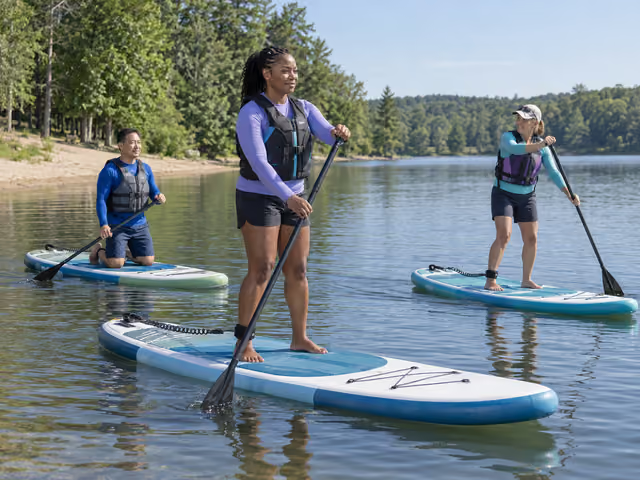
Enter where the instructor directs, with enough depth to clear the fin. Climb onto the centre of the board kneeling. Hold the paddle with one hand on the top grip and one on the shaft; the blade angles toward the nose. Make a few short forward strokes, changing sides and hand positions to keep your course.
Stop and turn before travelling
Practise in the instructor's marked area, leaving room between boards. A backward stroke helps slow or stop; a broad forward sweep on the right turns the nose left, and a sweep on the left turns it right. Take turns demonstrating while others wait where directed. Keep looking ahead and avoid striking another board with your paddle.
Practise falling and getting back on
Only practise where the instructor has checked depth and underwater hazards and is ready to help. Fall clear of the board onto the water surface rather than jumping feet first or diving. Stay with the board. From its side near the centre, bring your legs toward the surface, kick and slide your chest onto the deck as taught, then return to kneeling. Flotation and leash belts can catch on the board; ask for help rather than exhausting yourself. Practise wearing your actual fitted kit. If anyone cannot reboard, the whole group stays in supervised practice or ends ashore with the instructor's help; do not set off on the route.
Try standing when ready
From kneeling, place one foot and then the other near the centre. Rise gradually with feet parallel about hip-width apart and knees soft. Look ahead. Reach the blade forward, pull it back toward your feet and lift it out; alternate sides as needed. Kneel again if tired or wobbly. Nobody has to stand to stay with the lesson.
Follow the short route
Leave practice only when the instructor approves. Follow their chosen sheltered route, keep the agreed spacing and remain within their supervision. Pause at the named regroup points and turn back at the agreed landmark or earlier on recall. Tell the instructor promptly about fatigue, cold, fear or difficulty keeping up. The group follows the instructor's shortened return plan rather than leaving someone behind.
Return every person and board
Follow landing directions, kneel before the final approach if instructed, and step off where told once the board is controlled. The instructor counts everyone ashore. Return equipment, change into dry clothes and tell the shore contact the group is back. The session ends after the complete group return; points, rankings and ties do not apply.
Keep the group comfortable
Share the booking details, meeting point and clothing list in advance. Ask about comfort in water without turning it into a challenge. Make the first paddle about learning and being together: falls and kneeling do not earn penalties. Leave photos until a stable pause approved by the instructor, and ask before photographing anyone.
If friends disagree about distance, standing or a change of route, follow the instructor's decision and the needs of the person asking to stop. Never push boards, splash someone off balance or turn an exercise into a race. The instructor handles a person needing help; other paddlers keep clear and follow directions rather than attempting an improvised rescue.
Already know the game?
Ideas & Twists
Choose a variation together before you start.
Stand-up paddleboarding · See main rules
Host suggestion · shorter routeStay in the practice bay
Agree with the provider before launching to replace the travelling route with a supervised circuit inside the practice area. Keep the briefing, stop-and-turn work and fall-and-reboard practice. Follow the instructor's named circuit and return on recall; nobody paddles out to a distant landmark. Finish with the same complete group landing and equipment return.
Stand-up paddleboarding · See main rules
Host suggestion · posture choiceKneeling paddle
Ask the instructor to keep the group kneeling for the short route and to adjust paddles and technique accordingly. Omit the standing exercise; launch, steering, stopping, fall-and-reboard practice, spacing, recall and the finish remain the same. Kneeling still requires active paddling and recovery skills; it does not extend the route or change the provider's participation requirements.
Stand-up paddleboarding · See main rules
Host suggestion · skills focusSteering circuit
With the provider's agreement, replace the short route with a supervised steering circuit in the practice area. The instructor identifies existing visible reference points: paddle to the first, stop, make a broad turn, then paddle to the second and return. Take turns while others wait in the designated area, repeat only with instructor approval, and finish on recall with everyone ashore. Use no stopwatch, points or winner; keep all briefing, recovery and equipment requirements.
About this guide
These sources explain beginner technique and water preparation, rather than a competitive ruleset. The 2–6-friend range, each-person phone requirement, lesson sequence, regroup-and-recall arrangement and three variations are hosting choices. The provider sets actual staffing, participation requirements, equipment, route and conditions; local rules still apply.
Ready for something different?
Find another game →