

The quick version
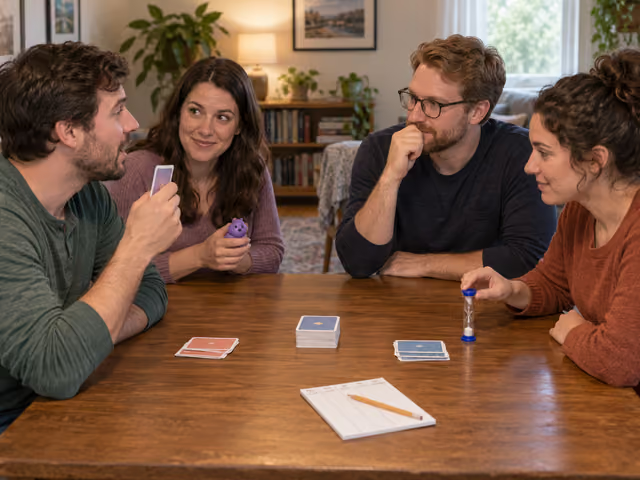
Choose a card color and two equal teams. Take turns describing while an opponent watches your card and runs the timer. Keep correct cards separate from skipped or squeaked cards. Correct cards earn your team one point each; skips and violations earn the opponent one each. Switch teams after the timer. Everyone describes once; highest total wins, with one extra turn per team to break a tie.
Saved on this device only — clearing your browser's cache or site data removes them (no account backup).
Choose teams, color and a finish
Use the English Classic Taboo F5254 edition with the 2023 instruction sheet. Its 212 cards contain four color-coded prompts each, for 848 targets. Bring the included mechanical squeaker, sand timer and notepad, plus a pencil. This format uses the physical equipment; a phone is optional in the publisher's version and is not needed here. Editions with a game-changer die, electronic buzzer or game board have their own instructions.
Make two equal teams: two against two, three against three or four against four. Write each team's describer order on the pad. Alternate teams until every person has described once. Agree which team starts. Everyone stays seated; arrange seats so an opponent can read beside the describer while the describer's teammates cannot see the card face.
Choose one color for the whole game. Orient all cards alike with that prompt hidden in the draw stacks. Reserve separate spaces for correct cards, skipped or squeaked cards, and unfinished cards. Keep used prompts out of the draw stacks. Name the current opponent who watches the card and another who watches the sand and records scores; in a four-person game those are the two opponents. There is no neutral host or extra participant requirement.
Describe freely within the word limits
The card's target is the answer; the five words beneath it are forbidden to the describer. Read all six before speaking. Give as many spoken clues as you need. Everyday situations, definitions and synonyms can work, provided they do not use a forbidden word or a prohibited part or form. You are not limited to one-word clues.
Do not say the target, any forbidden word, their component words, plurals or abbreviations. Do not mime, point out the answer, make sound effects, offer a rhyme, announce a starting letter or use a sounds-like clue. F5254 expressly allows singing, but lyrics still have to obey the word restrictions. A guesser's use of a forbidden word does not unlock it for the describer. These restrictions apply to the describer, not to guesses.
For an unscored demonstration, invent a card aloud: target UMBRELLA, forbidden words RAIN, WET, OPEN, HANDLE and STORM. A possible clue is 'You carry this over your head on a gloomy walk.' Saying 'It keeps you dry in the rain' would fail because it includes a forbidden word. This is a teaching example, not a claim that this prompt is in the purchased deck.
Run one timed turn
Start with a hidden card
The opponent starts the sand timer; the describer flips the first card and uses the chosen color. Teammates call out guesses while the monitor reads the same prompt. Keep the card face hidden from the guessers. Only the current team's guesses count.
Sort the result and keep moving
When your team says the target, place the card in the correct pile and take the next. If you choose to skip, or the monitor squeaks for an illegal clue, put it in the penalty pile and take the next. A skip is always a penalty, including an unfamiliar target. A squeak ends that card, not the whole turn. The sand keeps running.
Stop and record both scores
At timeout, stop clues and guesses. This guide's house ruling gives an unfinished card zero points to either team and removes that prompt from play; a guess completed after the stop does not count. Add one to your team's total for each correct card and one to the opponent's total for each skipped or squeaked card. Do not also subtract those penalty cards from your team's score.
Switch teams and describers
Clear the used cards away from the draw stacks. The other team takes its timed turn with its next describer; the off-turn team now monitors. Continue alternating through the written orders. Every person describes once, so the two teams receive the same number of turns.
If your team gets four correct, skips two and gets squeaked once, add 4 to your total and 3 to the opponent's. You do not record a net score of 1. A turn with no correct answers can still give the opponent points.
Finish after everyone's turn
After every player has described once, compare the running team totals. The larger total wins. If tied, each team takes one additional full timed turn, using the next person in its order. Compare only after both turns; repeat paired turns if still tied. Correct cards and penalty cards still score normally.
For another game, reset both totals and select an unused color. If draw stacks run out before a complete pair of turns finishes, this guide suggests a house remedy: abandon that incomplete pair and its points, change to an unused color, and replay the pair with the same describers and fresh prompts. If no unplayed color remains, use the totals after the last completed pair; a tied total gives a shared result. Record pair totals separately if the deck is running low. These deck-exhaustion rulings fill a gap in the short F5254 sheet.
Keep the challenge friendly and clear
Begin a clue with a situation or purpose rather than racing to say the nearest synonym. Listen to the guesses and change your approach if needed. Scan the full forbidden list before each new clue. Divide confident word-game players between teams, and use a deck language everyone can read and follow. Timed reading, speaking and hearing are real demands; seated play is not a promise of universal access. Try the untimed cooperative twist if the group prefers thinking space.
Agree before the timer what counts as the target: this guide's house standard accepts an ordinary singular or plural of the complete answer, but a multiword target needs all its meaningful words together in one guess. A synonym alone is not a completed answer. That acceptance standard never permits the describer to use a banned form.
A monitor should briefly name the prohibited clue, not argue about intent. Community discussions disagree about word families and coincidental fragments inside unrelated words. For a genuinely uncertain call, this guide suggests setting the card aside and continuing; after the turn, consult the printed sheet together. If uncertainty remains, give that card zero points, remove it and settle one consistent convention for later cards. Do not invent a blanket ban on every synonym. This dispute remedy is a house suggestion, not an official appeals procedure.
If a guesser sees the card face accidentally, this guide's house remedy removes that card for zero points and continues with a fresh one. Deliberately showing an answer is not a clue. Keep the scorepad visible to both teams and explain each penalty pile before recording it.
Already know the game?
Ideas & Twists
Choose a variation together before you start.
Taboo · See main rules
House adaptation · best with 6 or 8One-guesser rotation
Choose one teammate as the only guesser for an entire timed turn. Other teammates listen silently and cannot feed answers or questions. Rotate the designated guesser to the next teammate at the next team turn, skipping the current describer. At four players each team already has one guesser, so this adds nothing. Clue restrictions, timer, penalty points, the one-describer-turn-per-person finish and paired tiebreaks remain unchanged. This adapts the one-guesser idea in the A4626 game-changer die edition; F5254 has no such die.
Taboo · See main rules
House suggestion · one shared resultUntimed cooperative circuit
Keep 4, 6 or 8 people and the same deck, but replace teams and the timer with a clockwise circuit. Each person describes exactly three fresh prompts in a row. The next person clockwise monitors the card with the squeaker; everyone else may guess. End each card on a correct answer, a voluntary skip or a squeak. Correct is one shared point; skip, squeak or an exposed card is zero. Do not reveal the answer and retry it for credit. Continue until everyone has described three cards. Report the shared total out of 3 times the player count, then stop; there is no competing winner or tie. Keep all clue restrictions and agree the same answer/dispute conventions before starting. The sand timer is not used in this twist.
About this guide
Main rules use Hasbro's F5254 English instruction sheet (©2023) and physical components. The authored fit is 4, 6 or 8 on equal teams, not Hasbro's entire 4+ listing. One turn per describer is this guide's chosen equal-turn schedule. Timeout, target-form acceptance, uncertain/exposed-card and deck-exhaustion remedies are explicit house rulings. All three twists are house formats; the A4626 one-guesser option is inspiration, not an imported F5254 die rule. Community posts inform host advice and do not establish official rules, language-learning outcomes or popularity.
Ready for something different?
Find another game →