

The quick version
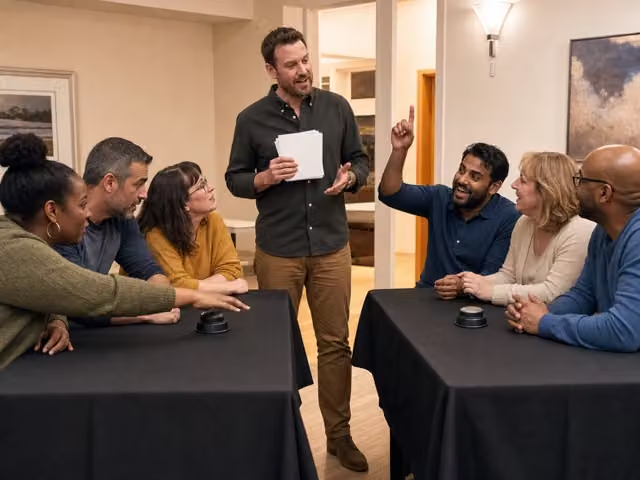
Choose one non-playing host and teams of two to four. Play three rounds of six questions, allowing 45 seconds per question. Each correct answer earns one point. Highest total wins; use a prepared numeric question for a tie.
Saved on this device only — clearing your browser's cache or site data removes them (no account backup).
Prepare the quiz and its finish
The host prepares eighteen questions in three sets of six, a private answer key, and two spare numeric tiebreak questions with verified answers and units. Use a mixture such as everyday science, films, geography and word puzzles. Check every answer against a reliable source and note acceptable alternatives. Avoid a question with several defensible answers unless the wording specifies which one is wanted.
Make at least two teams of two to four people, with one answer sheet and pen per team. Number each sheet 1–6 for each round and add the team name. The host sits out because they know the answers. Keep source material out of view.
This is a suggested house quiz. Announce the three-round finish, one-point marking and 45-second question clock. No searching or outside help while answering; a phone used as the host's timer stays with the host. Preparation and discussion make this a session rather than a promised short game.
Ask, mark and decide
Read the first question
Read the number and question clearly to everyone, repeat it once, then start 45 seconds. Teams confer quietly and write one answer beside that number. A team can leave a blank rather than guess. No shouted answers or steals.
Lock the answer
At the alarm, call for pens down on that answer. Teams may not revise it during later questions. Follow the same procedure for all six questions, then collect the sheets before revealing any answers.
Mark consistently
The host awards one point for each correct answer, zero for blanks or wrong answers, with no deductions. Spelling need not be perfect if the identity is clear, except in a question explicitly testing spelling. Explain answers and announce round and running totals. Repeat for rounds two and three with fresh numbered space.
Finish or break a tie
The highest total after eighteen questions wins. Tied leaders write one numeric answer to the same prepared tiebreak question, using the same 45 seconds. Smallest absolute difference from the verified answer wins; an exact tie uses the second spare. If still tied, share the win. Clear the score for another quiz and use new questions.
Keep the question fair
Ask for one answer type at a time. For example, asking for the name of a three-equal-sided triangle makes the required answer clear. A question asking for a person's name should say whether a surname is enough. Rotate who writes each round so one person does not control the whole discussion.
If someone challenges the key, hear the reason before the next round. Accept a verified alternative for every team that wrote it. If the question itself is defective, remove it from everyone's possible total. Use the same decision for the room and update visible scores.
Already know the game?
Ideas & Twists
Choose a variation together before you start.
Team trivia · See main rules
Suggested house variationChoose one double round
Before seeing any questions, each team marks one of the announced three topics as its double round. Correct answers in that round earn two points for that team; all others earn one. Each team has the same maximum of 24 points. Highest final total wins, with the same numeric tiebreak procedure.
Team trivia · See main rules
Suggested house variationPicture round
Replace one six-question round with six numbered original or permission-cleared pictures and matching identification questions. Give all teams the same view and six minutes to discuss the whole sheet, then collect answers. Each correct identification earns one point. The other two rounds and the final total/tiebreak stay unchanged.
About this guide
A suggested home quiz, with its own question count, clock, scoring and tiebreak. Professional quiz provider QuizQuizQuiz describes having the host or assistants mark papers; it does not prescribe this house format. Question facts must be checked by the host when preparing the quiz.
Ready for something different?
Find another game →