

The quick version
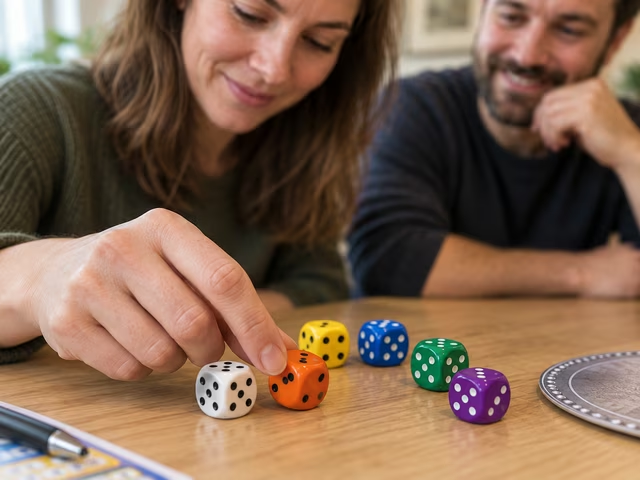
The active player rolls all six dice, chooses one they can use and puts it on an empty die space of their sheet. Mark its colored area, then put every still-available die with a lower face value on the shared silver platter. Reroll the remaining dice and repeat, up to three selections.
Saved on this device only — clearing your browser's cache or site data removes them (no account backup).
Prepare the table
Give everyone an original score sheet and pen; sequels use different sheets and rules. Randomly choose the first active player. Play six rounds with two players, five with three or four with four. At the start of each round mark its box and give everyone its printed bonus; in round four each chooses one of the two shown options.
Play a turn
The active player rolls all six dice, chooses one they can use and puts it on an empty die space of their sheet. Mark its colored area, then put every still-available die with a lower face value on the shared silver platter. Reroll the remaining dice and repeat, up to three selections. If no dice remain, stop early; if no roll can be used, that roll produces no mark and still uses one of the three rolls. At turn end put all remaining unselected dice on the platter.
Each other player now chooses one platter die to use on their own sheet; multiple people may use the same die. Only if none of those dice can legally be used may a passive player choose one from the active player's sheet instead. Then pass all six dice clockwise. A round ends after everyone has been active once.
Yellow crosses one matching number in any open yellow square. Blue crosses the sum of the blue and white dice, wherever those dice currently sit. Green fills the next square from the left only if the die meets its minimum. Orange writes the value in the next square, applying its printed multiplier. Purple writes a higher value than the previous entry, except any value may follow a six. White acts as any color; using it as blue still adds both dice.
Resolve earned sheet bonuses immediately, including chains. A colored X crosses any legal yellow or blue square, or the next green square without needing its threshold. A colored number writes that value in the next orange or purple square under its normal placement rule. Circle earned rerolls and extra-die actions, crossing them when spent. An active-player reroll rerolls all currently rolled available dice. At the end of the active or passive turn, each extra-die action uses any one of the six dice again. Multiple extras are allowed, but each physical die can be chosen only once through extras that turn.
Finish and score
Finish the last player's turn, including everyone's passive selection and extra-die actions. Yellow scores completed-column stars; blue uses the printed scale for number of crosses; green uses the star above its last cross; orange and purple sum their entries. Add one copy of your lowest color score per earned fox. Highest total wins, then highest single-color score; any remaining tie is shared. Unused actions score nothing.
Host the first game
Reddit's Game of the Week discussion praises both bonus chains and having something to gain during another player's turn. Pause after each selection to resolve its entire chain before rolling again. Always leave blue and white readable, even after a die is set aside, because their sum still matters.
Already know the game?
Ideas & Twists
Choose a variation together before you start.
That's Pretty Clever! · See main rules
Original STUDplay house twistSingle extra
You may spend at most one extra-die action at the end of any active or passive turn. Saved extras remain available on later turns.
That's Pretty Clever! · See main rules
Original STUDplay house twistNo repeat color on your turn
Your three normal active selections must be assigned to different scoring colors. White uses the color you assign it to. Bonus marks and extra-die actions are exempt.
That's Pretty Clever! · See main rules
Original STUDplay house twistFixed fourth-round bonus
Before play agree that everyone uses the round-four black X, or everyone the black six. Each person still chooses its permitted destination color.
That's Pretty Clever! · See main rules
Original STUDplay house twistOne selective reroll
Once per game, when spending an earned reroll, you may hold one currently available die and reroll the rest. Mark the exception beside your reroll track; ordinary rerolls still reroll all available dice.
About this guide
Requires the named physical game and its supplied components. Rules are paraphrased teaching guidance; keep the box's cards and reference diagrams beside the table. Original STUDplay house twists are optional, untested suggestions rather than publisher rules. Agree one before setup; unchanged rules still apply.
Ready for something different?
Find another game →