

The quick version
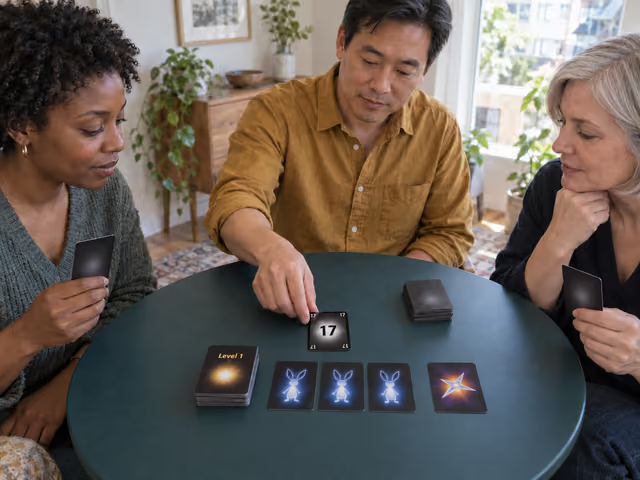
Start with one hidden number card each, one shared star and as many lives as players. Use levels 1–12 for two, 1–10 for three or 1–8 for four. When everyone is ready, begin playing one card at a time, lowest first. A play that skips lower cards costs one life: discard all skipped cards and continue. Empty every hand to finish a level, collect its printed reward, shuffle all 100 cards and deal one more per person. Clear the last level together to win; losing the last life ends the game.
Saved on this device only — clearing your browser's cache or site data removes them (no account backup).
Set the team's levels and lives
Use the original physical The Mind base game, following NSV's English rules. Pandasaurus sells the original game under this name; The Mind Extreme and Soulmates are separate games. Sort the set into 100 unique number cards, numbered 1–100; 12 level cards; five rabbit life cards; and three throwing-star cards. The stars are cards, not objects to throw.
- Two players: stack levels 1–12, with 1 on top. Start with two lives and one star.
- Three players: stack levels 1–10. Start with three lives and one star.
- Four players: stack levels 1–8. Start with four lives and one star.
Keep active lives and stars visible together, separate from the unused supply. Return unused levels to the box. Sit indoors where everyone can see and reach one central card pile while keeping their own hand private. Shuffle all 100 number cards and deal one face down to each person for level 1. Put the undealt deck aside; there is no drawing during a level. Look at your own card, keeping it hidden.
Choose your moment to play
Begin together
Each ready player puts one hand palm down on the table. When everyone is ready, remove those hands and start. No player is appointed to go first: whoever believes they hold the lowest number in the group plays it face up in the center.
Always play your lowest card
Play one card at a time onto that same pile. In later levels, keep your hand in ascending order privately and play your lowest remaining card first. You may play consecutive cards immediately, but place them separately. There is no clockwise turn, pass action or mandatory waiting time.
Keep card information private
Do not say values, show cards, give hints such as 'mine is low', consult about who should play, or invent signals. Ordinary eye contact is fine; do not use agreed expressions or gestures as a code. Do not count seconds or agree a counting pace. The permitted refocus and star signals below have their own purposes.
Pause when needed
Anyone may say 'stop' to refocus. Freeze play, place hands palm down, then remove them once everyone is ready and continue with the same hands and pile. A refocus alone costs nothing. Do not use it to announce numbers or negotiate the next play.
Finish the level
Once every hand is empty, including cards removed by mistakes or stars, the level is complete if the team still has a life. Collect any reward printed on that level card, then remove the level card. Gather every number card—played, discarded and undealt—shuffle all 100, and deal each person the number shown on the next level. Level 2 gives two each, level 3 gives three each, and so on. Begin together again.
Recover from a skipped card
If a played card is higher than any card still held, anyone holding a lower card must immediately stop play. Remove one shared life for that mistaken play. Everyone discards all cards in their hand below the newly played number, placing them face up to the side rather than adding them to the play pile. Keep the high card on the pile. Refocus and continue this level with the remaining cards; do not redeal or restart it.
For example, someone plays 46 while two others hold 39 and 44. Both lower cards go aside and the team loses one life total, not two. A later separate mistake costs another life. If the penalty removes the final life, stop immediately: the game is lost, even if that mistake also emptied the last hand.
Use a shared star to clear the lowest cards
During a level, anyone may raise a hand to propose using a throwing star. Use one only when the team has an active star and everyone agrees. As a host convention, acknowledge agreement with a nod; give no hints about your hand. Each player with cards then discards their single lowest card face up to the side. An empty-handed player discards nothing. Remove one shared star, refocus, and continue with the same pile. This costs no life. A star does not let you choose any card you like or cancel a mistake that has already occurred.
Levels 2, 3, 5, 6, 8 and 9 have completion rewards. Read the symbol at the bottom right of the completed level card: add one star for a star symbol or one life for a rabbit/life symbol. Level 2 gives a star. Take rewards from the unused supply, up to three active stars or five active lives. If already at that limit, leave the extra reward in the supply. Lives and stars carry forward between levels; they do not refill automatically.
Win or lose as one team
Complete the final level for your player count with at least one life remaining and everyone wins together. Lose the last life and everyone loses together. There are no individual points, winners or tie-breaks; every number card is unique, so equal values cannot occur. If you want another attempt, restore the starting lives and one star, shuffle all 100 number cards, and begin again at level 1.
The rulebook offers a face-down continuation after a full victory. The variation below gives a complete version with an explicit house convention for checking multiple mistakes.
Help the group find its rhythm
Explain the start, one-life recovery and star before dealing; then let the group try level 1 rather than coaching its timing. Conversation between levels is welcome. During a level, keep words to the permitted stops and procedural clarifications. A quiet call is enough: you do not need to shout. Keep the active life/star supply clearly apart from discarded cards so nobody accidentally spends the same star twice.
Two people may reach at once. Agree this house convention before play: the card touching the pile first is the play; the other player holds back and checks their remaining hand. If both landed, resolve the order they actually landed in and apply the ordinary error rule. Do not rearrange the pile to make it correct.
If a private hand is accidentally exposed, a house recovery is to gather all 100 cards and redeal the current level with the current lives and stars, giving no reward for the abandoned deal. Deliberately sharing information changes the challenge; pause, restate the agreement and use that same recovery rather than inventing a points penalty.
Some groups enjoy the suspense, while others miss talking and taking turns. Try the short ascent below before committing to a full run. Treat mistakes as shared timing problems, not one person's failure. Keep cards large enough to read and the pile within reach; ask what seating or card support people need before dealing.
Already know the game?
Ideas & Twists
Choose a variation together before you start.
The Mind · See main rules
House suggestion · shorter first sessionFive-level introduction
Set the usual starting lives and one star for your player count, but use only levels 1–5. Play and award the normal rewards after levels 2, 3 and 5. Finish successfully after level 5 with a life remaining; losing the last life still ends the attempt immediately. This is a short-run success, not a full base-game victory. For another attempt reset to level 1 and the normal starting resources. All dealing, hidden information, mistake and star rules remain unchanged.
The Mind · See main rules
House suggestion · timing challengeNo-star ascent
Use the normal levels and starting lives for your player count, but return all three star cards to the box. You cannot propose or use a star, and ignore every star reward printed on a completed level. Still collect printed life rewards, up to five lives. Refocusing and one-life mistake recovery remain available. Complete the full normal level stack to win together; lose the last life to lose. Reset the starting lives for a new attempt and keep stars out.
The Mind · See main rules
Official continuation · house mistake-count conventionBlind sequel
After winning the full base game, keep exactly the lives and stars you have left and rebuild the normal level stack from level 1. Shuffle all 100 cards and deal one per person, then increase hands normally at later levels. Play cards face down, keeping their play order intact. Do not stop because you know a lower card remains: you cannot see the played values. Refocusing and unanimously agreed stars still work; star discards remain face up to the side. At level end reveal the pile in its original play order. For this house checking convention, scan from first to last: each card lower than the highest number already revealed costs one life. For example, 12, 48, 31, 40 costs two lives. Stop as soon as the last life is lost; otherwise award the level's normal reward and continue. Record the highest blind level completed with a life remaining. Completing your final level is a blind victory. A fresh game starts with the normal base-game resources, rather than restoring resources during this sequel.
About this guide
The main game follows the original NSV English base-game rules. The five-level run, no-star run, exposed-hand redeal, simultaneous-play convention and agreement nod are house suggestions. The rulebook's blind continuation is official; the explicit multiple-mistake counting convention in that variation is a house rule. Extreme and Soulmates rules are not used.
Ready for something different?
Find another game →