

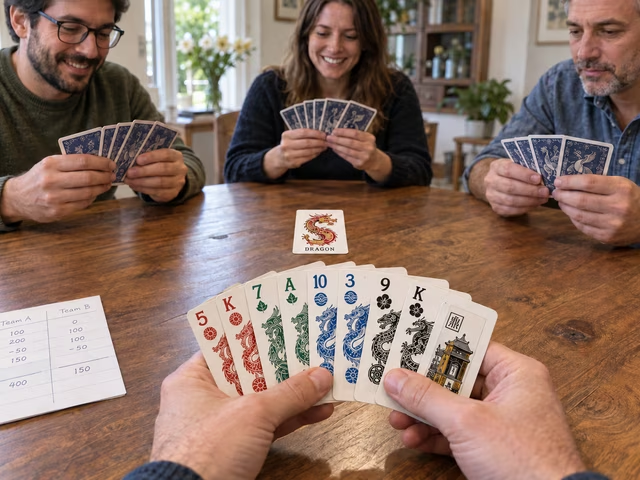
The quick version
Lead a single card, pair, three of a kind, full house, sequence of at least two consecutive pairs, or straight of at least five cards. On your turn pass or beat the current play with the same combination type and number of cards. Compare ranks, using the triple in a full house.
Saved on this device only — clearing your browser's cache or site data removes them (no account backup).
Prepare the table
Use one fifty-six-card Tichu deck: four suits ranked two through ace, plus Mah Jong, Dog, Phoenix and Dragon. Partners sit opposite. Play counterclockwise. Shuffle and let each player take one card in turn until each has fourteen; pause after eight cards for optional Grand Tichu declarations before anyone sees a ninth card. Each player secretly passes one card to each other player, selecting all three before picking up incoming cards. The Mah Jong holder leads first but need not lead that card.
Play a turn
Lead a single card, pair, three of a kind, full house, sequence of at least two consecutive pairs, or straight of at least five cards. On your turn pass or beat the current play with the same combination type and number of cards. Compare ranks, using the triple in a full house. Suits do not break ties. Passing does not stop you playing later in the same trick. After the other players pass, the last player to play takes the trick and leads again; if already out, the next active player in the play direction leads.
A bomb is four equal ranks or a straight of at least five cards all in one suit. It beats an ordinary play and can be played out of turn. A straight-flush bomb beats a four-card bomb; longer bombs beat shorter ones, then compare rank. Allow a clear pause for bomb opportunities before collecting a trick.
Mah Jong counts as one and may join a straight. Its player may wish for an ordinary rank. The next player on their normal turn who can legally include a real card of that rank must do so, even with a bomb; otherwise the wish persists. An out-of-turn bomb need not fulfill it. Dog can only lead an empty trick: it passes the lead to your partner, or the next active player after that partner, and cannot be bombed.
Phoenix can replace one normal card in a combination, but cannot make a bomb. As a single it is half a rank above the previous single, or 1.5 when led; it cannot beat Dragon. Dragon is the highest ordinary single and cannot join combinations. If it wins, give the whole trick to an opponent of your choice while retaining the lead. If bombed, the bomb winner keeps the trick.
Before playing your first card you may call Tichu: your team gains one hundred if you personally go out first, otherwise loses one hundred. Grand Tichu, declared before seeing a ninth card, instead risks two hundred. A Grand caller cannot also call small Tichu. Calls are individual; no hand discussion or signaling during play.
Finish and score
If partners finish first and second, stop immediately: their team scores two hundred and the other zero, before calls. Otherwise stop when only one player holds cards. Give that player's remaining hand to the opponents and their captured tricks to the first finisher. Score fives as five, tens and kings as ten, Dragon as twenty-five and Phoenix as minus twenty-five; all other cards score zero. Add each declared call separately.
Play further hands until a team has at least one thousand at a hand's end. Higher total wins; if tied, play another hand. The previous first finisher shuffles the next hand.
Host the first game
A Reddit return-to-Tichu report describes the game opening up once players understood helping a partner finish, rather than merely clearing their own hand. Teach an example where passing protects your partner's lead. Write the current Mah Jong wish where everyone can see it and erase it once fulfilled.
Already know the game?
Ideas & Twists
Choose a variation together before you start.
Tichu · See main rules
Original STUDplay house twistNo Grand calls
For the whole match, omit Grand Tichu. Small Tichu stays available before your first play, with its usual hundred-point gain or loss.
Tichu · See main rules
Original STUDplay house twistPartner-only exchange
After dealing, pass exactly one card to your partner and none to opponents. Everyone chooses before collecting their incoming card. Hands remain fourteen cards.
Tichu · See main rules
Original STUDplay house twistEarly small calls
Small Tichu must be declared after the exchange but before the Mah Jong holder's first lead. Grand calls retain their original timing.
Tichu · See main rules
Original STUDplay house twistPublic first lead
After exchanging, the Mah Jong holder announces the type of combination they will lead—single, pair, triple, full house, pair sequence, straight or bomb—before other players make any remaining small-Tichu declarations. Their first play must use that type.
Tichu · See main rules
Original STUDplay house twistShort match
Use a target of five hundred instead of one thousand. Finish and score the entire hand, compare totals if both cross, and play another hand on a tie.
About this guide
Requires the named physical game and its supplied components. Rules are paraphrased teaching guidance; keep the box's cards and reference diagrams beside the table. Original STUDplay house twists are optional, untested suggestions rather than publisher rules. Agree one before setup; unchanged rules still apply.
Ready for something different?
Find another game →