

The quick version
Choose a permitted shore with a short, known route and a suitable daylight low tide. Check local advice, weather and tide predictions, then agree the exit, exploration boundary and latest turnaround. At the beach, count everyone and reassess the conditions. Walk together to the first reachable pool, look from bare ground and let each person point out something without touching it. Leave at the first return trigger and count everyone back at the agreed meeting point. There are no points or winners.
Saved on this device only — clearing your browser's cache or site data removes them (no account backup).
Choose a shore the whole group can reach
This guide hosts 2–6 adults on a daylight, shore-based observation outing. Everyone, including the host, counts toward that range. It is our small-group format, not a park visitor limit or an official staffing ratio. Choose a short route suited to the least confident walker; this outing does not include swimming, snorkeling, scrambling over headlands or passing through sea arches. A ranger-led visit is a useful option when the group cannot confidently judge local access.
Ask the land manager about current closures, permitted access, wildlife protections, parking, entrance fees, route hazards and tide advice. Check the actual approach and return terrain: parking near a beach does not mean the pools are easy to reach. Loose pebbles, driftwood, slopes and slick rocks can make the return slower. Ask each person about footing, balance and how far they want to walk. If the route cannot suit everyone, choose another site or a managed marine-life exhibit together rather than promising easy access.
Bring, for each person, sturdy closed-toe shoes with flexible grippy soles that may get wet, weather-appropriate layers and rain or sun protection, drinking water and a snack. For the group, bring printed tide predictions for the correct date and location, a local route map with exits and hazards, a watch, a charged phone in water protection, a compact first-aid kit, one working headlamp or torch per person for an unexpected delay, and a bag for your own litter. Confirm usable phone coverage on this short route, the local emergency number and the precise location to give responders. Choose another site if reliable communication cannot be arranged. A light is backup equipment, not permission to plan a night return.
Optional extras are a local identification guide, binoculars or a camera. Carry them in a pack while walking so hands are free for balance. Nets, collecting buckets, bait and tools for prying animals or rocks are not part of this outing. Check any site-specific equipment or access requirements before departure.
Plan the return as carefully as the low tide
Read the tide prediction's date, location, time zone, units and reference level. Confirm with local staff which prediction location and route limits apply to your beach; do not copy another visitor's tide time or assume the nearest station is suitable. A lower tide often exposes more pools, but it does not guarantee safe access. At Olympic National Park, the tidepool page recommends tides below one foot for viewing. That is local viewing advice, not a universal safe water level.
Check the coastal forecast, swell warnings, daylight and current conditions as well as tide predictions. Predictions do not include every weather-driven change in water level. Allow the approach, careful walking, stops and the complete return in daylight. Choose a clear outer boundary, exit and meeting point, and set a latest turnaround early enough for the slowest person to return before the route becomes unsafe. Ask local staff if you cannot establish that window; if still uncertain, do not start the walk.
Choose pools accessible without rounding a headland, going under an arch, crossing a surge channel or making a tide-dependent creek crossing. A safe-looking outward passage can disappear behind you. Tell someone staying offsite your destination, group size, intended return and what to do if you are overdue. Recheck the forecast and local notices before leaving and the actual shore on arrival. Turn back earlier whenever conditions require it; the watch never overrules the sea.
Agree how to move, look and stop
At the meeting point, count the group and point out the return route, boundary and turnaround time. Form pairs; an odd group has one trio. Buddies stay within sight and speaking distance, and the whole group stays together. The host monitors time and route; name another person to watch incoming water and waves while others are absorbed in a pool. With two, the host watches the sea while the friend looks, then they trade. With three or more, rotate the lookout only with a spoken handover.
Everyone remains responsible for their own footing and the ocean. The lookout is an extra reminder, not protection from a wave. Anyone may say 'return' for discomfort, fatigue or uncertainty; the whole group leaves together without a vote. Return at the latest turnaround or earlier if waves reach the observation area, water encroaches on the exit, footing is doubtful, the weather or visibility worsens, or anyone wants to stop. Never wait for a route to become blocked before leaving.
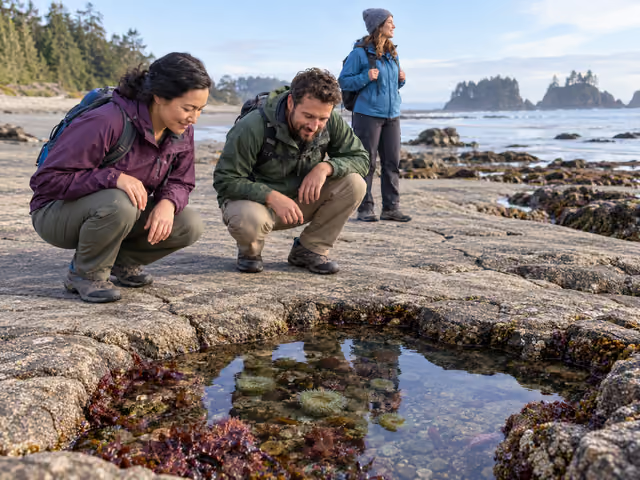
Observe without handling, feeding, collecting, moving rocks or pulling seaweed aside. Keep feet out of pools and off animals and plants. Stay on a clear stable approach or view from farther away; an interesting animal does not justify reaching an unsafe edge. Local rules still apply if another visitor is touching things. This group's observation-only agreement is intentionally simple and conservative.
Look closely, share the view and return together
Start with the nearest suitable pool
The host checks the exit and waves, then leads at the slowest person's pace. Test a foothold before putting full weight on it, take short steps and keep at least one foot grounded. Do not jump between rocks. Leave wet logs and seaweed-covered rocks alone; choose another view if the approach is doubtful.
Let the pool settle
Stop on stable bare ground outside the water. Wait quietly and look for shapes, movement and patterns already visible. A small shell may move; an anemone may be open or closed. Notice what is actually there rather than poking, splashing or lifting a rock to make something appear.
Take turns noticing
One friend describes where to look, using a nearby landmark, while keeping their hands away from the animals. Others take a turn at the good viewing spot without crowding its edge. The lookout continues watching the ocean. If identifying an animal, describe what you can see and use the guide later; uncertainty is fine.
Move only within the agreed boundary
Check the return route and the sea before the group moves to another reachable pool. Keep the pairs or trio and the lookout role intact. Do not split up to search farther away or compete for a rarer sighting. Skip a pool when it is crowded or cannot be reached without trampling habitat.
End on the first return trigger
When the agreed turnaround or any earlier stop applies, leave together by the confirmed exit. Do not add a final pool or shortcut. At the meeting point, physically count every person before anyone departs, share one observation and pack out your litter. The outing is complete when everyone is accounted for and ready to leave; there is no score, winner or tie. A quiet day with few sightings still counts as a finished visit.
Try 'Look at the edge of that pool: can you see a shell moving?' Everyone may answer or pass. It is a way to share attention, not a required species hunt.
Keep the visit comfortable and the limits clear
Choose a shorter route when someone finds the stones tiring; do not turn careful walking into a test of confidence. Let friends pass on identification or photographs. Avoid crowding another group's pool, blocking the path or asking someone to move closer for a picture. Use quiet conversation and leave wildlife in place. Never make touching an animal or finding a particular species a participation requirement.
If friends disagree about whether to continue, the earliest stop and most cautious limit govern. If someone says touching or lifting rocks is allowed elsewhere, keep this outing's look-only agreement and follow the current local restrictions. If people disagree over an identification, compare visible features or record it as unidentified rather than handling the animal. No disputed sighting changes an outcome because there is no score.
If the exit is unexpectedly cut off, stop before entering water or climbing an unassessed escape. Keep the group on secure higher ground away from wave reach if reachable safely, call the local emergency service promptly and give the location and number of people. Do not try to beat the tide, swim around an obstruction or send someone alone for help. A missing person or injury also ends the outing and activates the emergency plan; untrained friends should not enter the sea to attempt a rescue. Take local ranger instructions seriously.
If arrival conditions are unsuitable, cancel the pool walk and choose a safe permitted shore viewpoint or another gathering. Keep off wave-washed driftwood and away from sea cliffs. There is no obligation to use the equipment just because everyone traveled. Before leaving, check the group, personal gear and litter once more; wildlife, shells and rocks stay at the beach under this format.
Already know the game?
Ideas & Twists
Choose a variation together before you start.
Tidepooling · See main rules
House observation formatStay with one pool
Replace the moving-between-pools part with one safely reachable pool chosen by the host. Friends take turns describing a detail, then let the water settle again; nobody must produce a new discovery. Keep the same lookout handovers, boundary, stop triggers and group return. Finish at the planned turnaround or the first earlier stop, even if you hoped to see more. There is no species target or score.
Tidepooling · See main rules
House observation formatOne detail each
Before approaching, choose one broad thing to notice together: movement, shapes or how water fills a crevice. Each friend may share one observation at the return meeting point or pass. Use only pools on the original route, with no touching, collecting, extra distance or additional time to complete the prompt. End under the main return rules; there are no points or ties.
Tidepooling · See main rules
House observation formatCompare two views
The host selects two reachable pools already inside the planned boundary. Observe the first, then the second only if time and conditions permit, asking what differs in water depth, shelter or visible life. This is a discussion, not a controlled experiment or a claim that a species must live in either pool. Never transfer water, stones or animals between them. If the second pool is unsafe or the return trigger arrives, skip it and finish normally; no comparison is owed.
About this guide
NPS and NOAA inform shore preparation and habitat care. This suggested outing is observation-only: no handling, collecting or tide-dependent passages. Follow current advice for your exact site; Olympic's viewing-tide guidance is not a universal safe-access threshold.
Ready for something different?
Find another game →