

The quick version
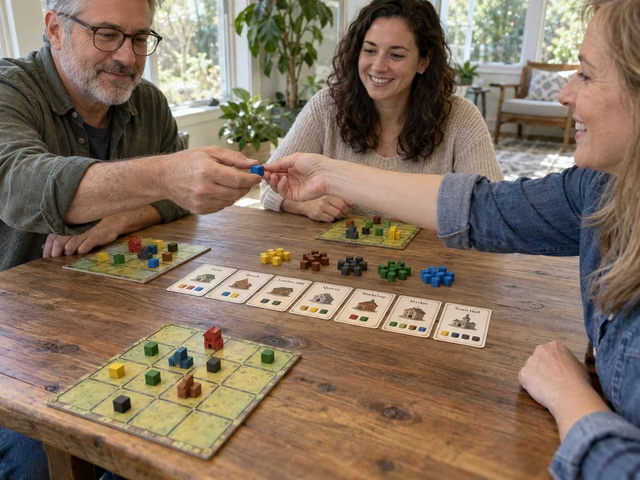
The Master Builder names wood, wheat, brick, glass or stone. Everyone still playing must put one cube of that type into an empty square. Once all have placed, anyone may build zero or more buildings.
Saved on this device only — clearing your browser's cache or site data removes them (no account backup).
Prepare the table
Use the base box. Give everyone an empty town board. Display Cottage plus one randomly chosen card from each of the other six building types; keep these seven recipes visible throughout. Supply all resource cubes and corresponding buildings. Give each player two secret monument cards; they keep one and one monument piece. Choose a first Master Builder and give them the hammer.
Read all seven building recipes and scoring instructions aloud. The cards are essential: the same wooden building represents different rules in different games. Cottage feeding depends on the selected food building; an unfed Cottage remains built but earns no Cottage points.
Play a turn
The Master Builder names wood, wheat, brick, glass or stone. Everyone still playing must put one cube of that type into an empty square. Once all have placed, anyone may build zero or more buildings. Match a displayed recipe's exact cube colors and arrangement, rotated or reflected if desired. Return those cubes to supply and place its building in one of their vacated squares. Announce the build. Cubes cannot be reused and buildings never move.
You may delay building, but cannot build after a resource is called until you first place that resource. A monument is built from its personal recipe once only: reveal its card, apply its immediate effect, and keep its ongoing ability and eventual scoring. Card-specific exceptions take precedence. Adjacency normally means shared edges, never diagonals.
When everyone finishes, pass the hammer left among active players. A town with no empty space and no further building it will construct is complete; that player stops receiving and naming resources. The last active player chooses their own resources until their town also ends. Pieces are unlimited; use clear substitutes if supplies run short.
Finish and score
When all towns are complete, remove unused cubes, except cubes stored on Warehouses. Score every building and monument using its displayed card, then subtract one for each empty town square, including squares just cleared of unused cubes. Highest total wins. Ties favor fewer turns as Master Builder, then fewer empty spaces, then more Cottages, then shared victory. Keep a tally of hammer turns if using the first tiebreak.
Host the first game
Demonstrate a rotated recipe and place the finished building on one of its former cube spaces. Reddit's Tiny Towns Game of the Week discussion divides over resource calling: some enjoy anticipating opponents, others prefer the printed Town Hall variation. Choose the table's preferred interaction before starting, and keep all recipe text readable from every seat.
Already know the game?
Ideas & Twists
Choose a variation together before you start.
Tiny Towns · See main rules
Published rulebook variantCavern reserve
Over the whole game, each player may set aside up to two resources named by other players instead of placing them. These set-aside cubes never reenter the town and score nothing.
Tiny Towns · See main rules
Published rulebook variantTown Hall resources
Replace the hammer with a mayor and the fifteen resource cards. Shuffle and secretly discard five. For two successive rounds reveal one card and everyone places that resource; every third round everyone chooses their own resource. Repeat; when the deck empties reshuffle all fifteen and secretly discard five again. Card effects about other players calling apply to revealed-card rounds; Bank limits personal-choice rounds and Fort Ironweed skips them unless its owner is last active. Use remaining printed Town Hall clarifications.
Tiny Towns · See main rules
Original STUDplay house twistVisible monuments
Reveal chosen monuments during setup rather than when built. Abilities still activate only after construction, so opponents gain information rather than an early bonus.
Tiny Towns · See main rules
Original STUDplay house twistOne resource relocation
Give each player one paper token. Between placing the called cube and building, discard it to move one resource cube to another empty square. Buildings cannot move. The token has no point value.
Tiny Towns · See main rules
Original STUDplay house twistNo repeated call
The Master Builder cannot name the immediately preceding resource. Place a spare cube beside the hammer to show that color. Ignore this restriction once only one town remains active; card-specific resource replacements still apply.
About this guide
Requires the named physical game and its supplied components. Rules are paraphrased teaching guidance; keep the box's cards and reference diagrams beside the table. Original STUDplay house twists are optional, untested suggestions rather than publisher rules. Agree one before setup; unchanged rules still apply.
Ready for something different?
Find another game →