

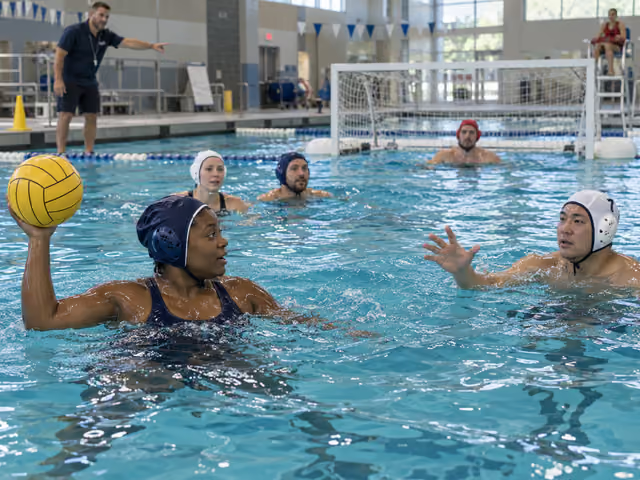
The quick version
Book the pool, coach and safety cover, then bring 14 swimmers for two teams of seven, including one goalkeeper each. Practice passing before playing. In this beginner house format, defend without touching opponents, use one hand on the ball and keep attackers outside the marked 2-meter strip. Play four 4-minute periods; each goal is one point. The higher total wins, and equal totals are a draw.
Saved on this device only — clearing your browser's cache or site data removes them (no account backup).
Arrange the session before inviting swimmers
Ask an aquatic center or adult water polo club for a beginner session with qualified coaching, a referee and timekeeping arranged by the provider, and separate lifeguard cover meeting the venue's requirements. Confirm the booking, cost, group capacity, supplied equipment and swimming assessment. Ordinary pool admission does not include this session. Each player must be comfortable swimming and treading in deep water and pass the provider's entry requirements; there is no universal distance test.
This guide uses a proposed beginner house game inspired by USA Water Polo's 2026–2027 rules. Send the full format to the provider for approval before booking: seven per side, no deliberate body contact, four 4-minute periods on a running game clock, a simplified 30-second possession clock, a full-width 2-meter attacking exclusion strip and pass-first restarts. These are recreational modifications, not the competition rulebook. If the provider offers a different format, obtain its complete rules before the group commits.
The provider sets a pool course suitable for the swimmers, with secured rectangular water polo goals at opposite ends, side boundaries, goal lines, halfway and clearly visible 2-meter markers. This guide uses an indoor deep-water pool. Keep the course separate from public swimming. The coach identifies the safe entry, exit, rest point and emergency stop signal. Staff handle equipment placement; do not improvise goal anchors or use lane ropes as climbing aids.
Bring 14 playing participants, divided into two balanced teams of seven: six field players and one goalkeeper each. Coach, referee, timekeeper and lifeguards are additional people, not part of that count. Field players wear contrasting light and dark ear-protector caps; goalkeepers wear red caps distinguishable by team. Bring secure swimwear and a towel, remove jewelry, and follow the provider's equipment policy. The provider chooses a water polo ball the group can handle and supplies a whistle, two timers, score sheet and pencil. Physical timers can replace phones.
Learn the first pass
Enter only when staff invite you. The coach first checks comfortable swimming, stopping, turning and sustained treading; ask them to demonstrate the alternating circular leg movement called the eggbeater kick. Practice with an instructor, rather than trying to learn it through a contested ball. Follow the coach's rest instructions and ask for a pause before fatigue makes treading difficult.
In pairs, float a short pass to the partner's open hand. Catch with one hand, steady yourself, then send it back. Use a soft pass before increasing distance. The coach then demonstrates an unopposed shot, a goalkeeper save and one pass-first restart. Practice these without keeping score. Begin the game only after the coach is satisfied the group can manage it.
Play the friendly game
Start from halfway
The referee chooses the first starting team by a coin toss or draw. Both teams begin in their own halves, with goalkeepers near their goals. On the whistle, the starting team passes from halfway to a teammate. That completed pass makes shooting legal. There is no race for the opening ball. Alternate the starting team each period; after a goal, the team that conceded restarts from halfway.
Move the ball and defend the passing lanes
Swim into open space, pass, or swim with the ball floating in front of you. Field players touch the ball with only one hand at a time, never a clenched fist; do not hide it underwater. A goalkeeper may use two hands inside their own marked 2-meter strip and stays in their own half. Nobody stands on the bottom or pushes off a wall, rope or goal during play. Keep attacking players outside the opponent's full-width 2-meter strip, even when holding the ball. Defenders intercept passes or block shots with an open hand, leaving space around the ball carrier; do not grab the ball out of someone's hand, hold, push, pull, dunk, kick or strike anyone.
Shoot before possession expires
The timekeeper starts a 30-second possession timer when play is live and a team controls the ball. At an awarded restart, it starts when the pass leaves the thrower's hand. It continues during passing and swimming, pauses on referee stoppages and resets to 30 on every awarded restart or change of possession. A genuine shot also gives a new 30 seconds once either team controls the rebound. A loose ball after a pass does not reset it. The referee decides whether a throw was a genuine shot. At expiry, whistle a turnover and give the opponents a pass-first restart where the ball is, outside the attacking 2-meter strip. If a shot was already in flight at expiry, let it finish: count a goal if it enters without another attacker touching it; otherwise allow the rebound's new possession or the appropriate out-of-bounds restart. The timekeeper calls the final five seconds aloud.
Count goals and change ends
One point scores when the whole ball crosses the goal line between the posts and below the crossbar. A rebound off a post or goalkeeper that remains inside the course stays live. A goal accidentally put into your own net counts for the other team. After a goal, record the point, return to your own half and let the team that conceded restart. Play four periods of four minutes on a running game clock: it continues through routine goals, fouls and ball retrieval, but staff stop it for safety, coaching or an equipment problem. Rest at least two minutes between periods, longer when the coach needs it. Change ends after period two.
Finish on the fourth-period signal
A shot released before the period-ending signal may still count if it goes in without another attacker touching it; otherwise play stops at the signal. The team with more goals after period four wins; equal scores finish as a draw. There is no extra time or shootout in this friendly format. Stop earlier if staff call it or anyone cannot continue comfortably. An unfinished game has no declared winner. Exit where instructed, return equipment and let the coach close the session.
Know where the next pass comes from
Every awarded restart begins on the referee's whistle with a pass to a teammate; a direct shot from the restart does not count. Opponents stay at least 2 meters from the thrower until the ball leaves the hand and may then intercept. Take the restart promptly. If it is taken from the wrong place or before the whistle, retake it; if the thrower shoots instead of passing, give the other team a restart there. All attacking restart locations must be outside the opponent's 2-meter strip.
- Side boundary: the team that did not touch the ball last takes the pass where it crossed the side.
- Behind a goal, outside the posts: use the same last-touch rule. An attacking last touch gives the defending goalkeeper a restart from their 2-meter strip. A defending last touch gives the attackers a corner restart from the nearest side's 2-meter marker.
- Handling or position foul: two hands by a field player, hiding the ball underwater, pushing off a fixture, or entering the attacking 2-meter strip gives the other team a restart where the ball was. Move it outside the new attacking team's 2-meter strip if necessary.
- Defensive contact: whistle immediately and give the fouled team a restart at the ball, moved outside the attacking strip if necessary. Contact by an attacker instead gives possession to the defenders. This game has no penalty shots or timed player exclusions. Repeated deliberate contact or dangerous conduct ends that person's participation; if this leaves fewer than seven on either team, end the scored game and continue only with a coach-led practice.
- Unclear last touch or simultaneous fouls: use an alternating possession arrow written on the score sheet. Initially it points to the team that did not start period one. Give that team the restart at the ball and reverse the arrow. Period starts do not change the arrow.
After a safety or coaching pause, the team that controlled the ball keeps the restart at that spot; use the arrow only when neither team controlled it. The simplified last-touch, full-width strip, restart, discipline and possession-clock rules above replace the competition rules for this house game.
Give beginners room to learn
Balance teams using both swimming confidence and water polo experience. Experienced players should make catchable passes, leave receivers space and explain positioning between periods. Ask the coach for a manageable pace; a strong lap swimmer can still find treading and handling the ball tiring. A useful first attack is a short pass into space followed by a return pass, rather than a long throw at a crowded goal.
The referee settles last touch, strip entry, fouls and whether the ball crossed the line. Ask about a call during a stoppage, then play from the announced restart; do not hold up play by arguing in deep water. Demonstrate the unusual house rules before the first whistle, particularly no deliberate contact, pass-first restarts and the running game clock. Choose any variation before starting and have the coach approve it.
Anyone may ask to rest or leave the water. Stop the scored game if a player leaves, rather than asking them to push through or putting an unassessed replacement in. If the group needs swimming instruction first, arrange that before a water polo session. Follow staff instructions for distress, collisions or equipment movement immediately.
Already know the game?
Ideas & Twists
Choose a variation together before you start.
Water polo · See main rules
Coach-approved house suggestionFive a side
For exactly 10 assessed swimmers, use two teams of five, each with four field players and one goalkeeper. Have the provider approve and mark a smaller course before entry; use the same two goals, 2-meter strips, staff cover and equipment. Keep four 4-minute periods, the 30-second possession rule, no contact, pass-first restarts, one point per goal and a draw for equal totals. Balance teams again. If either side falls below five, end the scored game. This changes the participant count; it is not the main 14-player format.
Water polo · See main rules
Coach-approved house suggestionThree-player attack
Keep the 14-player game, but a team must complete passes to two different teammates during each possession before shooting: the initial holder and the two receivers make three distinct players involved. A required pass-first restart counts as the first pass; the next completed pass must reach a different teammate. The goalkeeper may be one of the three. The count returns to zero after a goal, turnover, awarded restart or genuine shot and rebound, even if the same team recovers. The referee calls 'one' and 'ready' for the two valid receivers. A premature shot gives the opponents a pass-first restart at the ball, outside their attacking strip. The clock still runs for 30 seconds, so choose short passes. All scoring, period, contact and draw rules stay the same.
About this guide
USA Water Polo's 2026–2027 rulebook supplies the sport's seven-player teams, one-hand field play, goal definition and core handling restrictions. This guide proposes a complete, provider-approved beginner house game with shorter running periods, no deliberate contact, a simplified clock and last-touch rule, a full-width attacking strip, pass-first restarts, alternating disputed possession and draws. Competition exclusions, penalty shots, direct-shot exceptions and 30/20-second resets are not used. Adult program sources support coached entry and venue-specific swimming requirements; they do not endorse this particular house game. Both variations are host suggestions requiring the provider's approval.
Ready for something different?
Find another game →